

A student recognizes an answer in yesterday's notes but cannot yet explain it when the notes are closed. Retrieval practice makes room for that second task: trying to bring previously taught information to mind, checking the response and returning t...
Read More


An exit ticket is useful when a short student response changes what you teach next. Collecting a stack of answers is only the beginning. The important work is deciding what each response shows, what remains unclear and which next lesson will address...
Read More

A student can know the lesson content and still lose track of the steps needed to finish and submit an assignment. A teacher can also mistake an adult-completed routine for a skill the student has learned. A classroom task analysis makes the sequenc...
Read More
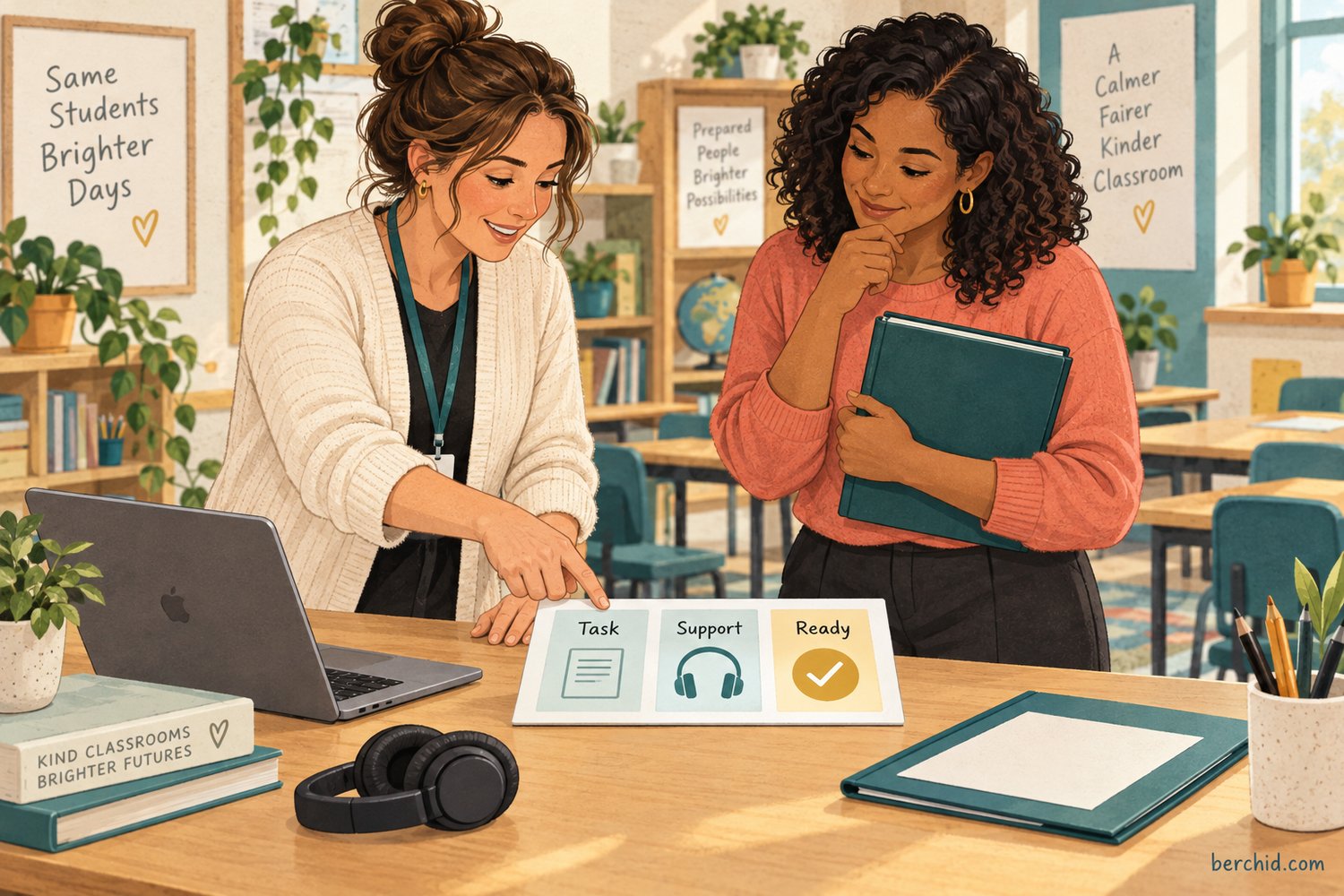
A support can be written in a plan and still be difficult to deliver in the next lesson. The materials may be in another room, the receiving teacher may not know when to provide them, or a brief note may say only extended time without explaining the...
Read More

A finished worksheet can show an answer without showing how the student reached it. If the task, teaching help and original response are missing, even a carefully saved page can be difficult to interpret later. Classroom work samples become more use...
Read More

A classroom task can become easier to complete without becoming clearer about what a student has learned. That is the central planning risk when modifying curriculum: the worksheet changes, but the learning target and the assessment remain vague. Th...
Read More

A peer interaction log becomes useful when it shows how a shared activity unfolded. "Played nicely" leaves a teacher with little to act on. "Offered a block, received a pointing response, and placed the block in the indicated gap" shows what both pa...
Read More
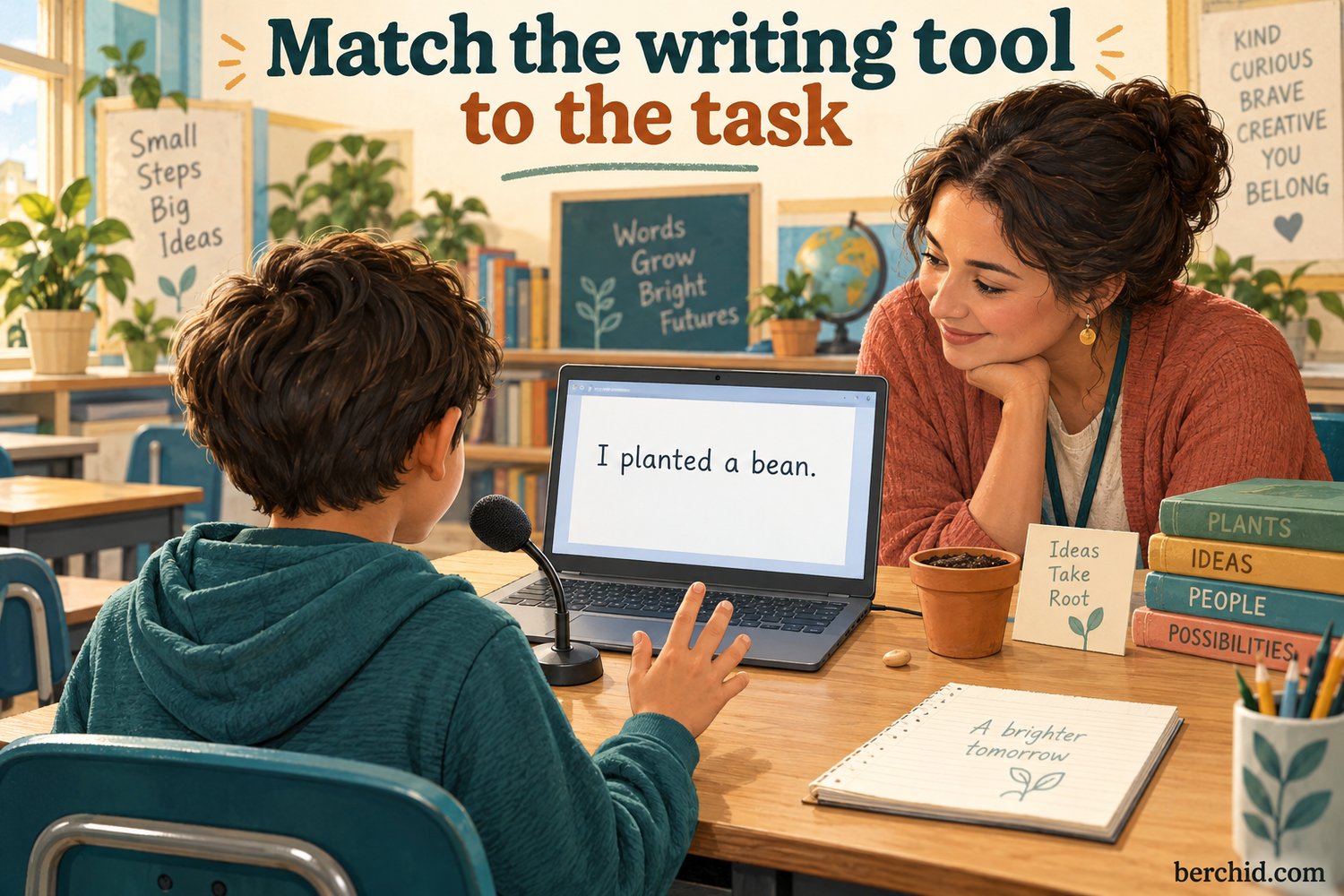
A writing tool becomes useful when a student can use it for a meaningful classroom task. A microphone, keyboard or graphic organizer on the desk does not tell a teacher whether the student can capture an idea, review it and produce work they recogni...
Read More
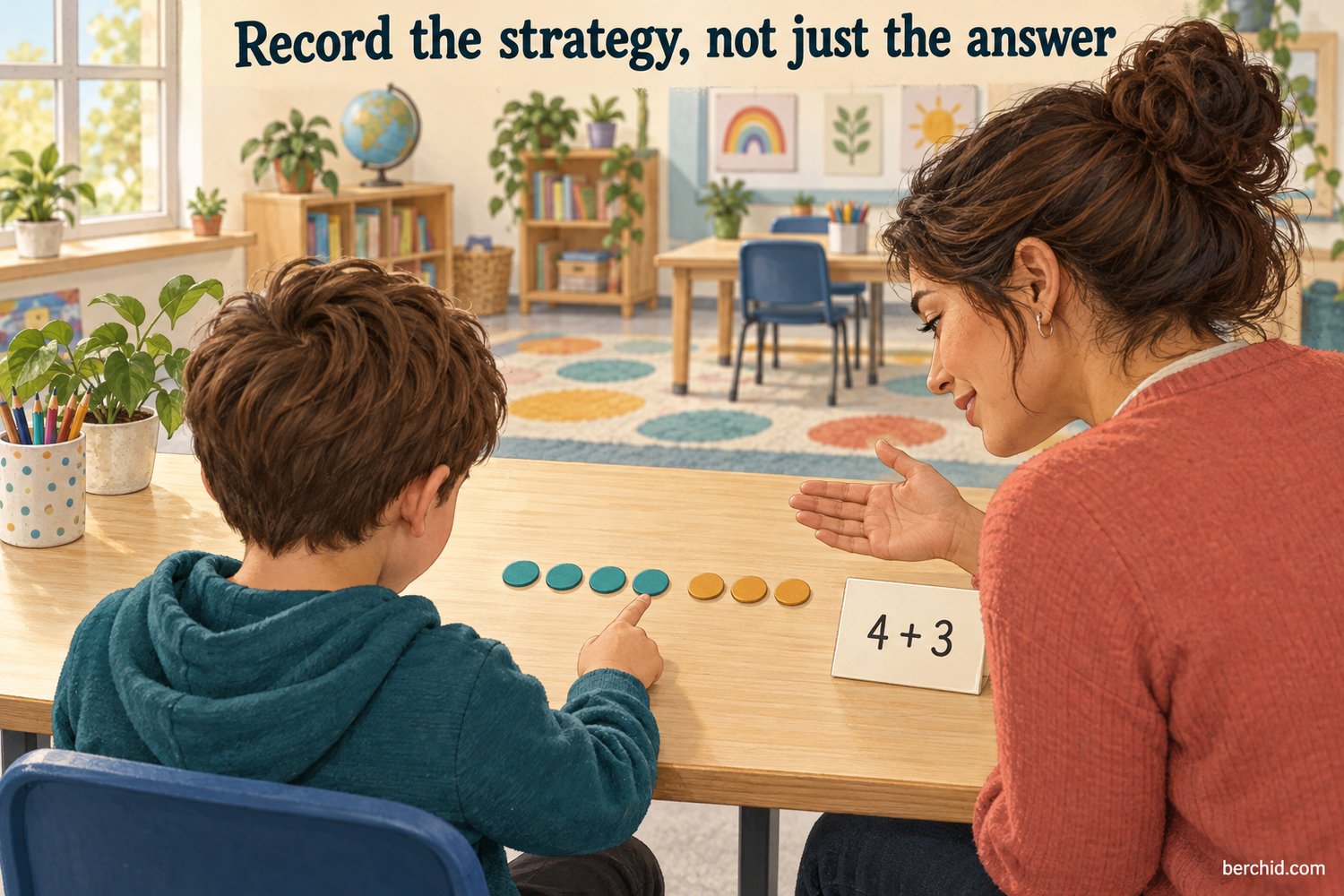
A wrong answer tells a teacher where to look. It rarely tells the whole story. A student who writes 6 for 4 + 3 might have skipped a counter, misunderstood the written expression or used a strategy that the adult has not yet seen. Useful classroom m...
Read More
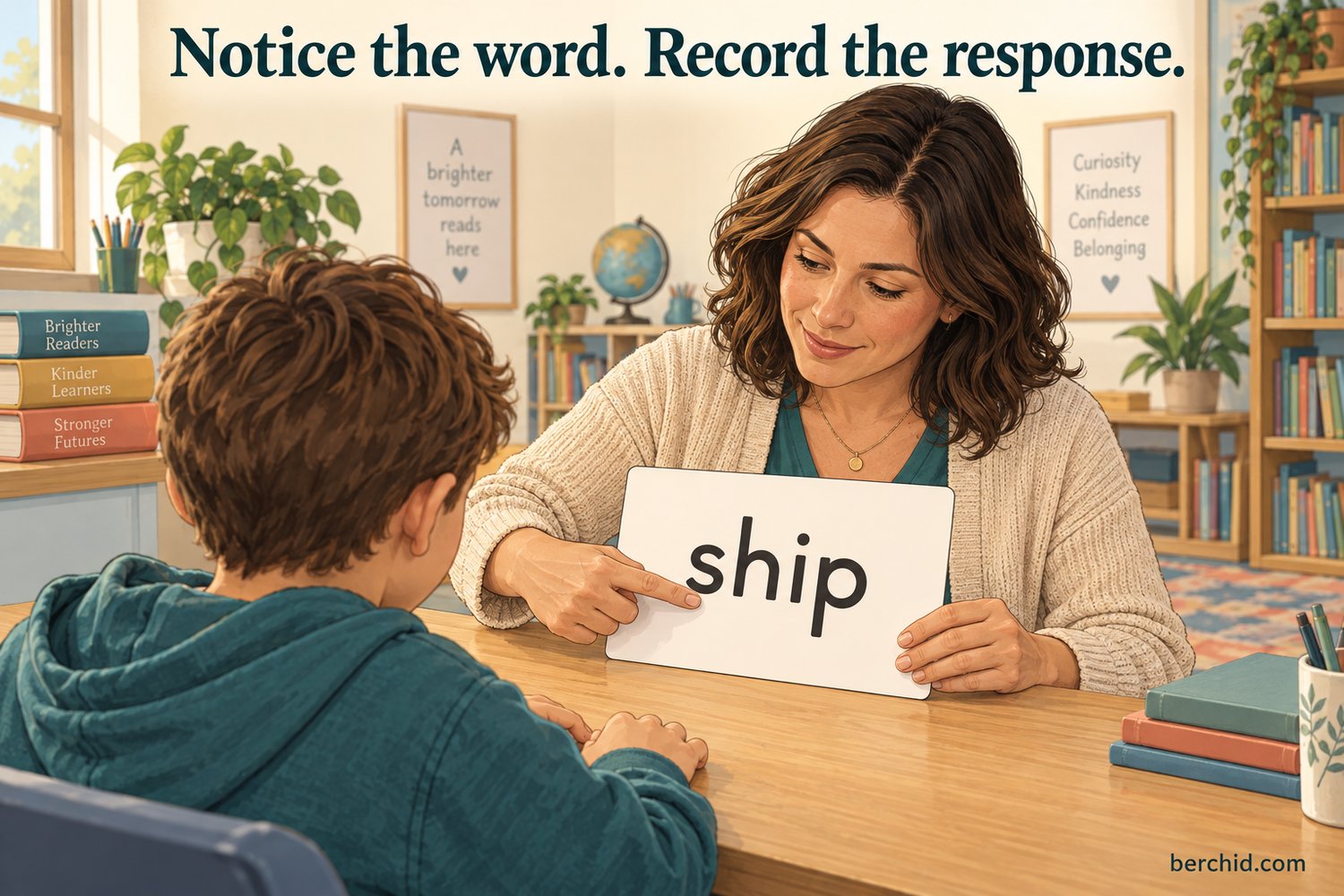
A student reads the printed word “ship” as “sip”. That small moment can become useful information, but only if the note preserves what the student saw, what they said and what happened next. “Poor reader” loses those details. “Read ship as sip befor...
Read More

A student says, “I have hardly any energy for writing today.” The teacher could collect a number and file it away. Or the teacher could ask what the student means, look at the task together and agree on a manageable first step. The second response g...
Read More

A useful classroom speech observation tells the speech-language pathologist what happened in an everyday interaction: who was listening, what the student tried to communicate, what was understood and how the exchange affected participation. “Speech ...
Read More

A classroom rubric should help a student understand what good work looks like and help a teacher explain the evidence behind a judgment. A table with “excellent,” “good” and “needs improvement” across the top is only a starting structure. Without as...
Read More

Classroom behavior frequency counts are useful only when everyone knows what counts as one event and how long someone actually observed. Six events during ten minutes and nine events during thirty minutes tell a different story from the totals alone...
Read More

A student shares an idea during a group task, but the conversation moves on before anyone responds. “Does not take turns” describes the student as the problem. A more useful note explains the exchange: how the student entered, what classmates did, w...
Read More