

Selective Mutism in Schools
A child with selective mutism is not choosing to stay quiet; their body cannot access speech in certain settings, even if they talk freely at home. This resource helps you tell selective mutism apart from ordinary shyness, identify anxiety triggers in the classroom, and respond to silence in a way that reduces pressure instead of adding to it.
What's Inside
- Need, Strategy, and Why tables: 12 pages covering recognizing a selectively mute student, identifying anxiety triggers, and reacting to a child's silence
- Signs to watch for: freezing, avoided eye contact, and social isolation during unstructured time
- Accepting responsibility for communication barriers: honest reflection on pacing, tone, and environment
- Low pressure strategies: reducing verbal demands and allowing nonverbal ways to participate
How It Helps You
- Helps you avoid well-meaning responses that increase a child's anxiety
- Gives the student ways to participate without being forced to speak
- Supports a consistent approach across teachers and support staff
Ways to Use It
Use it when a new student shows signs of selective mutism, share it with paraprofessionals and specialists, or bring it to team meetings to agree on a shared approach.
Who It's For
Early childhood and elementary teachers, school counselors, and speech language professionals supporting a child with selective mutism.
Format
PDF (print-ready) and PPTX (editable). 12 pages of tables. Instant download.
Need more than one?
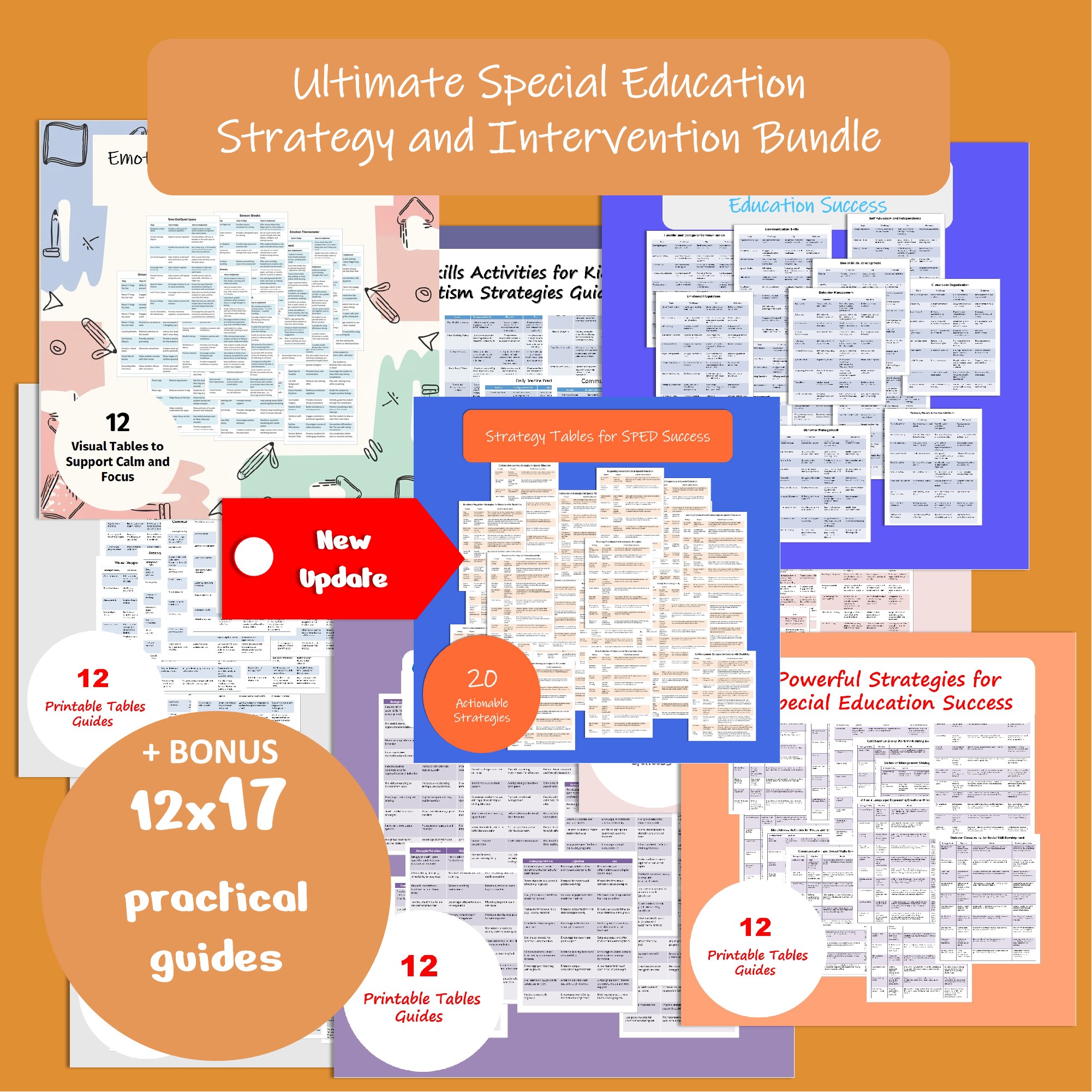
If these Pattern, Change, and Why style tables fit the way you work, there are many more topics to cover. The Special Education Mega Bundle brings together 18 related resources in one download, and you save 31% compared to buying each item separately.