


Clip Chart Alternative: Shame-Free Behavior Support for Neurodivergent Students
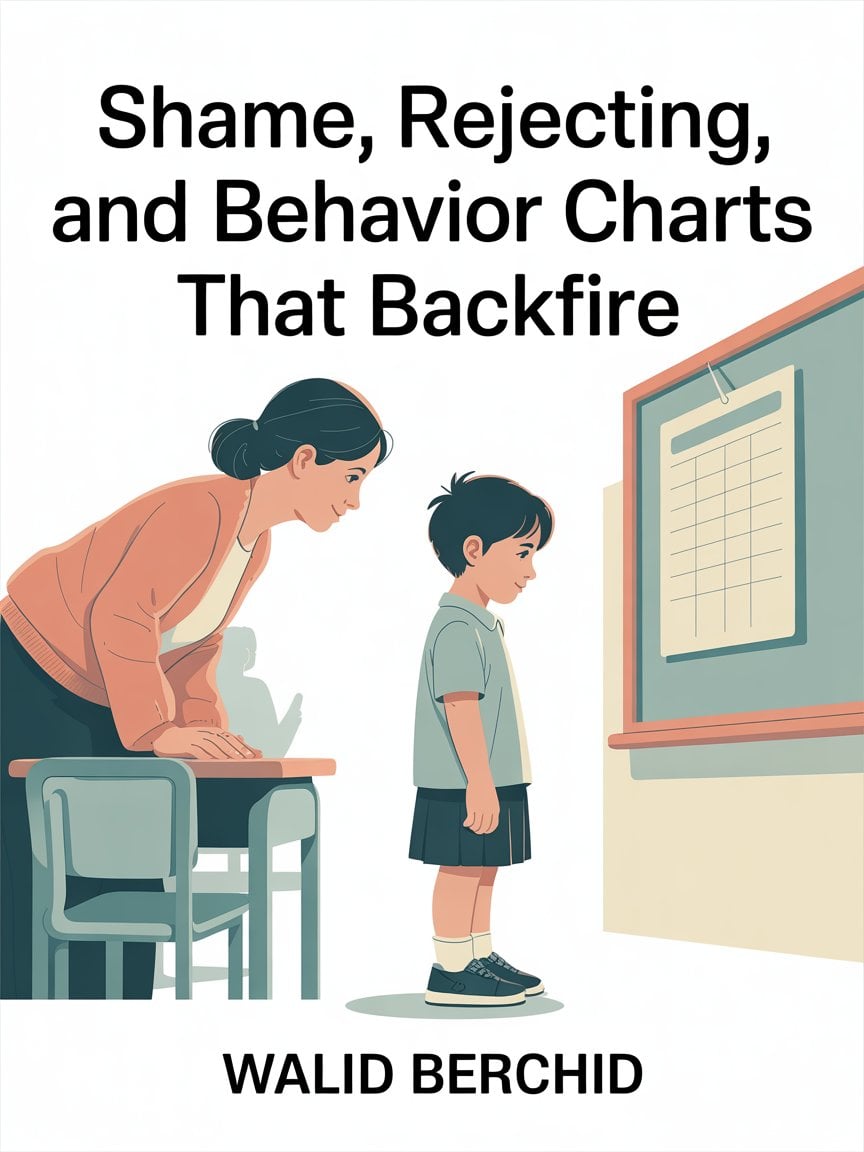
Clip charts and color systems can turn the day into a public scoreboard, and they land hardest on students who already struggle. This 19-page guide is for teachers who want structure without shame.
What's Inside
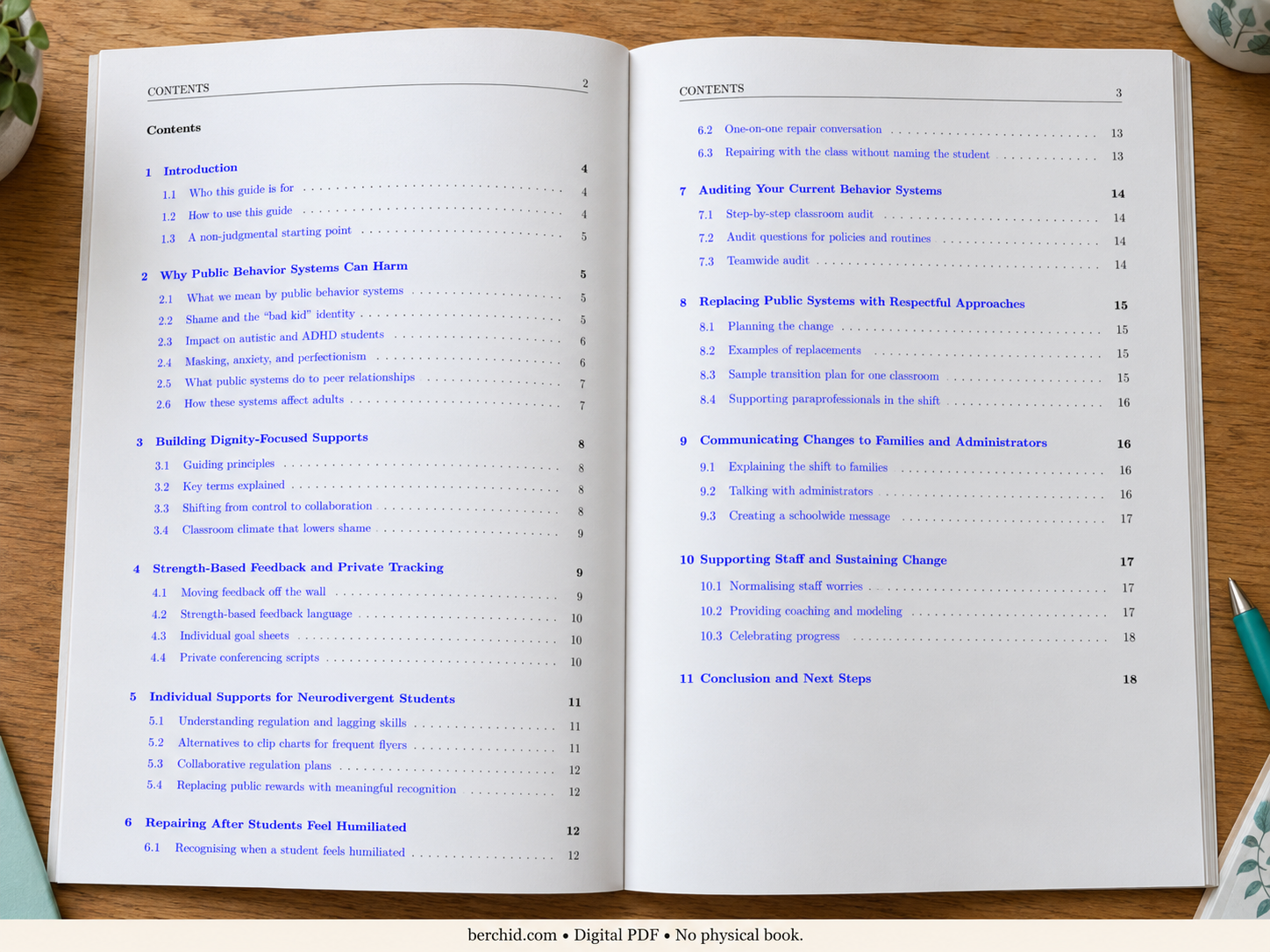
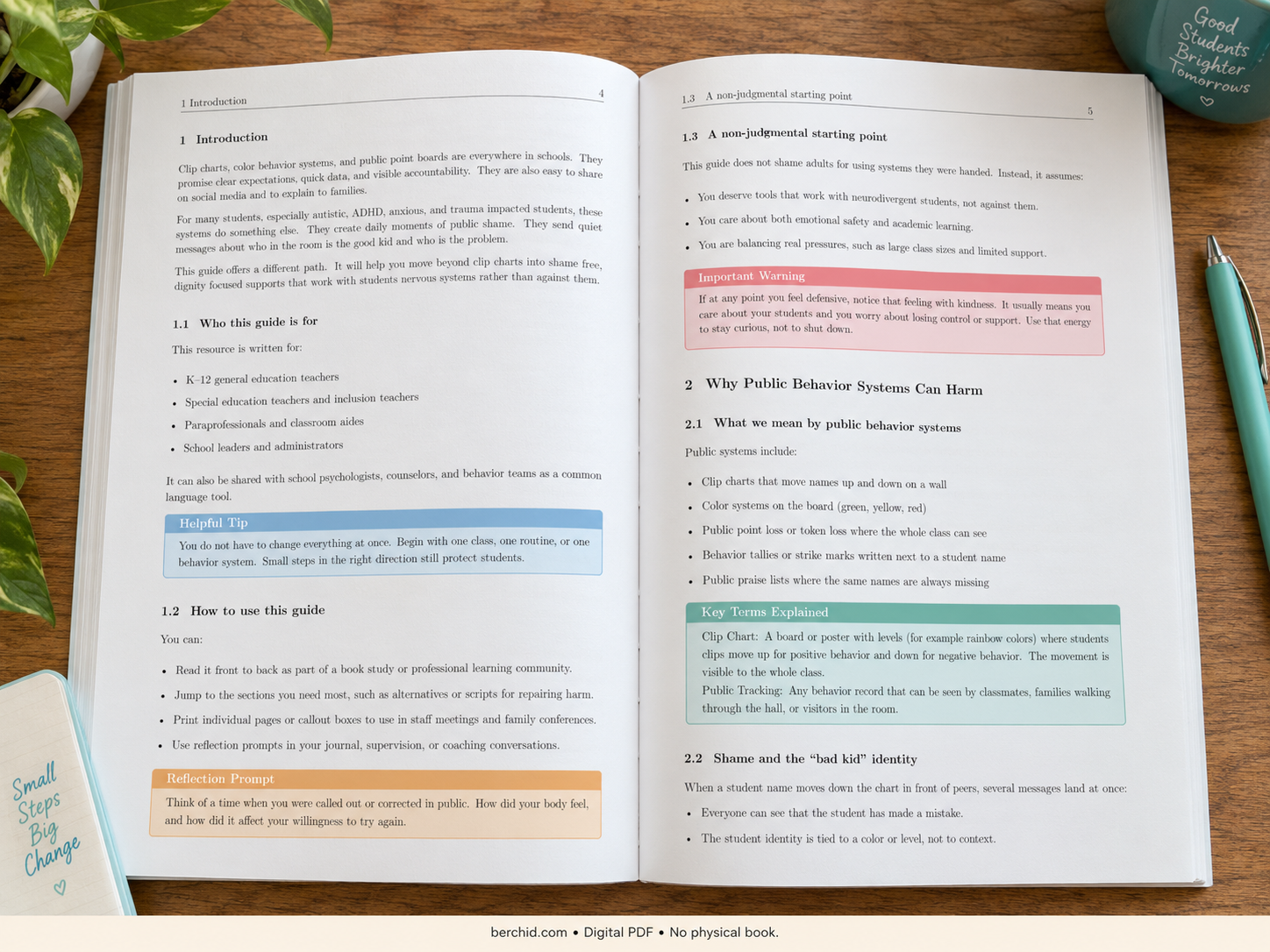
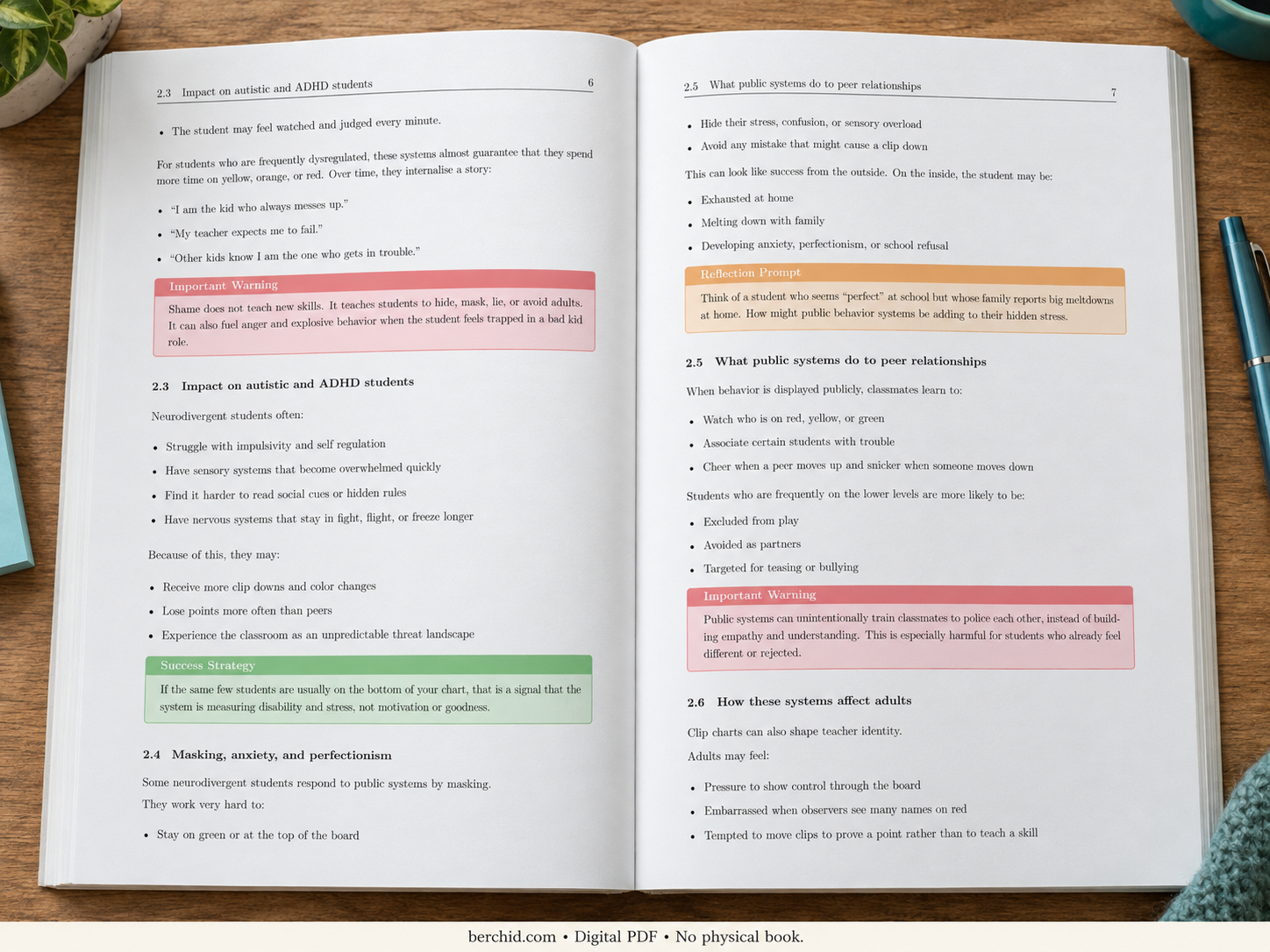
- Why public systems backfire: their impact on autistic, ADHD, anxious and trauma-impacted students, including masking, peer exclusion and a "bad kid" identity
- Dignity-focused alternatives: strength-based feedback language, private tracking and goal sheets, private conferencing scripts and collaborative regulation plans
- Repair scripts: one-on-one and whole-class conversations after a student has felt humiliated
- Audit and transition: a classroom and schoolwide audit and a sample four-week plan for retiring a clip chart
- Communication: scripts and email templates for families, administrators and paraprofessionals
How It Helps You
- Keeps structure while removing public shaming
- Gives you the reasoning and talking points to explain the change
- A staged plan so the shift feels manageable
Ways to Use It
Use it for personal reflection, a staff book study or as a shared reference in IEP and behavior team meetings, in any K-12 classroom.
Who It's For
General and special education teachers, paraprofessionals, administrators and behavior or school psychology teams.
Format
PDF (19 pages). Instant download.
Need more than one?

If you find yourself reaching for in-depth guides like this one, the guides bundle collects the full library of longer special education references. The Special Education Guides Bundle includes this resource and more in one download, and you save 80% compared to buying each item separately.