

Auditory Processing Disorder (APD): A Teaching Resource
A student with Auditory Processing Disorder is not tuning you out on purpose; their brain is working hard to make sense of sound. This resource shows what APD looks like in class, from a student who keeps asking "what?" to one who nods along but is lost, and how to respond without putting them on the spot.
What's Inside
- 12 pages of Behavior / Response / Result tables: listening difficulties, noisy environments, and different types of auditory challenges
- Seating and environment tweaks: such as corner spots and reduced background noise
- Learning from a communication breakdown: what to try differently next time
- Simple phrases: for asking for repeats or clarification without embarrassment
How It Helps You
- Helps you recognize APD-related behavior for what it is
- Offers environment changes that do not single a student out
- Gives students language to self-advocate
Ways to Use It
Use it to adjust your classroom setup, plan whole-class listening routines, or coach individual students on asking for clarification.
Who It's For
General education teachers, special education teachers, and speech-language professionals supporting students with auditory processing needs.
Format
PDF (print-ready) and PPTX (editable). 12 pages. Instant download.
Need more than one?
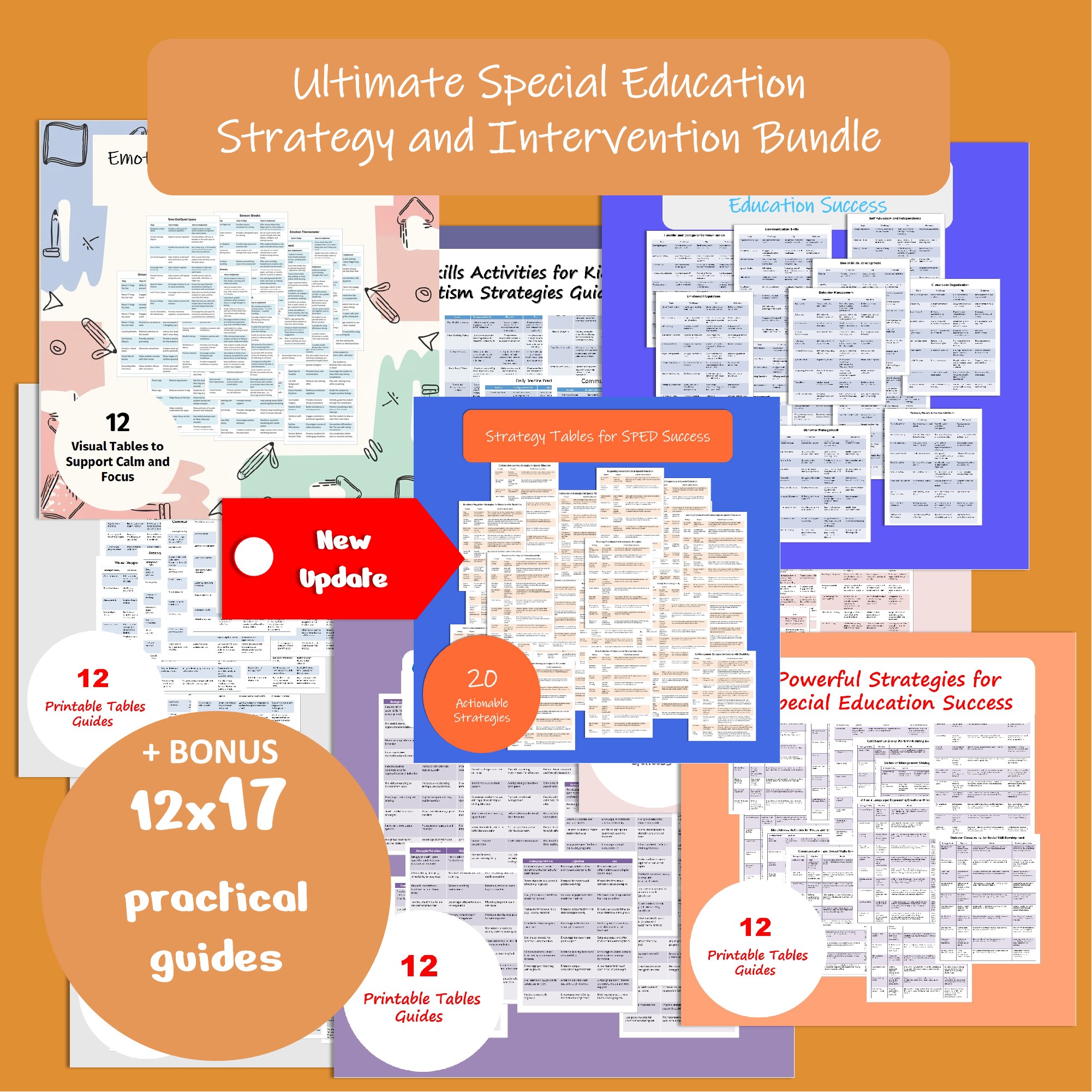
If practical, table-based strategy guides like this fit the way you work, the Special Education Mega Bundle brings together 18 related resources in one download, and you save 31% compared to buying each item separately.