
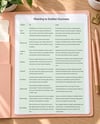
Vestibular Processing Difficulties | Movement and Balance Strategies
On Sale
$4.00
(25% off)
$3.00
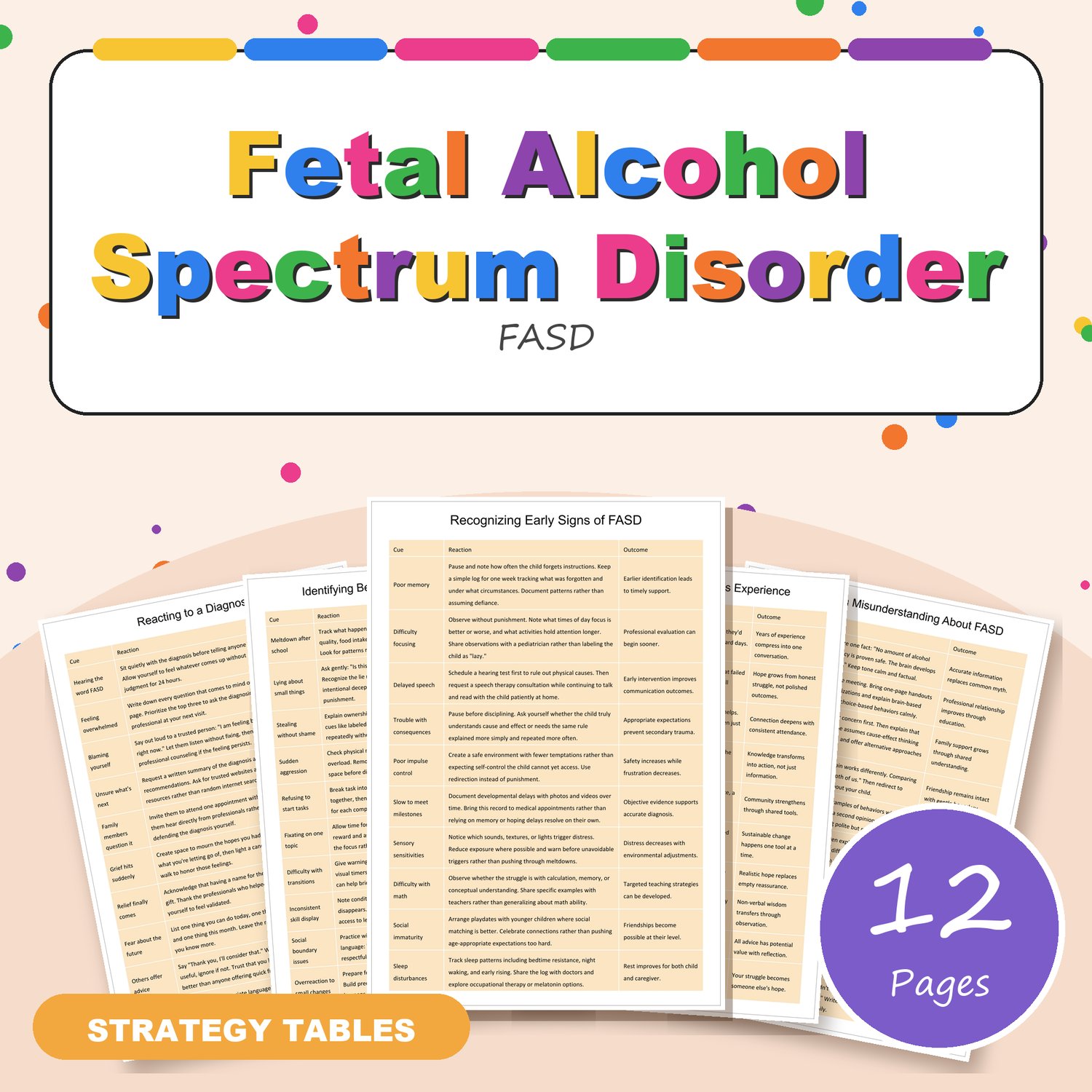
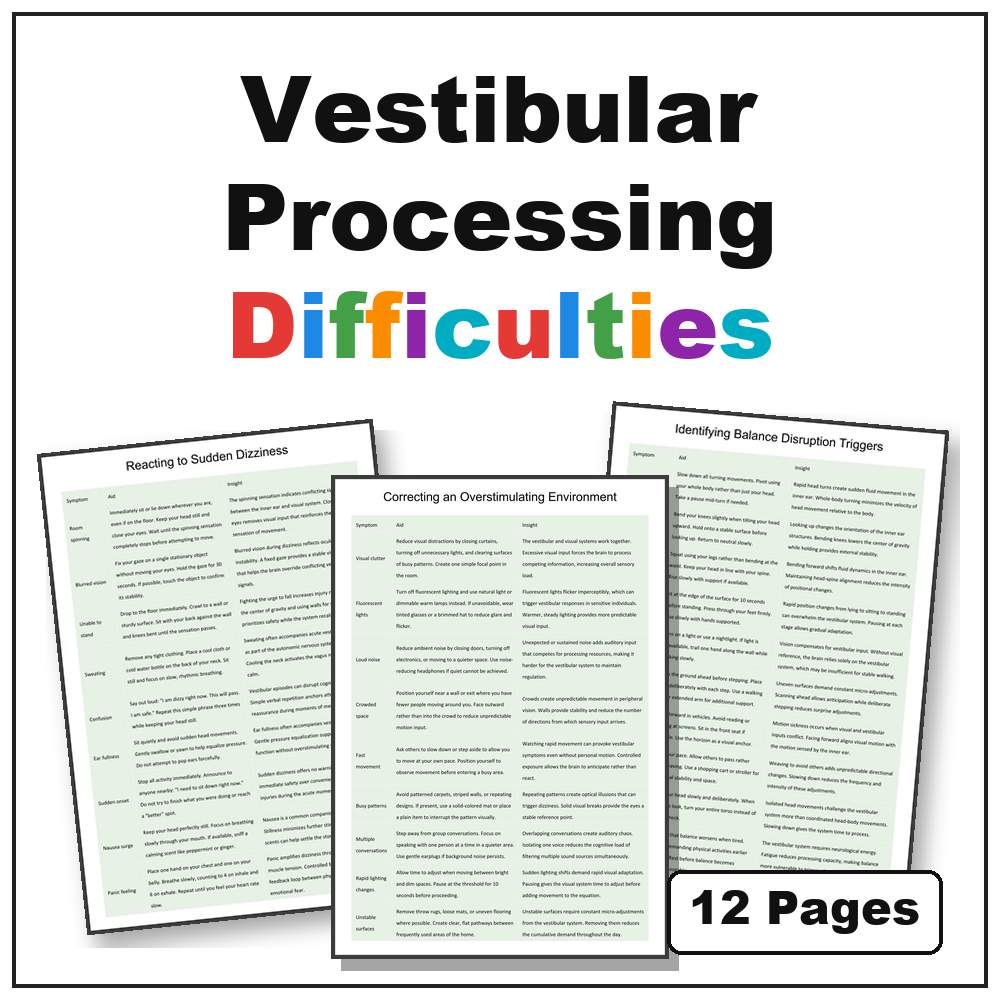
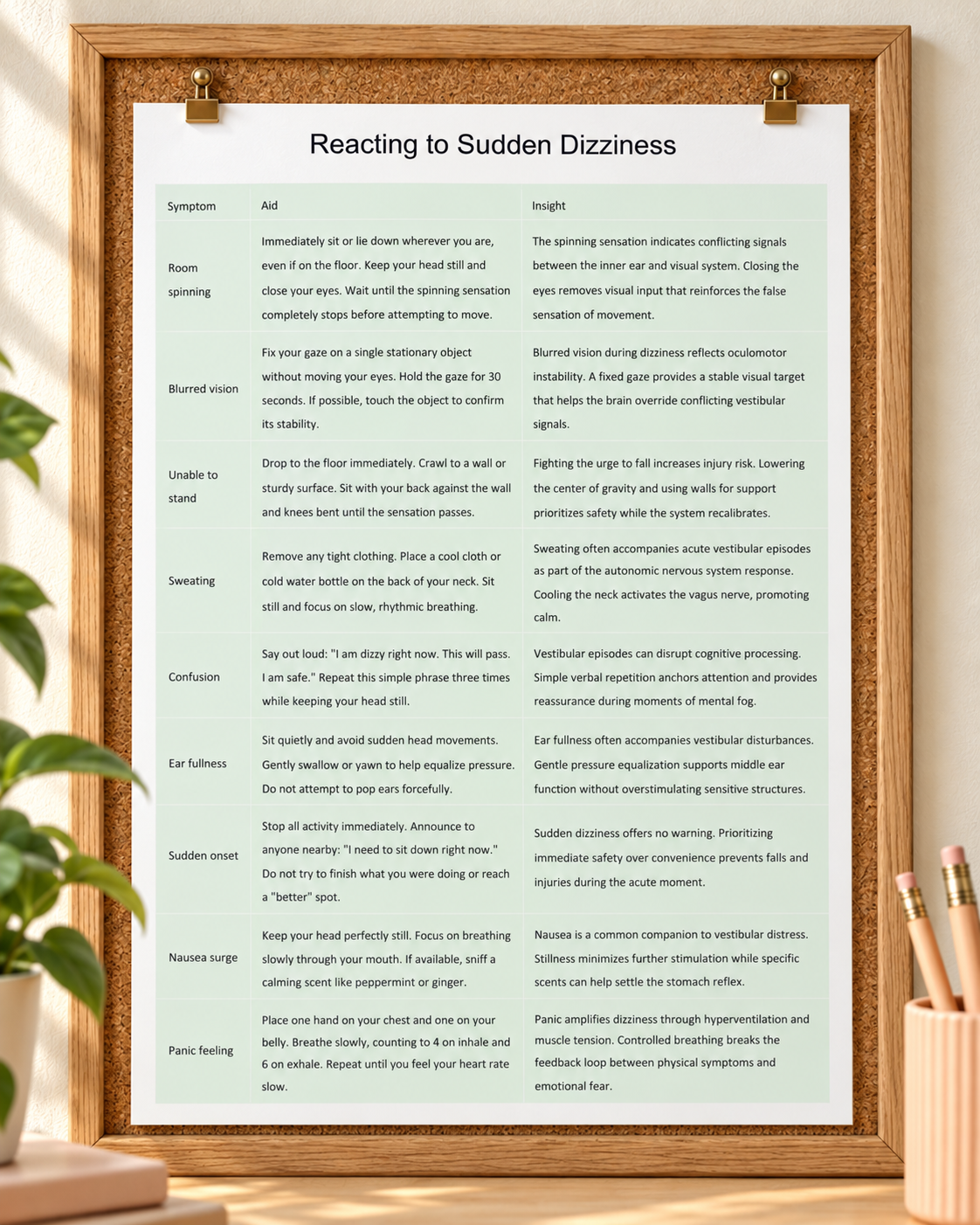
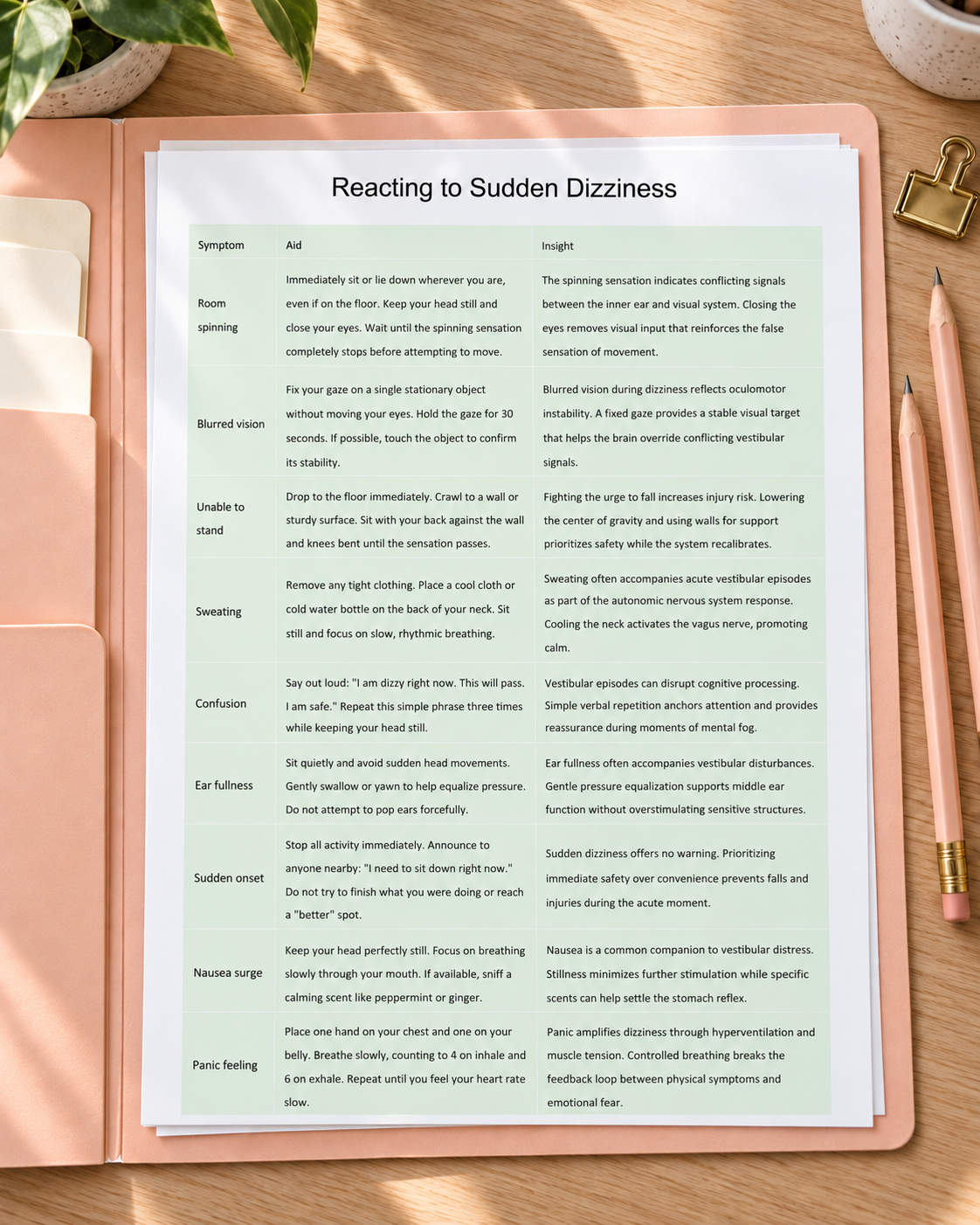
Vestibular processing difficulties affect balance, movement and comfort in busy environments. These 12 strategy tables describe each symptom with a practical aid and the insight behind it.
What's Inside
- Recognizing Vestibular Overload
- Reacting to Sudden Dizziness
- Correcting an Overstimulating Environment
- Identifying Balance Disruption Triggers
- Learning from a Fall or Near-Fall
- Accepting Physical Limitations
- Frustration with Slow Adaptation
- Repeating the Same Movement Mistake
- Applying a Calming Vestibular Strategy
- Helping a Child Regulate Through Movement
- Fearing Unstable Surfaces
- Celebrating a Moment of Stability
How It Helps You
- Helps recognize vestibular overload and balance triggers
- Offers calming movement strategies for regulation
- Supports children who fear unstable surfaces
Ways to Use It
Use them in sensory planning, occupational therapy sessions, classroom setup or at home.
Who It's For
Occupational therapists, special education teachers and parents.
Format
PDF (print-ready) and PPTX (editable). 12 strategy tables, one per page. Instant download.
Need more than one?
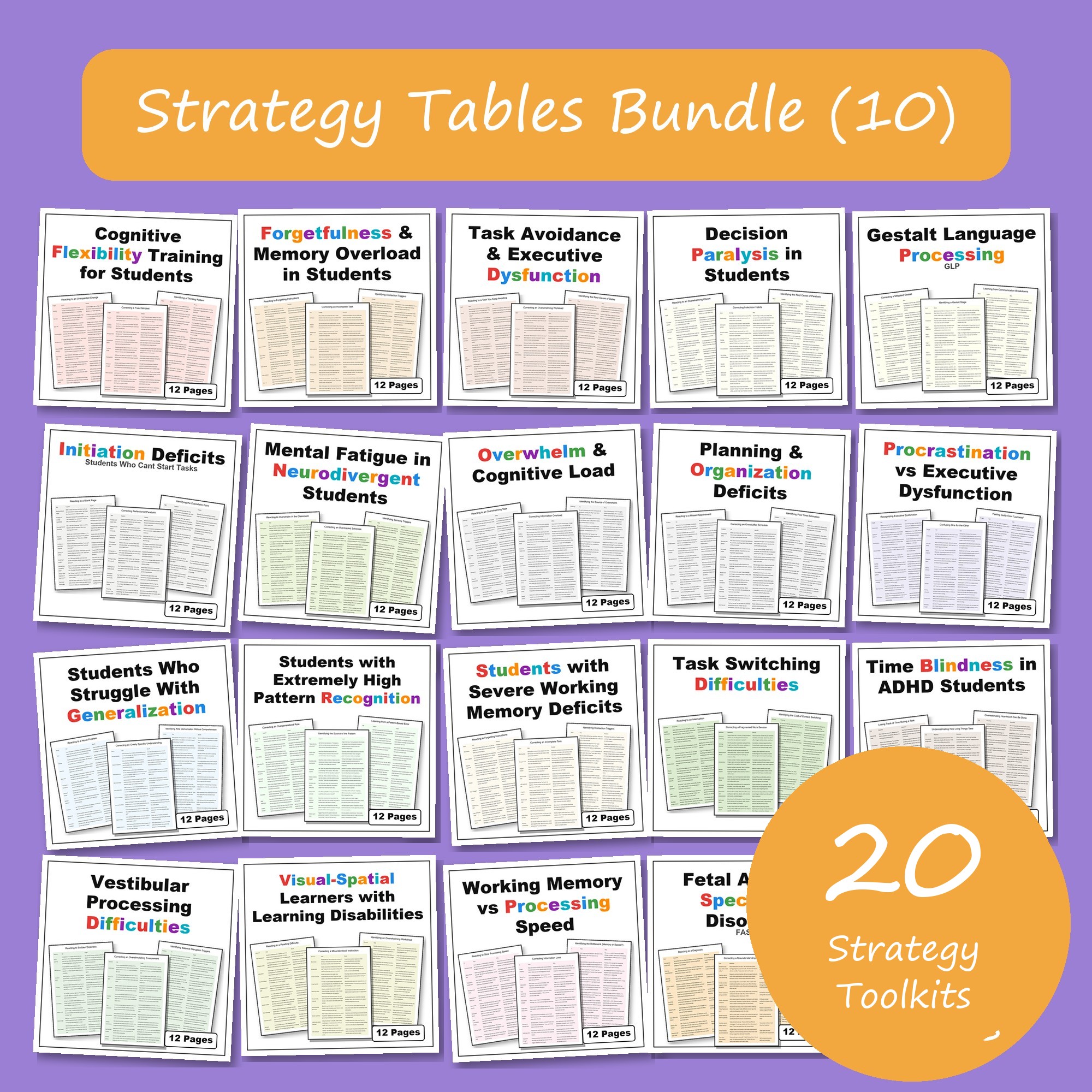
If one-page strategy tables suit the way you work, the Strategy Tables Bundle (10) includes this resource and 19 more in one download, and you save 58% compared to buying each item separately.