
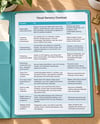
Sensory Overload Strategies for Classrooms
On Sale
$4.00
(10% off)
$3.60
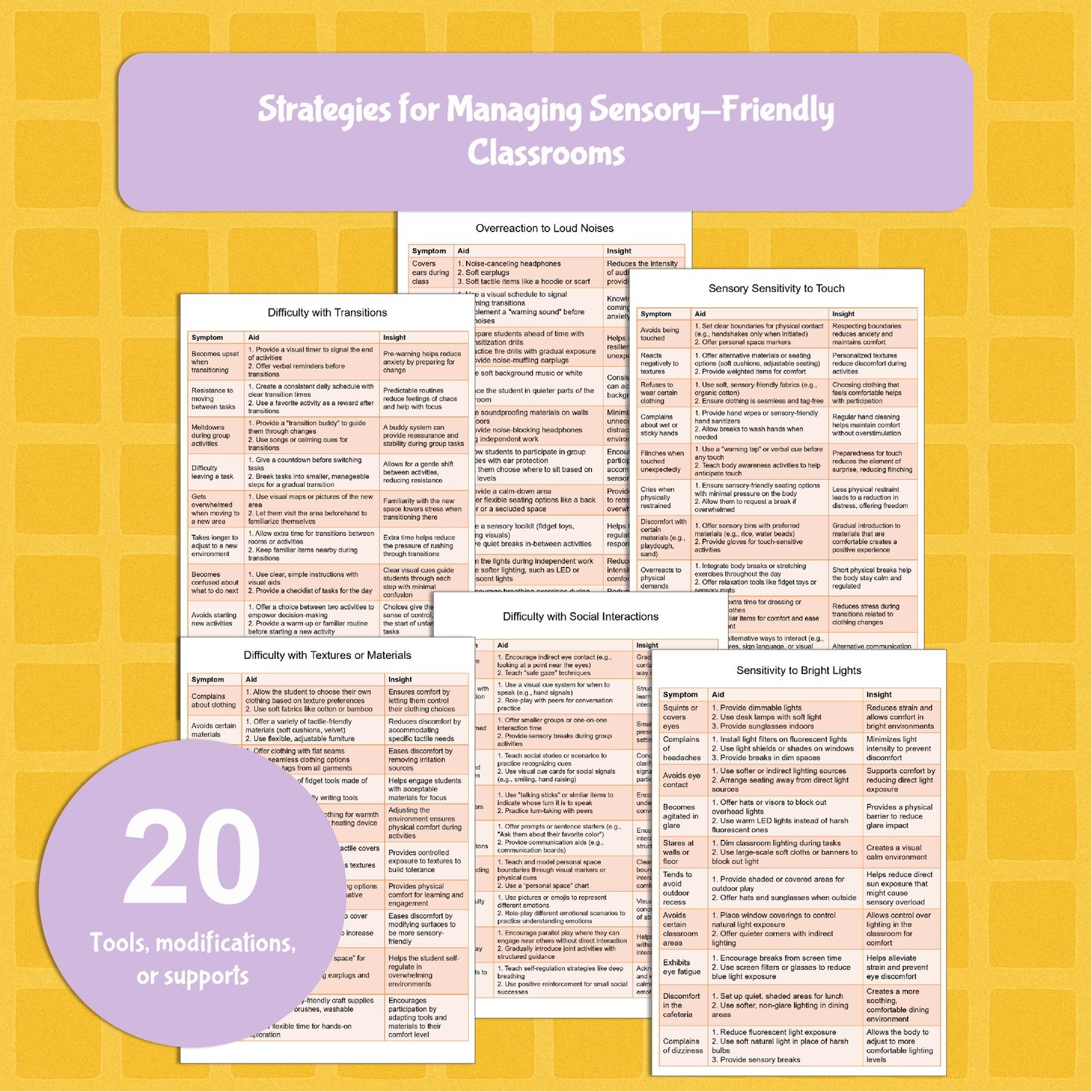
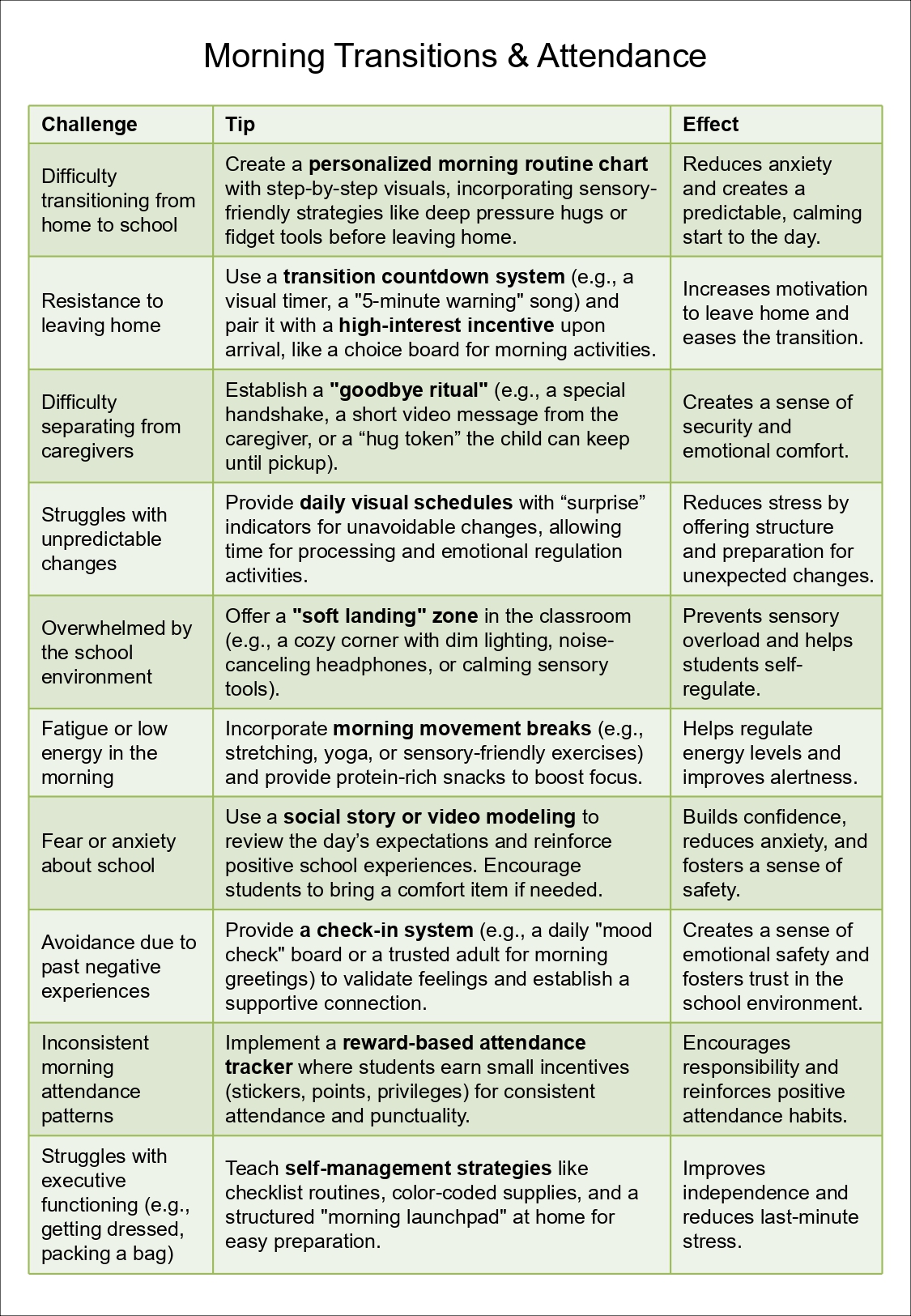
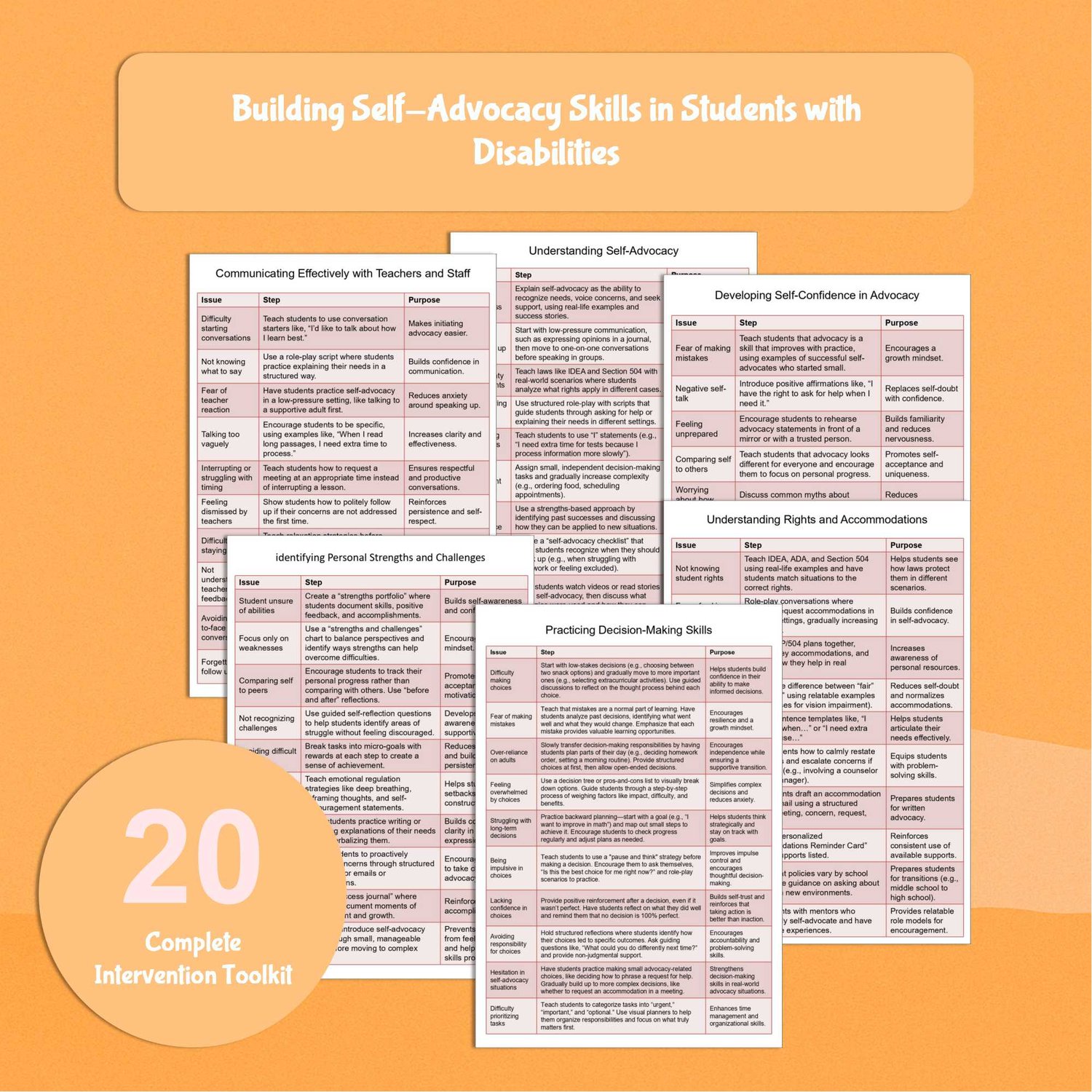
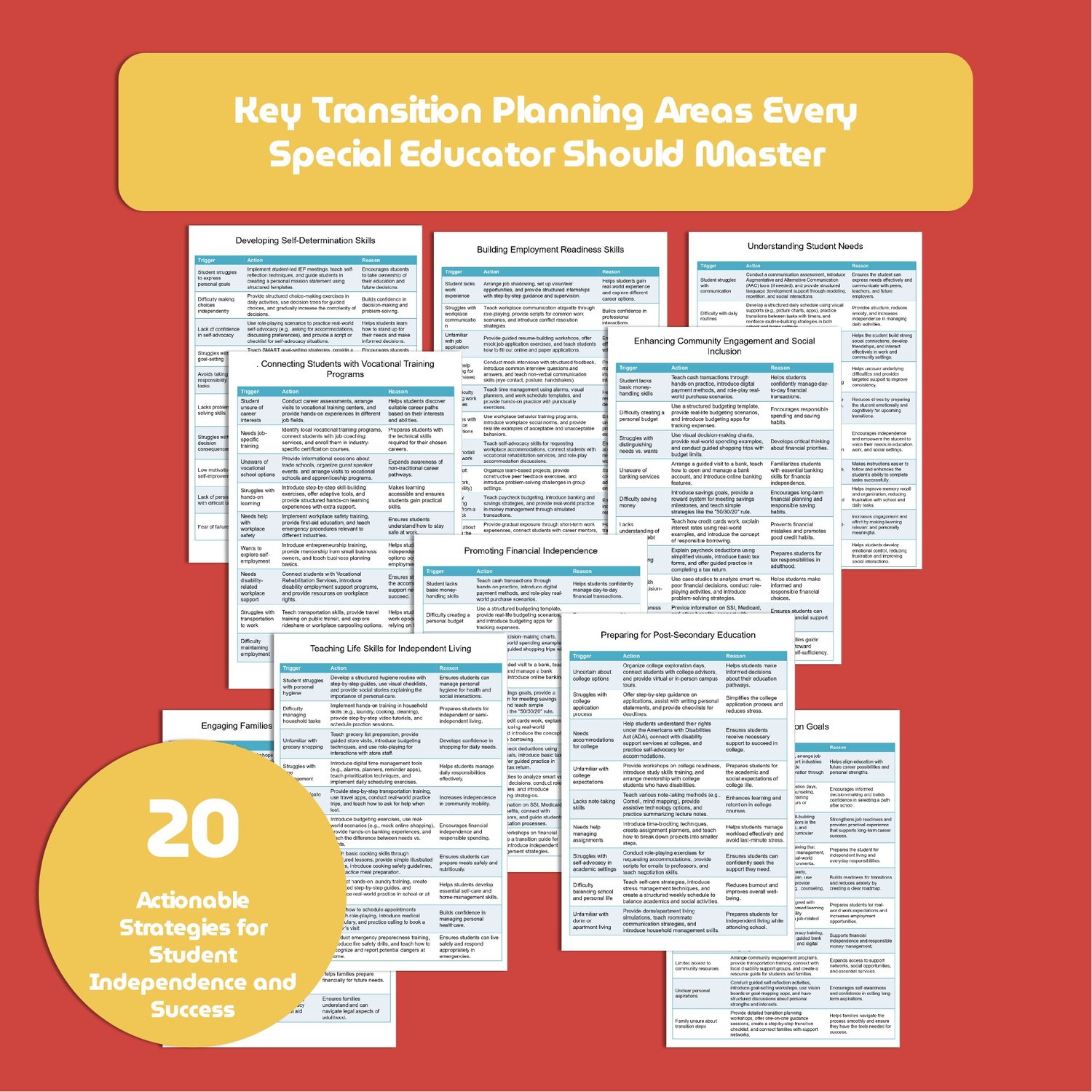
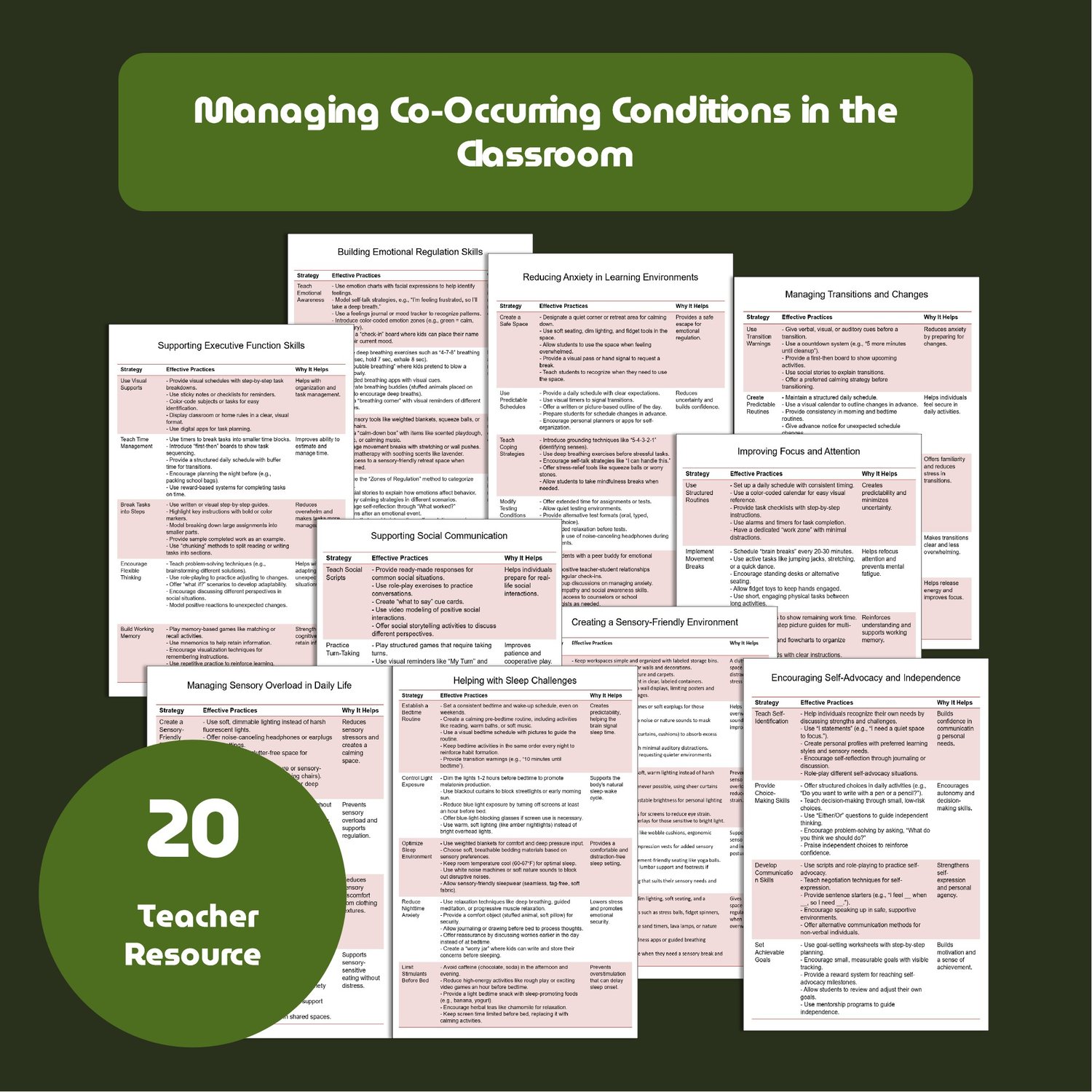
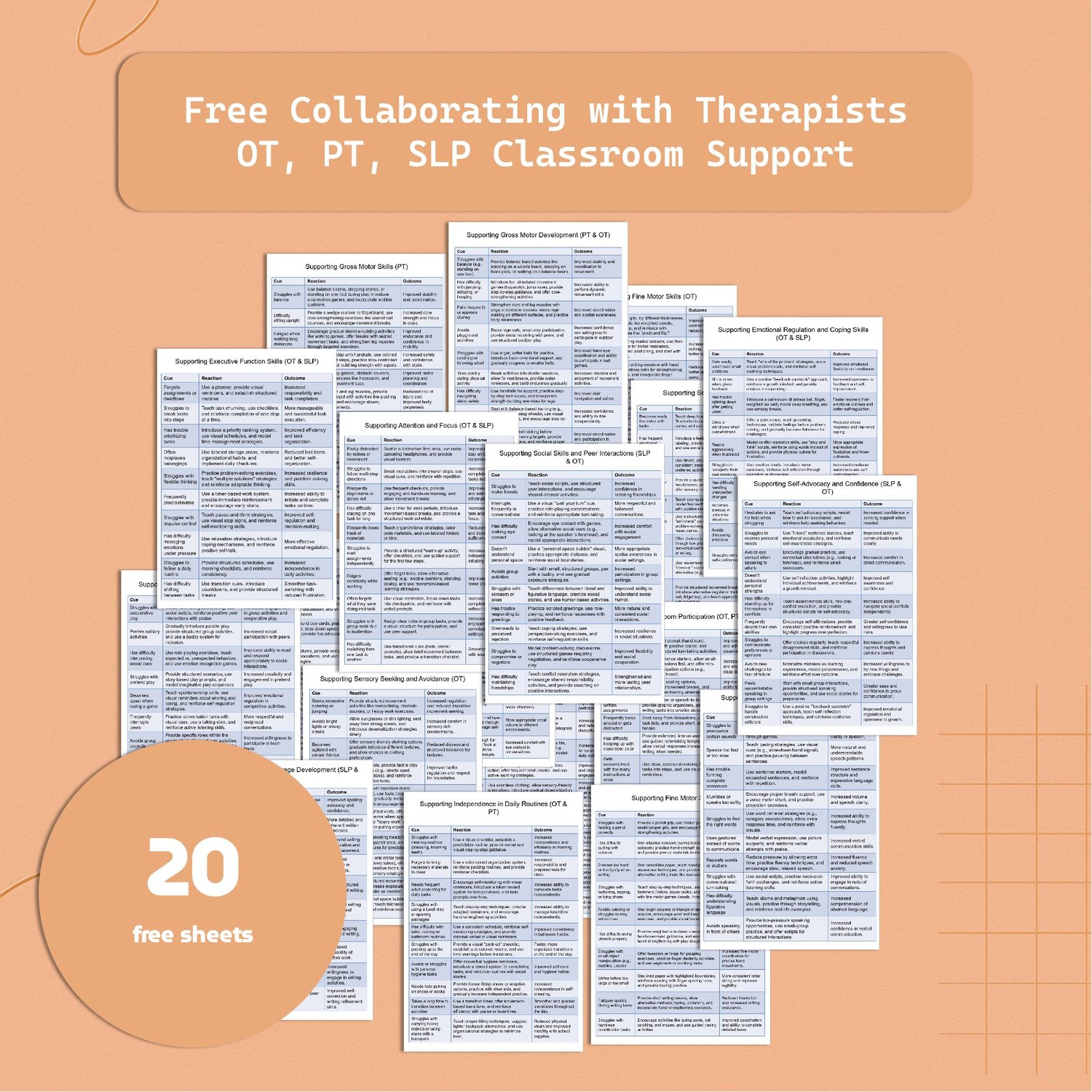
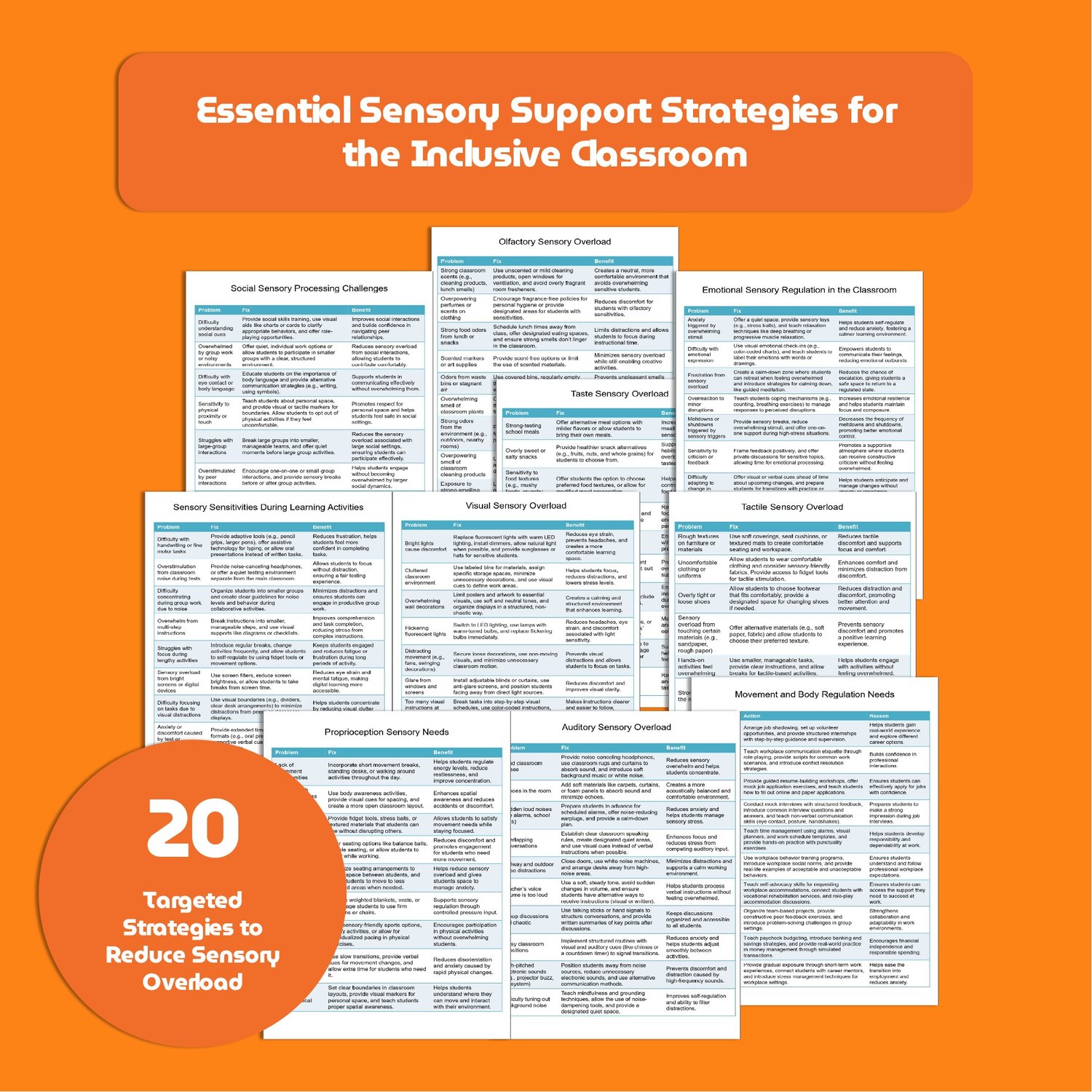
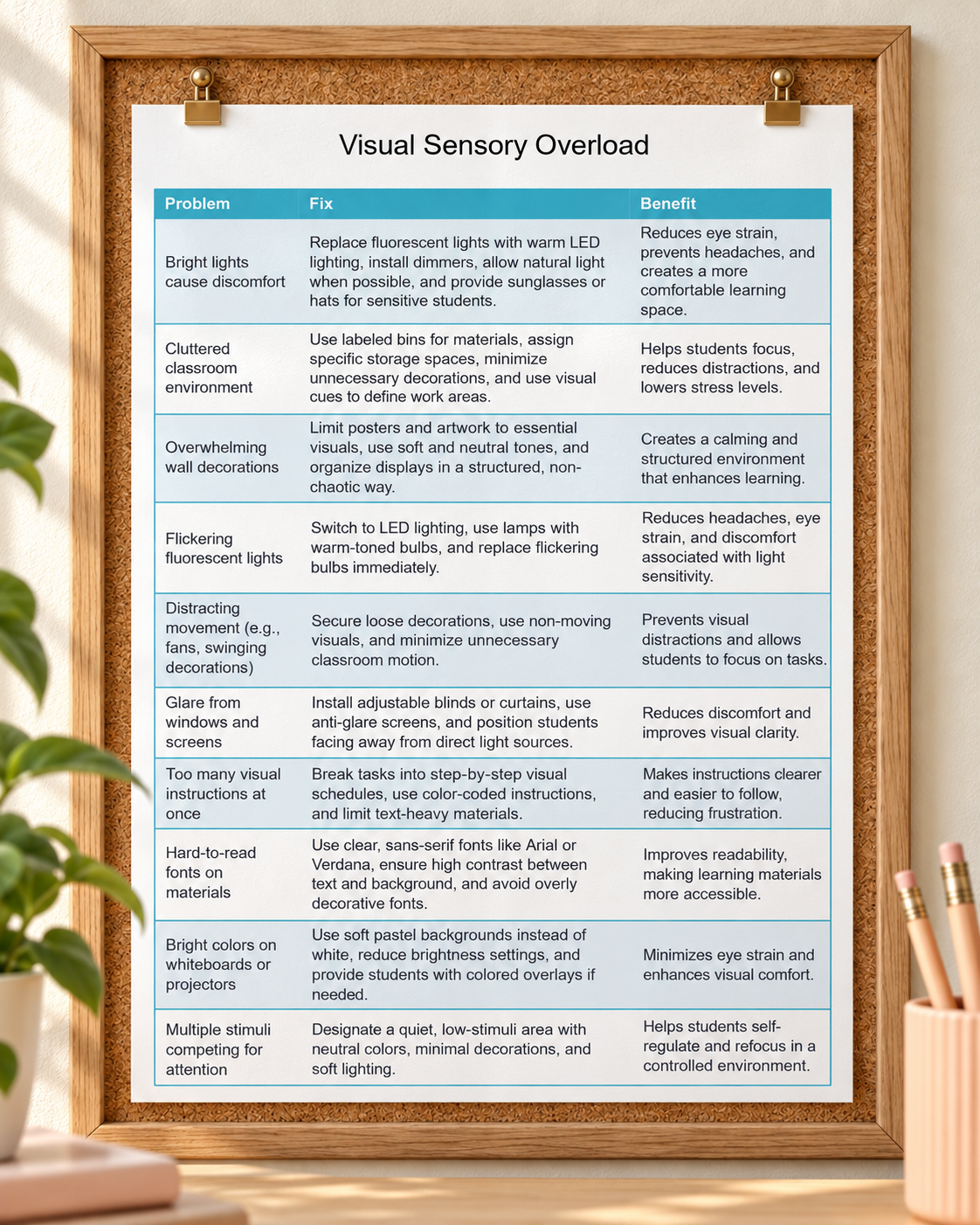
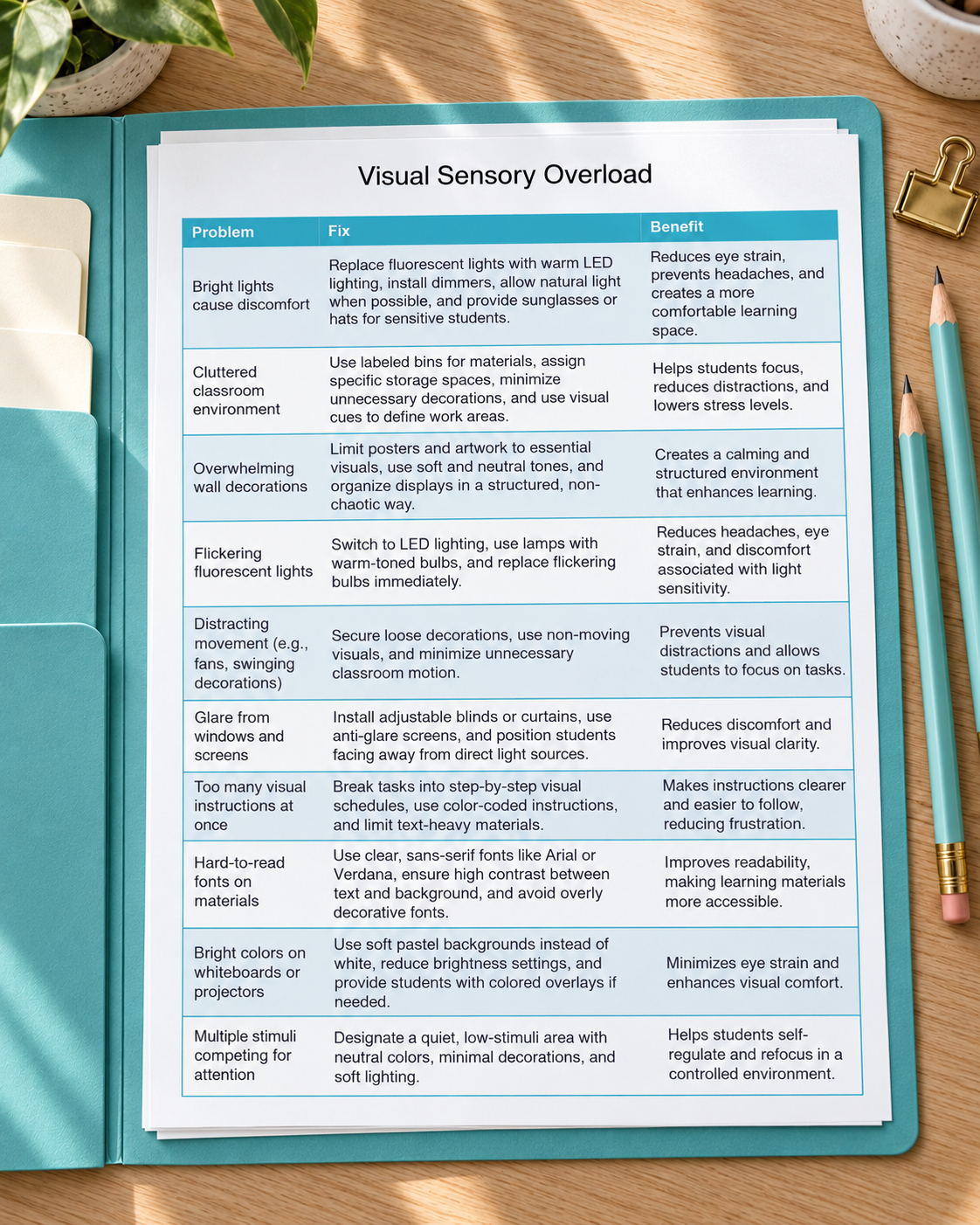
Sensory overload can derail a student's whole day. This guide offers 20 tables in a problem, fix and benefit format, matching specific triggers like flickering lights or strong smells to practical classroom solutions.
What's Inside
- Visual and Auditory Sensory Overload: lighting, noise reduction, classroom clutter
- Tactile and Olfactory Sensory Overload: textures, clothing comfort, scent-free policies
- Taste Sensory Overload; Sensory Sensitivities During Learning Activities: meal options and adaptive learning tools
- Proprioception and Movement; Body Regulation Needs: movement breaks, weighted tools, flexible seating
- Social Sensory Processing Challenges; Emotional Sensory Regulation: group work, self-regulation, calm-down spaces
- Total: 20 problem, fix and benefit tables
How It Helps You
- Covers every major sensory channel in one reference
- Offers fixes you can apply in the classroom right away
- Supports individual sensory accommodations
Ways to Use It
Use it for whole-class planning, staff training, or to plan a specific student's sensory accommodations.
Who It's For
General and special education teachers, occupational therapists and administrators.
Format
PDF (print-ready) and PPTX (editable). 20 tables. Instant download.
Need more than one?
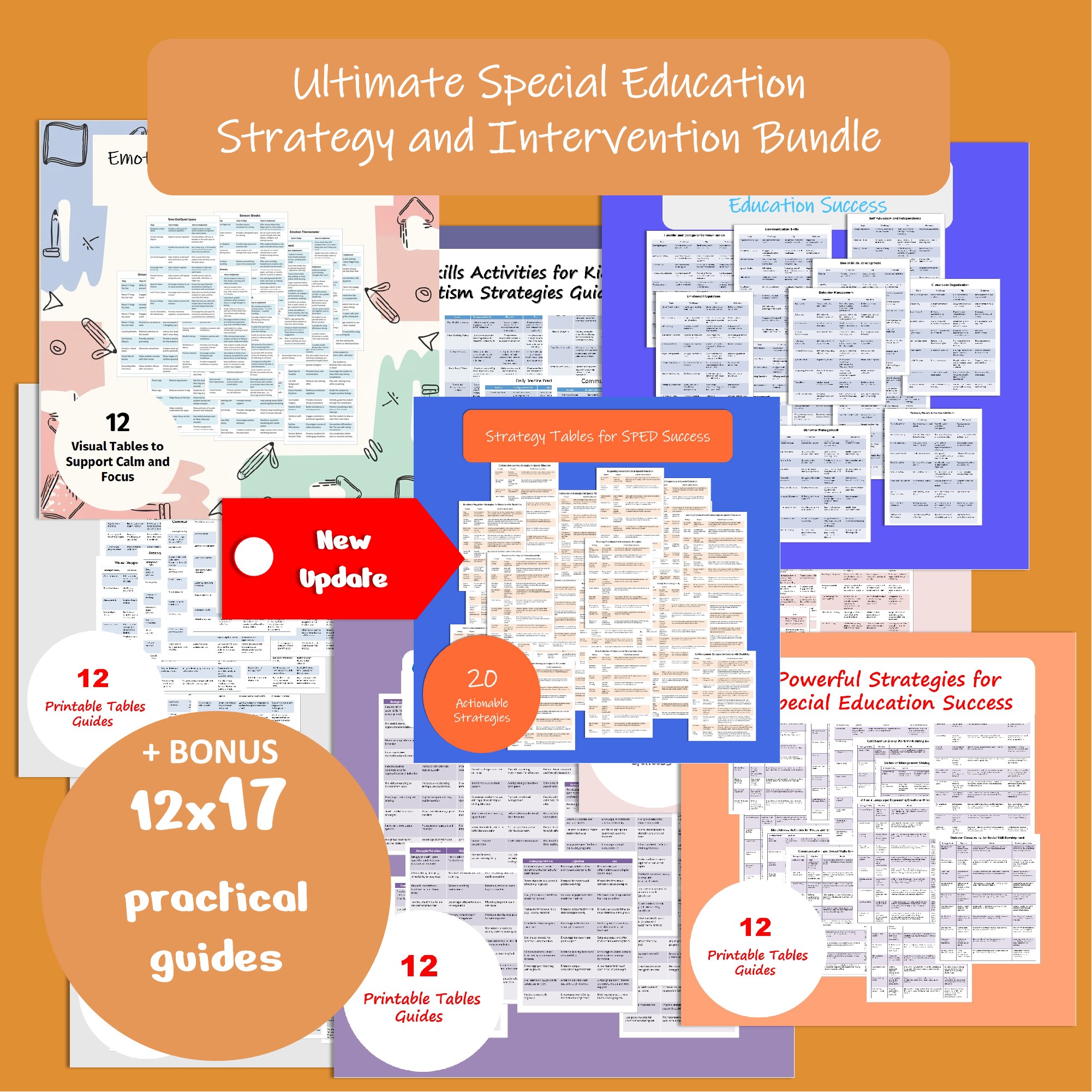
If quick-reference strategy tables fit how you work, the mega bundle gives you many more topics in the same format. The Special Education Mega Bundle brings together 18 related resources in one download, and you save 31% compared to buying each item separately.