
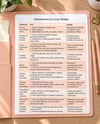
Sensory-Friendly Classroom Strategies: 20 Tools
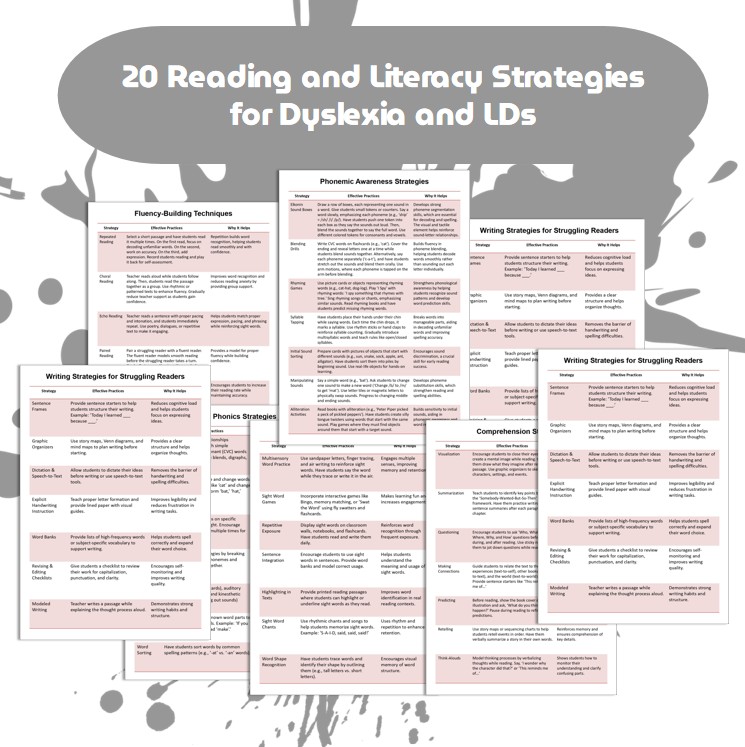
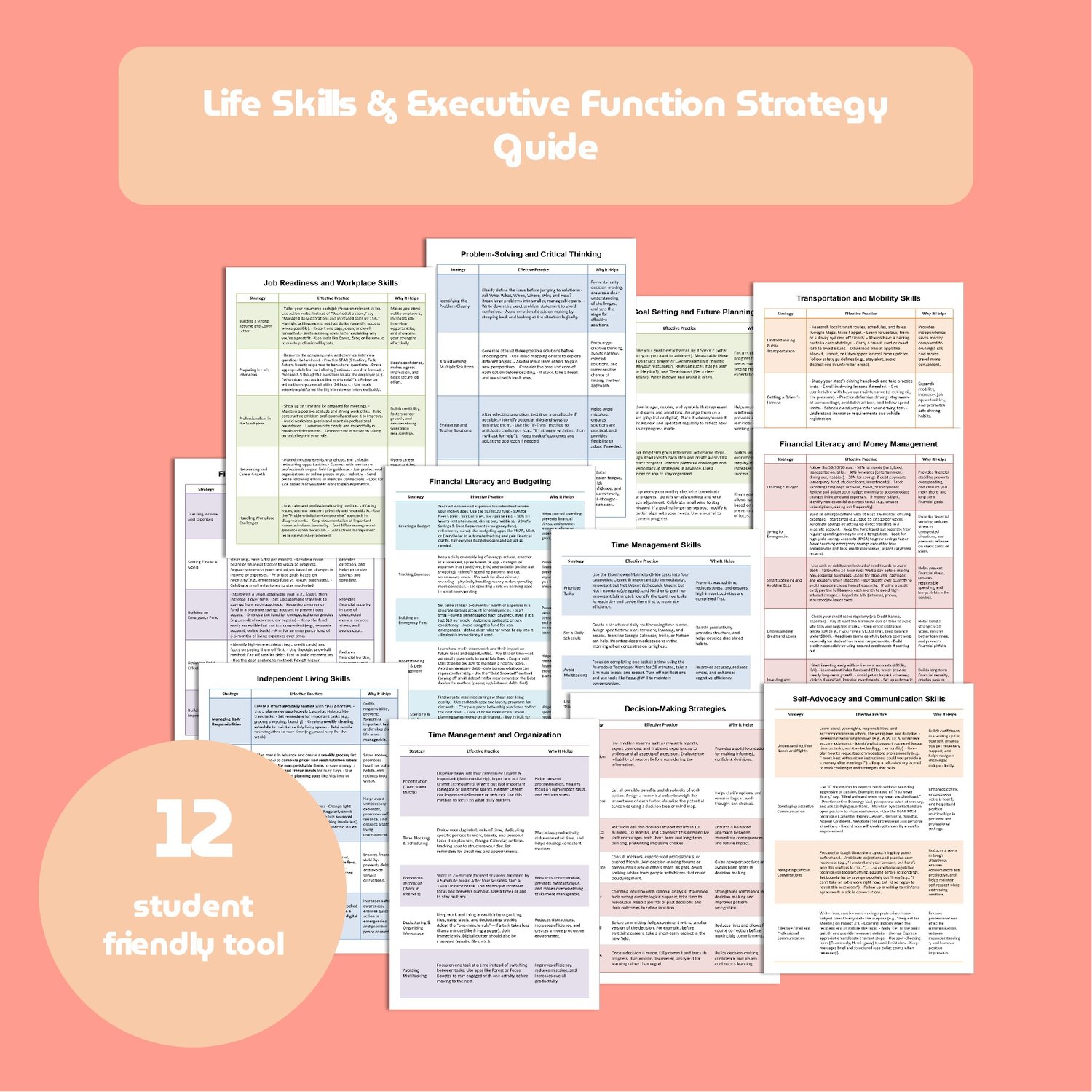
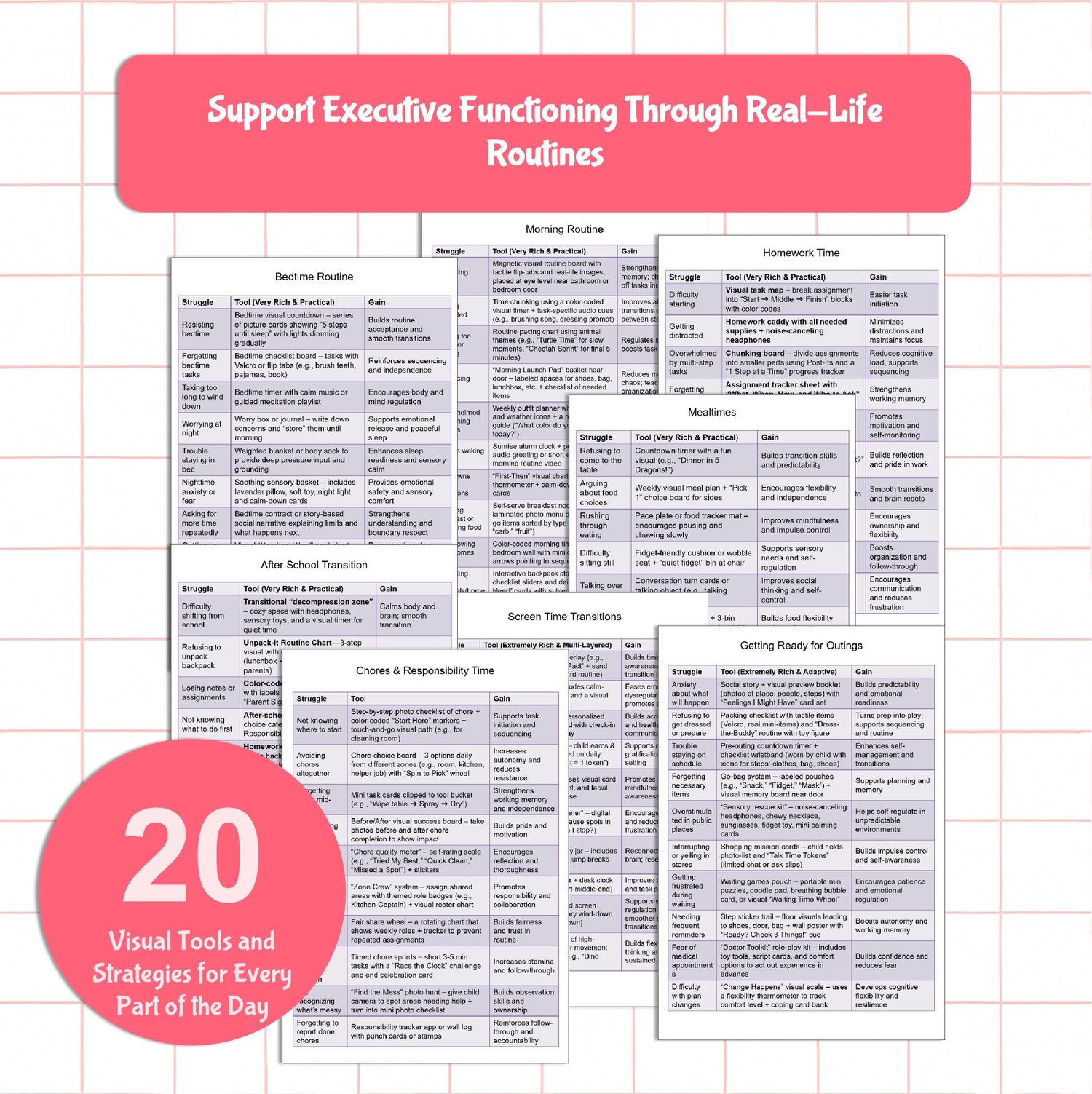
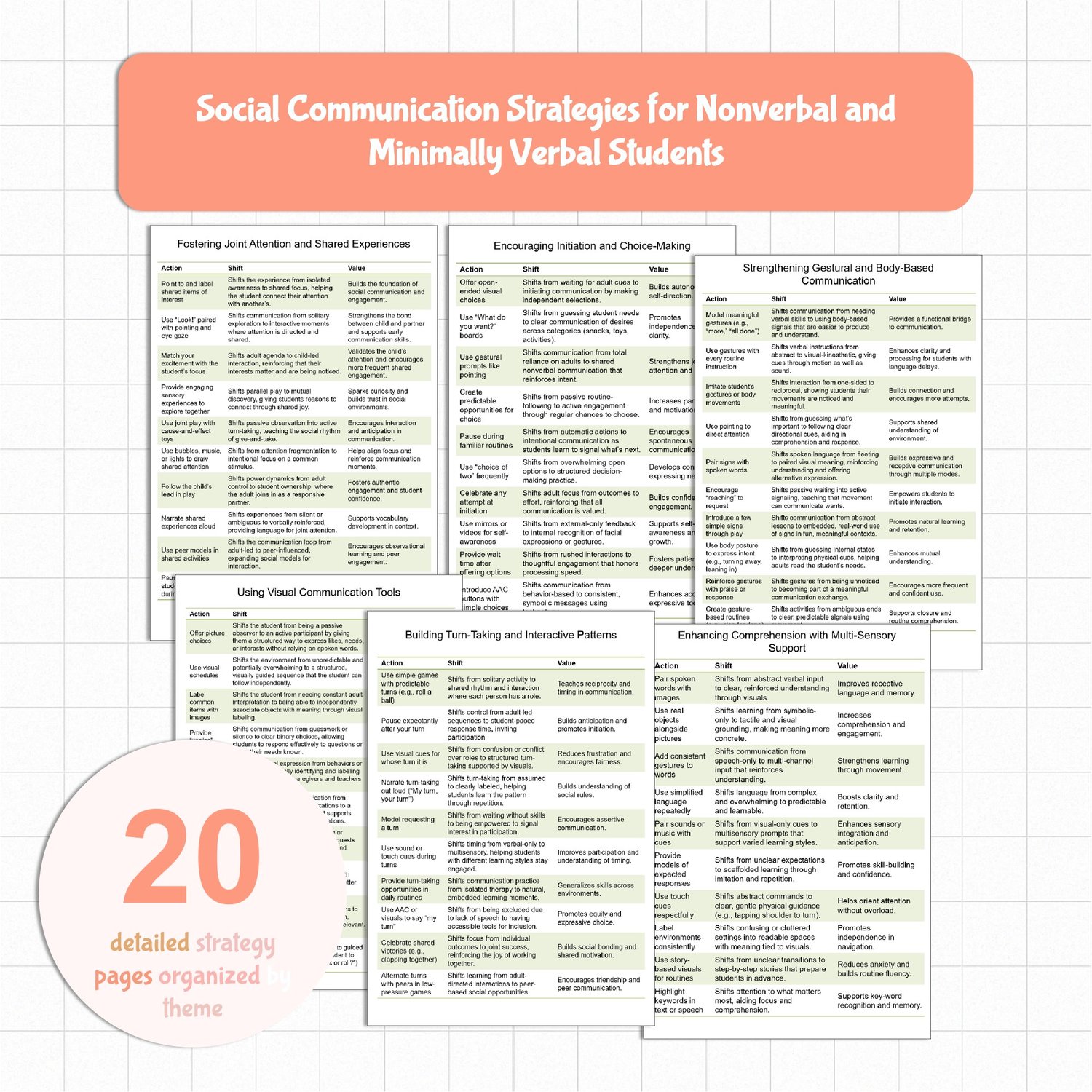
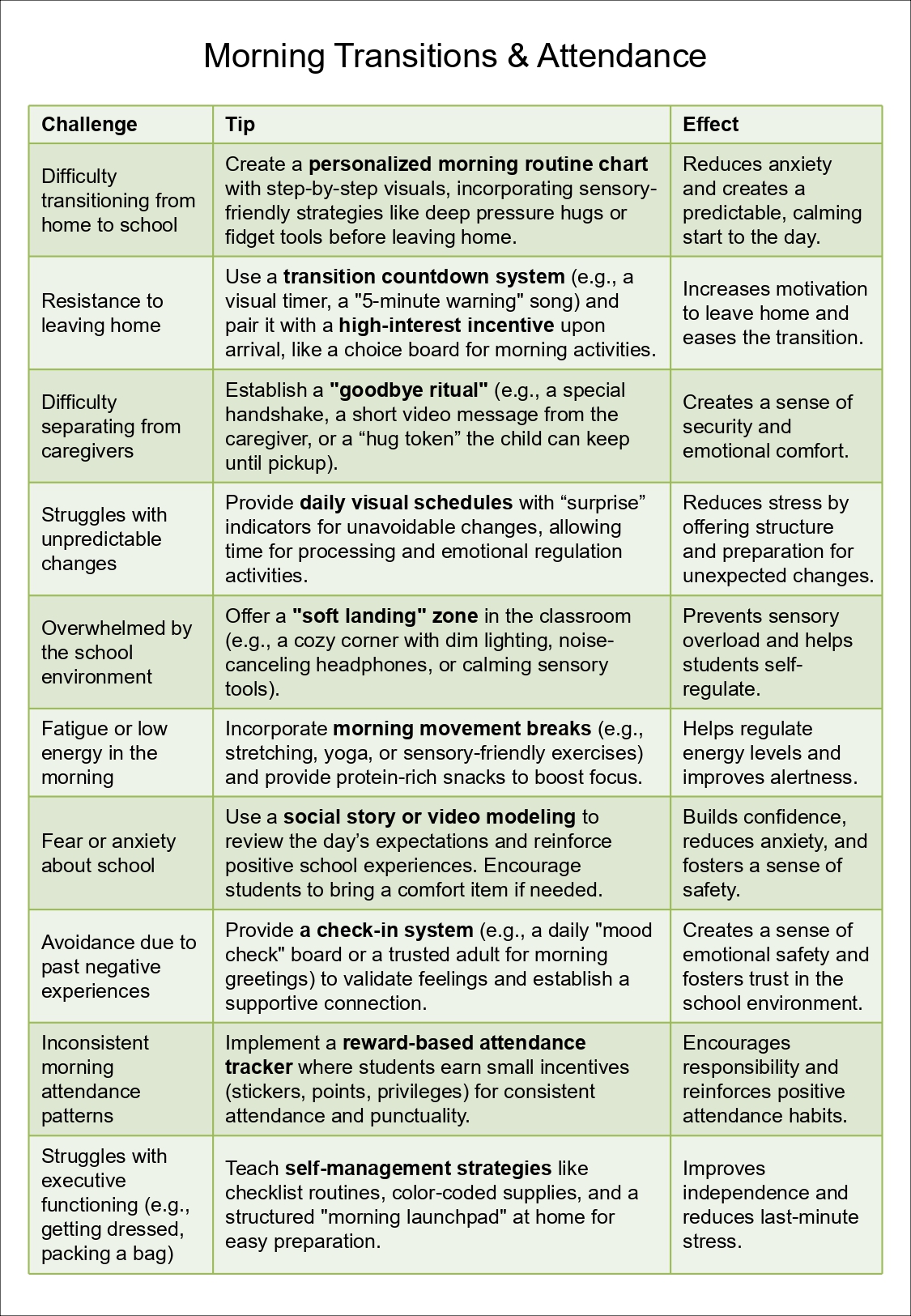
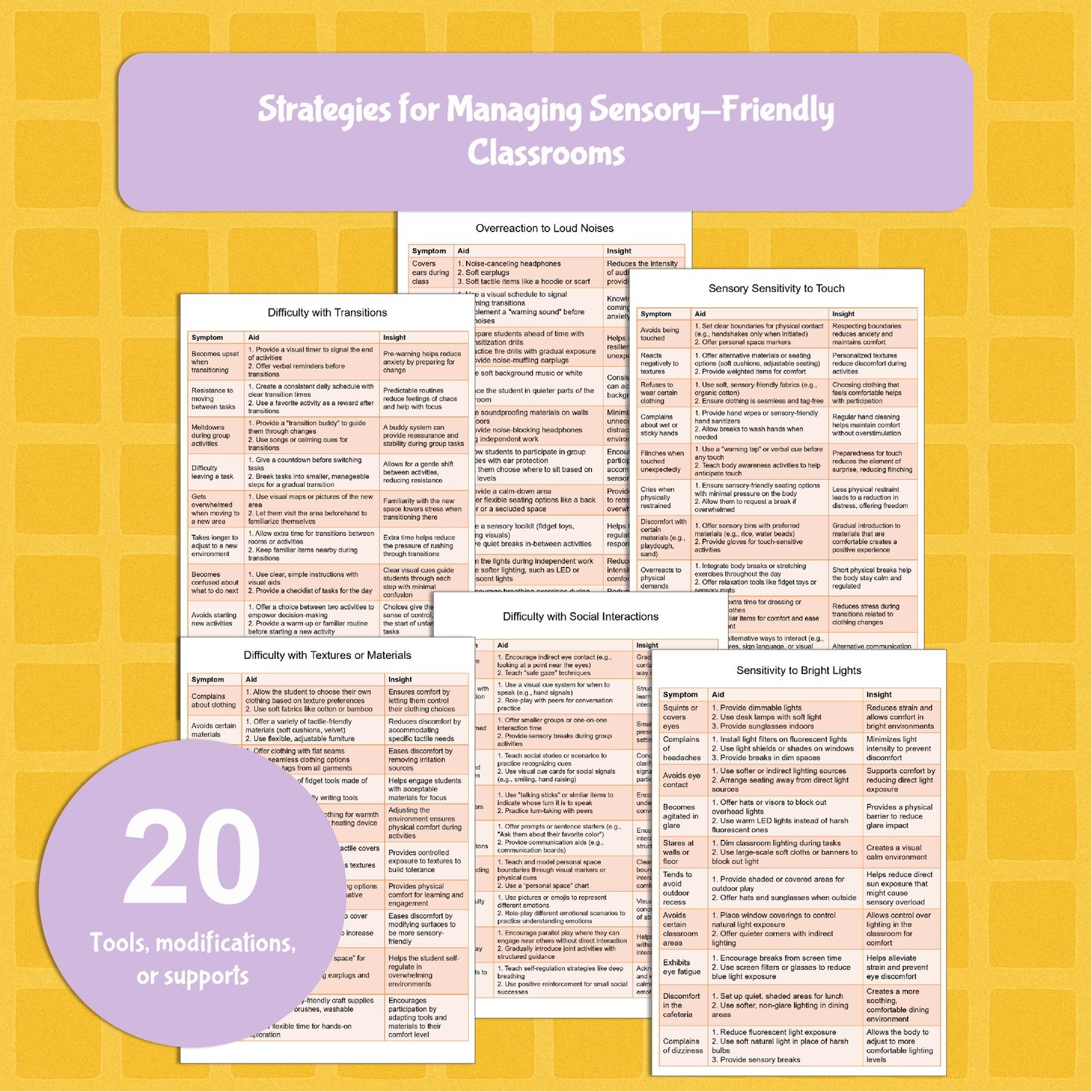
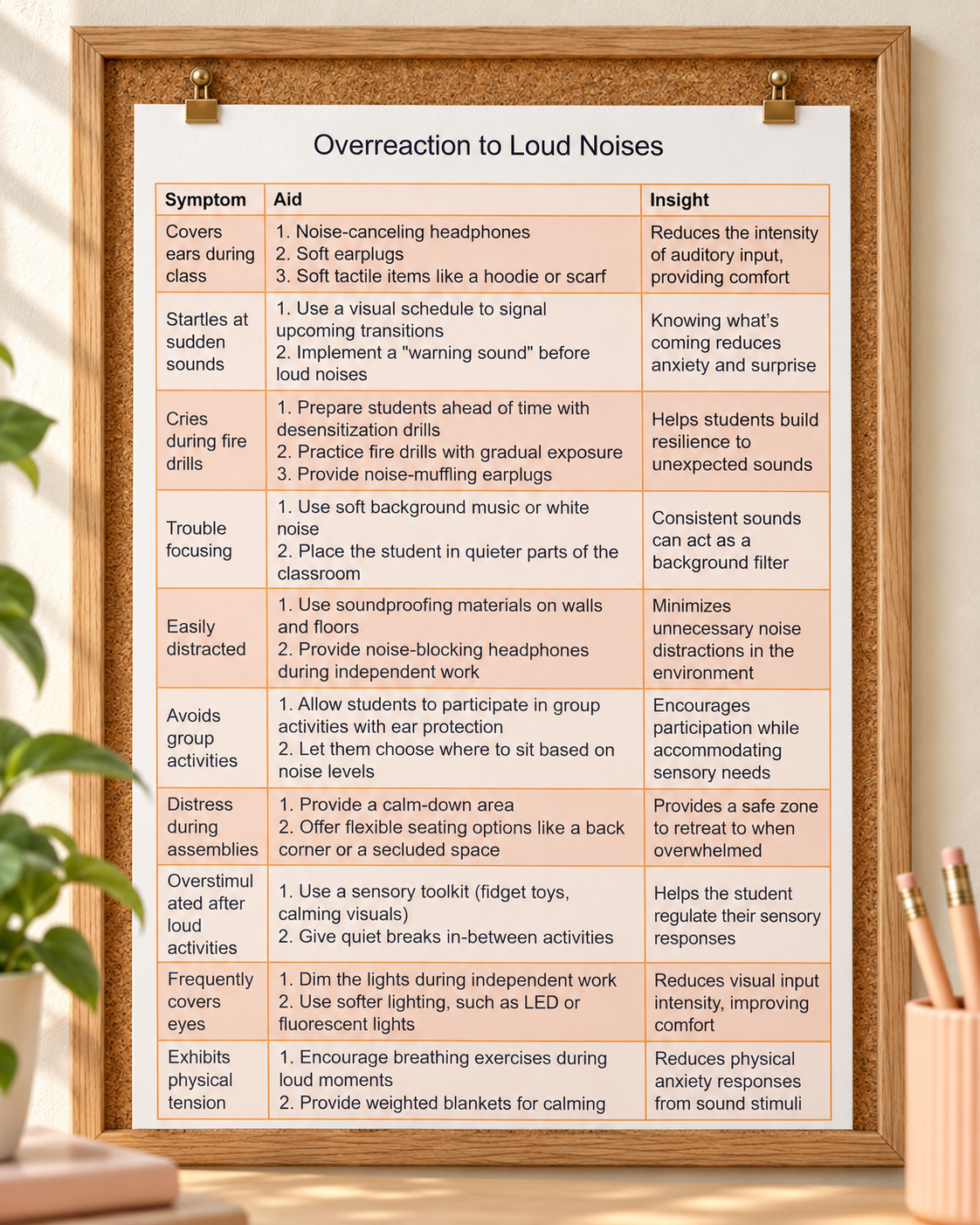
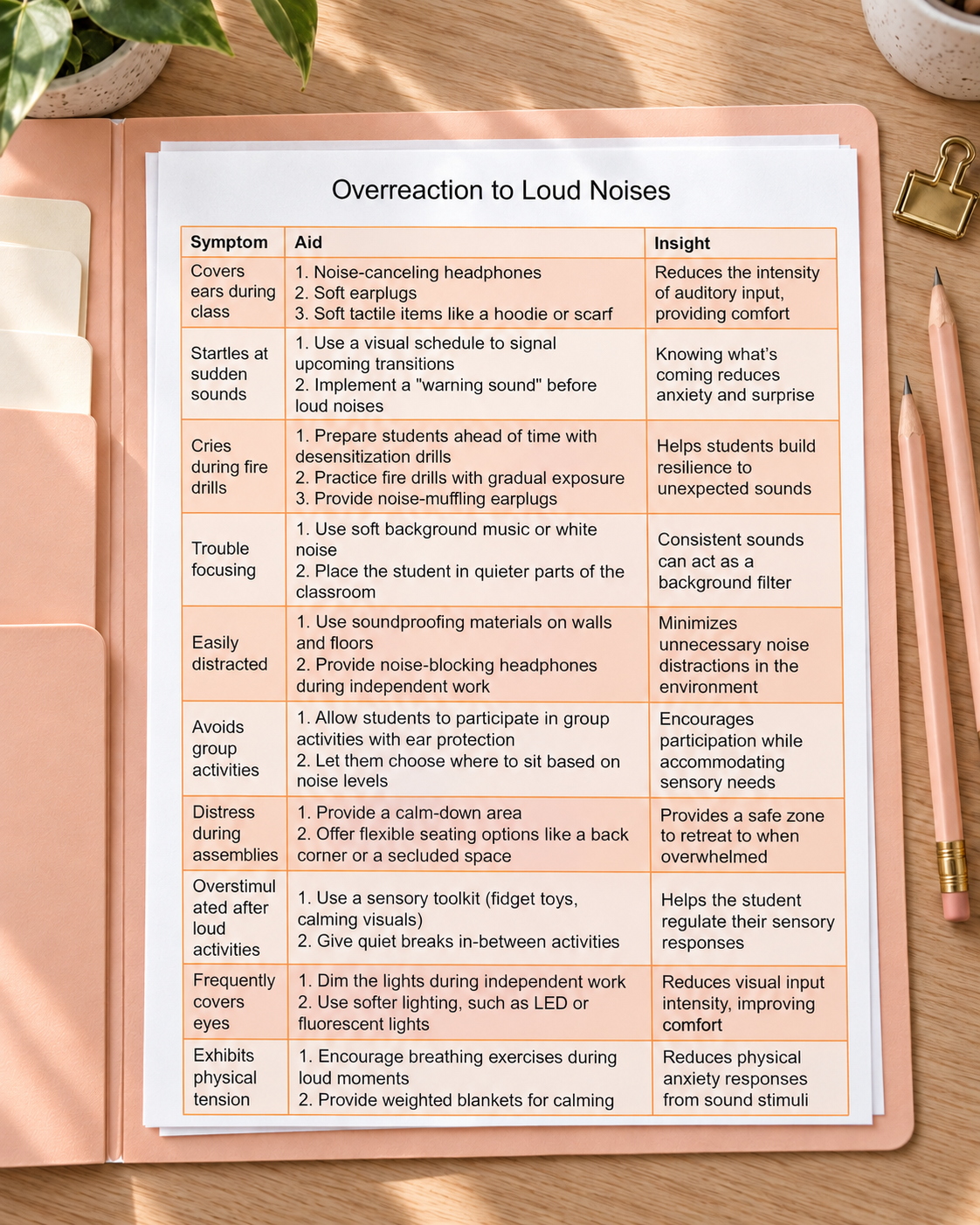
Spotting the early signs of sensory overwhelm and responding quickly can prevent a meltdown. This guide offers 20 tables that name a specific symptom, like covering ears or flinching at touch, and pair it with concrete aids and the reasoning behind them.
What's Inside
- Difficulty with Transitions: visual timers, transition buddies, countdowns
- Overreaction to Loud Noises; Sensitivity to Bright Lights: noise-canceling tools, dimmable lighting, quiet zones
- Sensory Sensitivity to Touch; Difficulty with Textures or Materials: seating options, clothing adjustments, tactile toolkits
- Difficulty with Social Interactions: eye contact alternatives, visual cue systems, structured peer practice
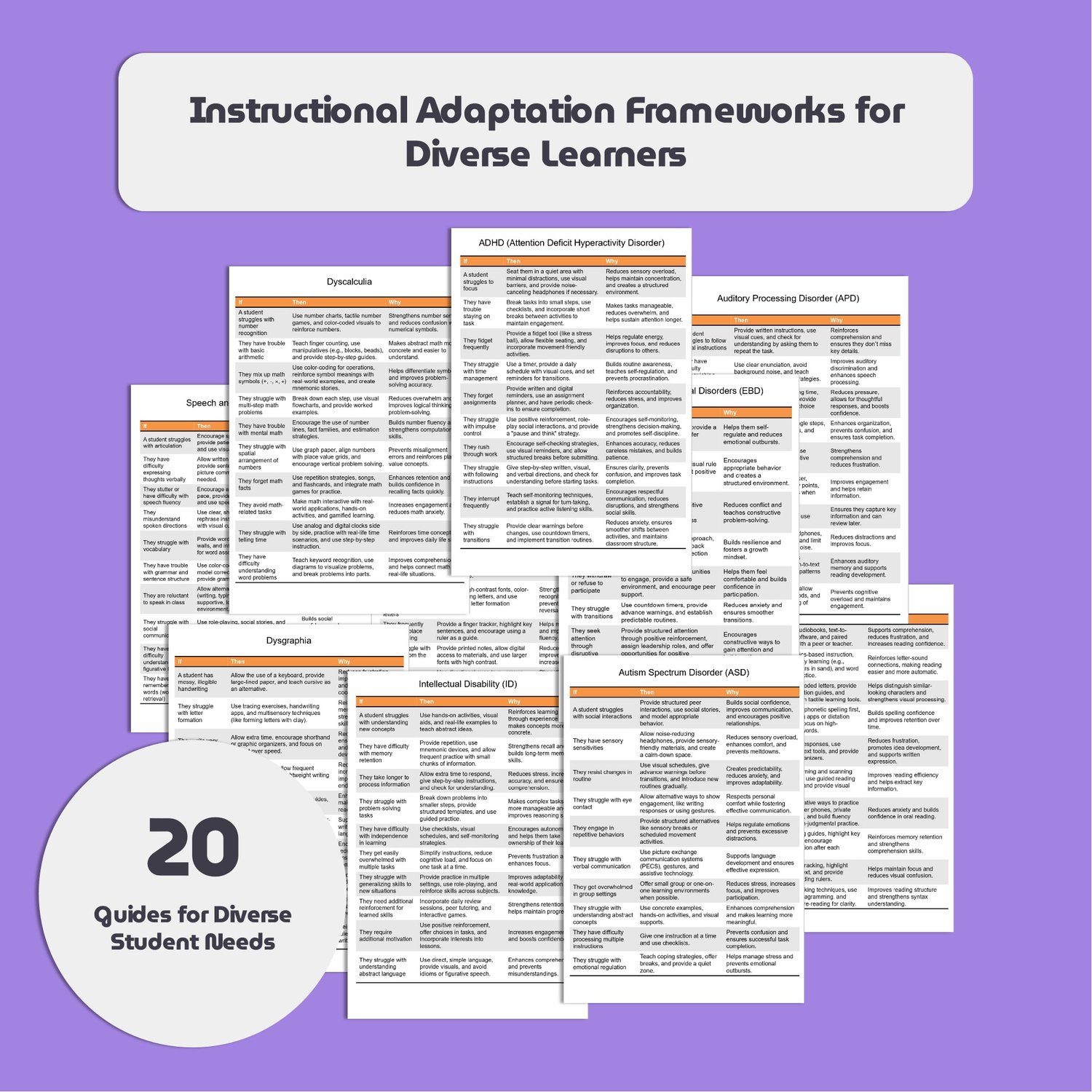
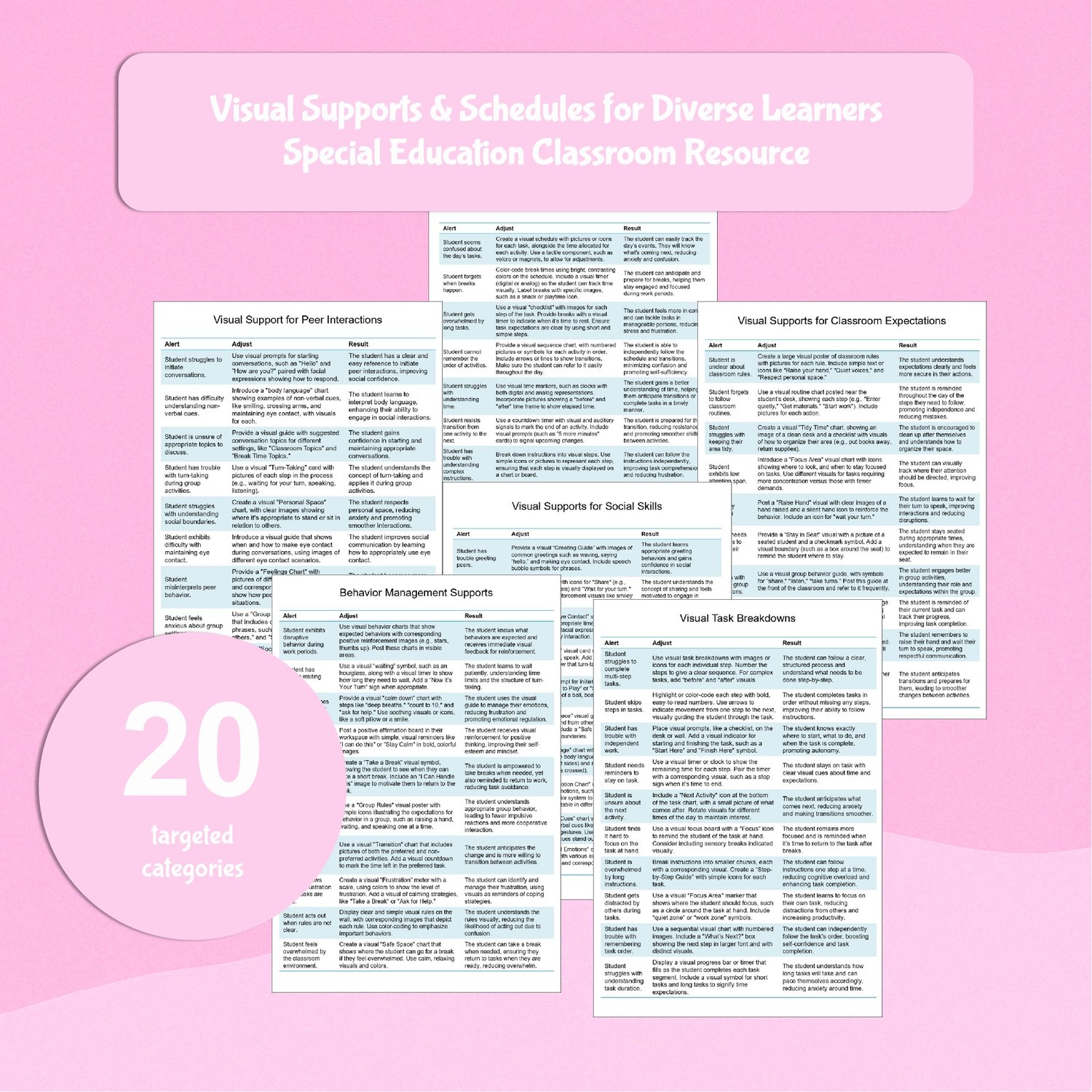
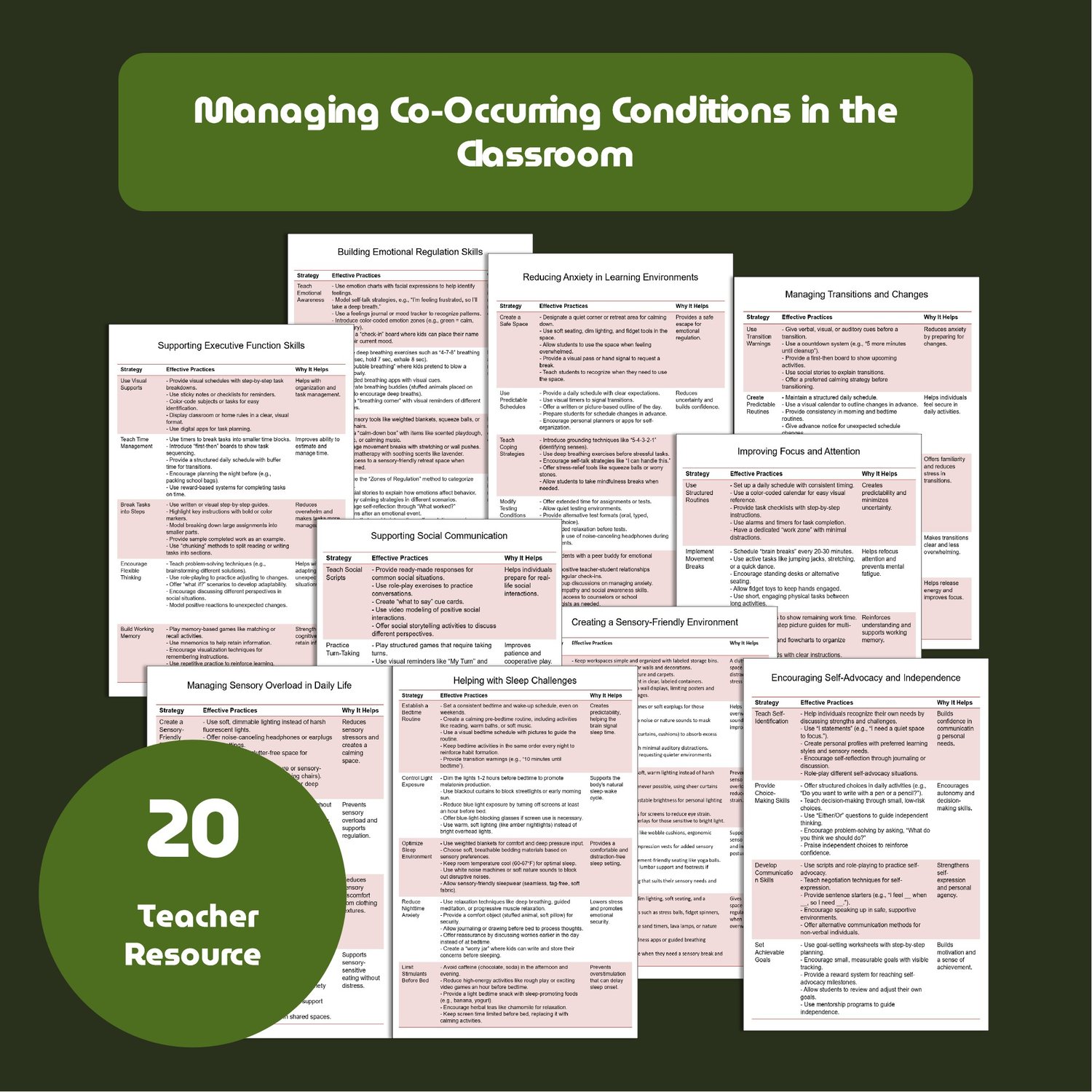
- Total: 20 symptom, aid and insight tables
How It Helps You
- Helps you recognize sensory distress before it escalates
- Gives specific tools and modifications for each symptom
- Useful for whole-class setup and individual plans
Ways to Use It
Use it as a whole-classroom reference, a plan for one student's sensory needs, or a training resource for new staff.
Who It's For
General and special education teachers, occupational therapists and classroom aides.
Format
PDF (print-ready) and PPTX (editable). 20 tables. Instant download.
Need more than one?
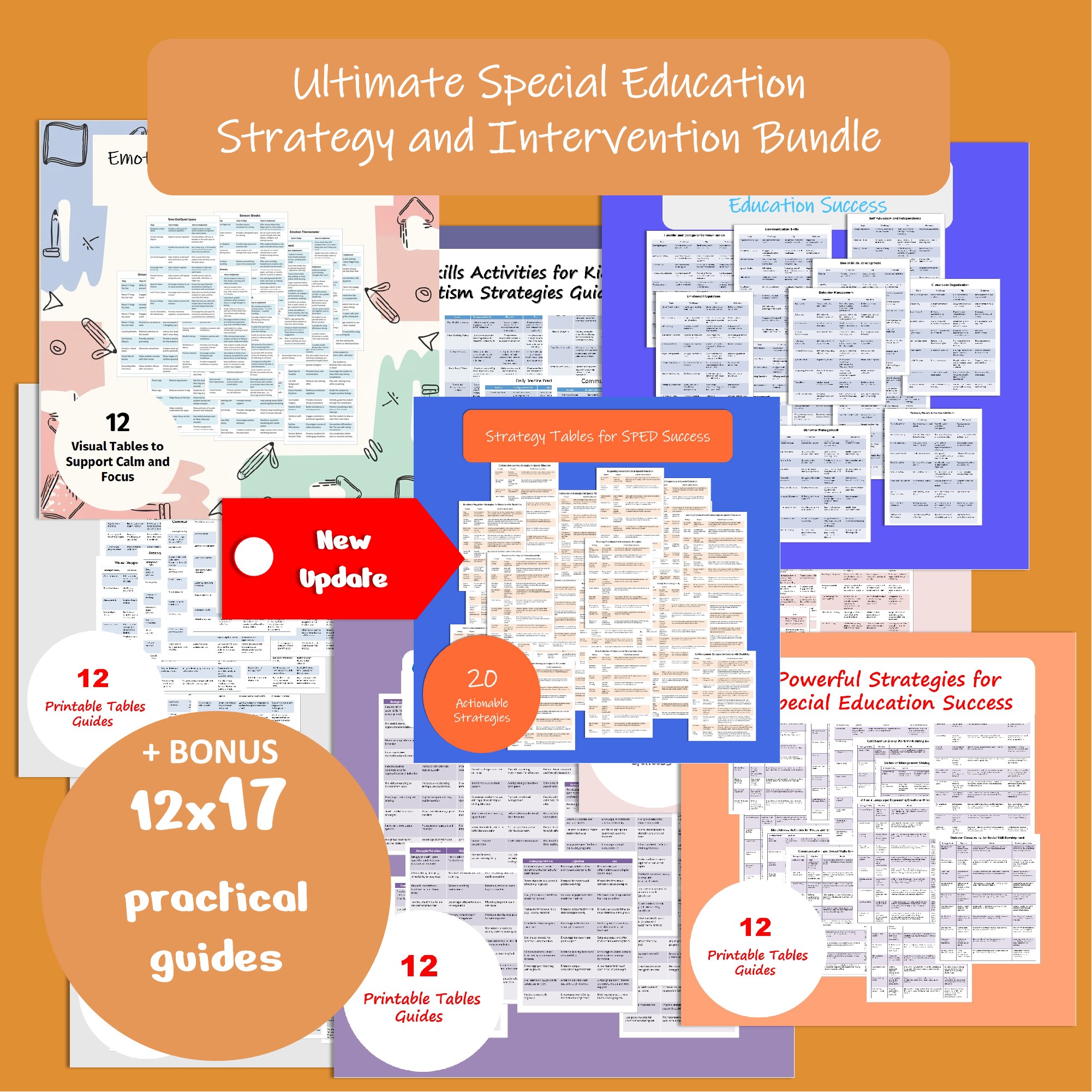
If quick-reference strategy tables fit how you work, the mega bundle gives you many more topics in the same format. The Special Education Mega Bundle brings together 18 related resources in one download, and you save 31% compared to buying each item separately.