
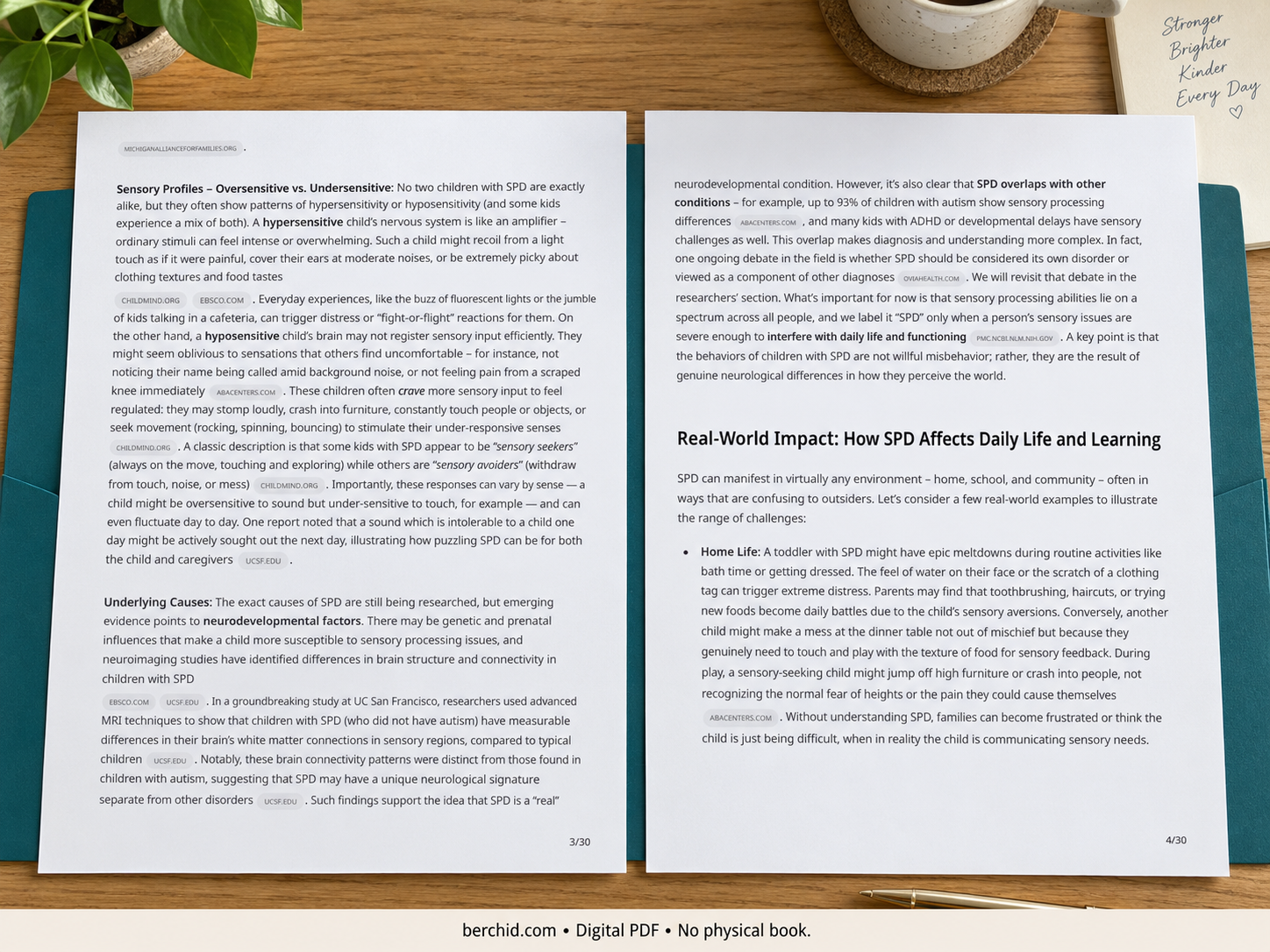
Sensory Processing Disorder (SPD) Guide: Strategies for Parents & Teachers
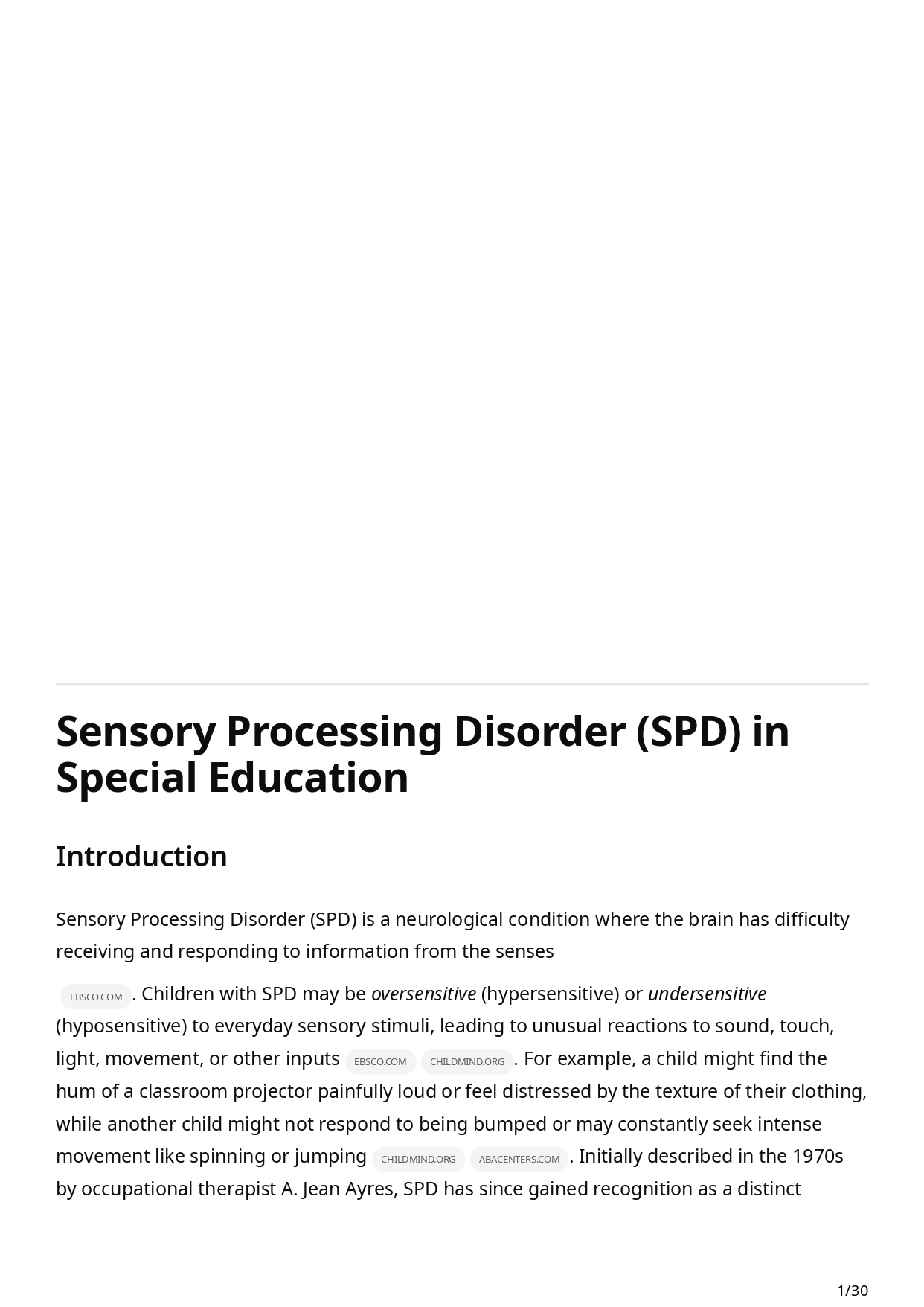
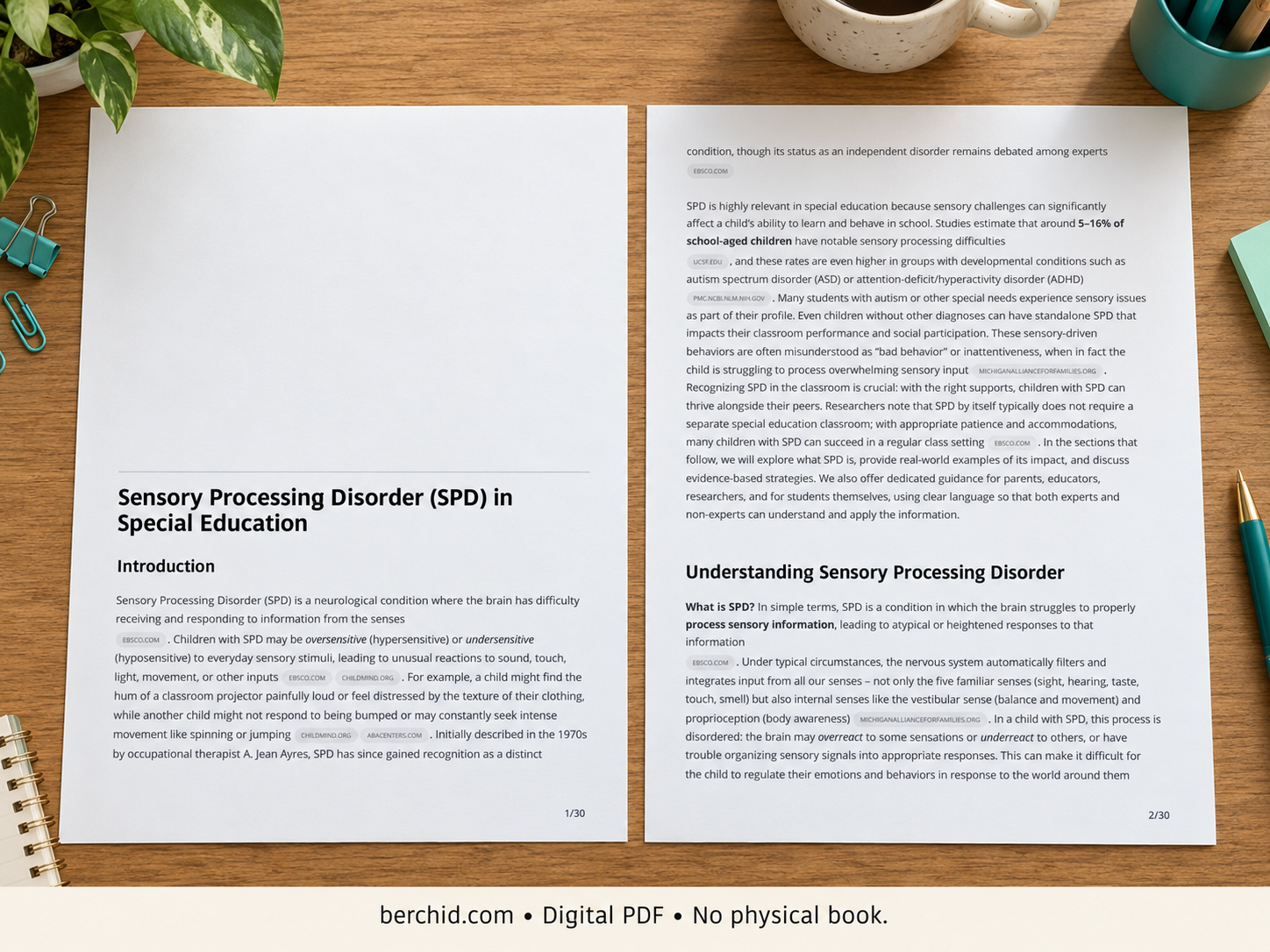
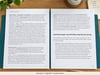
A child who covers their ears at every assembly or touches everything nearby is taking in the world differently. This 30-page guide explains sensory processing differences and gives everyone around the child a concrete way to help.
What's Inside
- Foundations: what SPD is, hypersensitive and hyposensitive profiles and effects on home, learning and social life
- Parent section: sensory-friendly routines, a calming space at home and sensory input in chores and play
- Educator section: classroom adjustments, sensory breaks and tools, accommodations for art, music, PE, lunch and recess, and formalizing supports in an IEP or 504 plan
- Research section: neurological evidence, diagnostic debates and intervention effectiveness, including neuroimaging distinguishing SPD from autism
- Student section: deep breathing, using a sensory toolkit and communicating needs
How It Helps You
- Keeps home, classroom and child on a consistent approach
- Practical accommodation examples like movement breaks and preferential seating
- Explains the current debate on SPD as a diagnosis
Ways to Use It
Build IEP accommodations from the educator section, hand the parent section to a family, share the student section to support self-advocacy, or use sections in staff training.
Who It's For
Educators, therapists, school support staff and parents.
Format
PDF (30 pages). Instant download.
Need more than one?
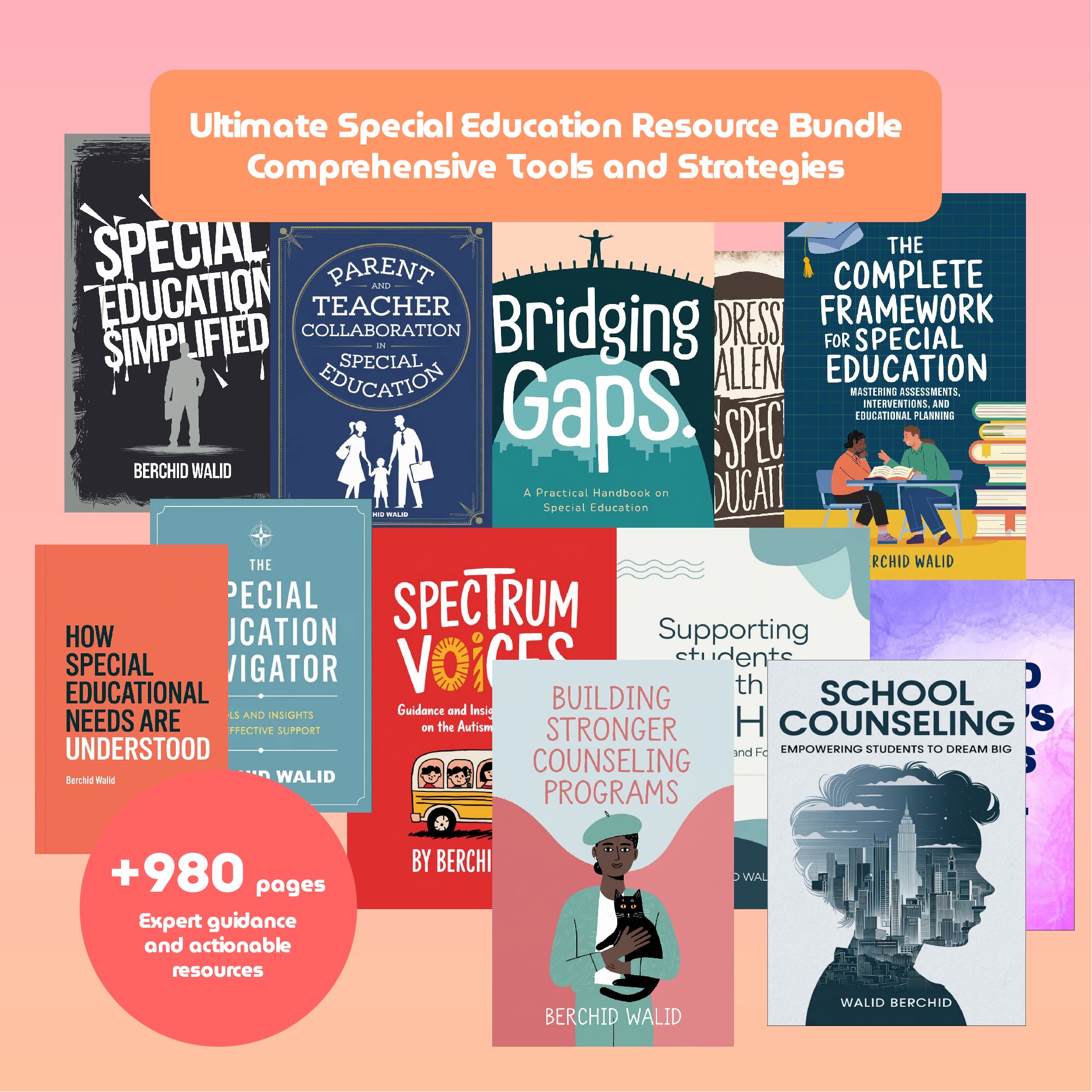
If you find yourself reaching for in-depth guides like this one, the guides bundle collects the full library of longer special education references. The Special Education Guides Bundle includes this resource and more in one download, and you save 80% compared to buying each item separately.