

Self-Advocacy Skills Lessons
Teaching students to speak up for themselves is one of the most valuable skills we can build, and it takes practice. These checklists break self-advocacy into clear, teachable steps so you can see how a student is doing at expressing preferences, asking for help, and speaking up in class.
What's Inside
- Expressing Preferences: how a student communicates choices
- Understanding My Learning Needs: building self-awareness
- Asking for Help: recognizing need, asking clearly, and following up
- Requesting Accommodations: building independence in advocating for supports
- Speaking Up in Class: raising a hand, sharing ideas, and disagreeing respectfully
- Record fields: student name, date, and observer throughout
How It Helps You
- Breaks a broad skill into specific, observable steps
- Provides data for self-advocacy and transition goals
- Helps students take a more active role in their own supports
Ways to Use It
Use the checklists during self-advocacy lessons, before student-led IEP meetings, or when tracking progress on transition goals.
Who It's For
Special education teachers, transition specialists, and school counselors.
Format
PDF (print-ready) and PPTX (editable). Instant download.
Need more than one?
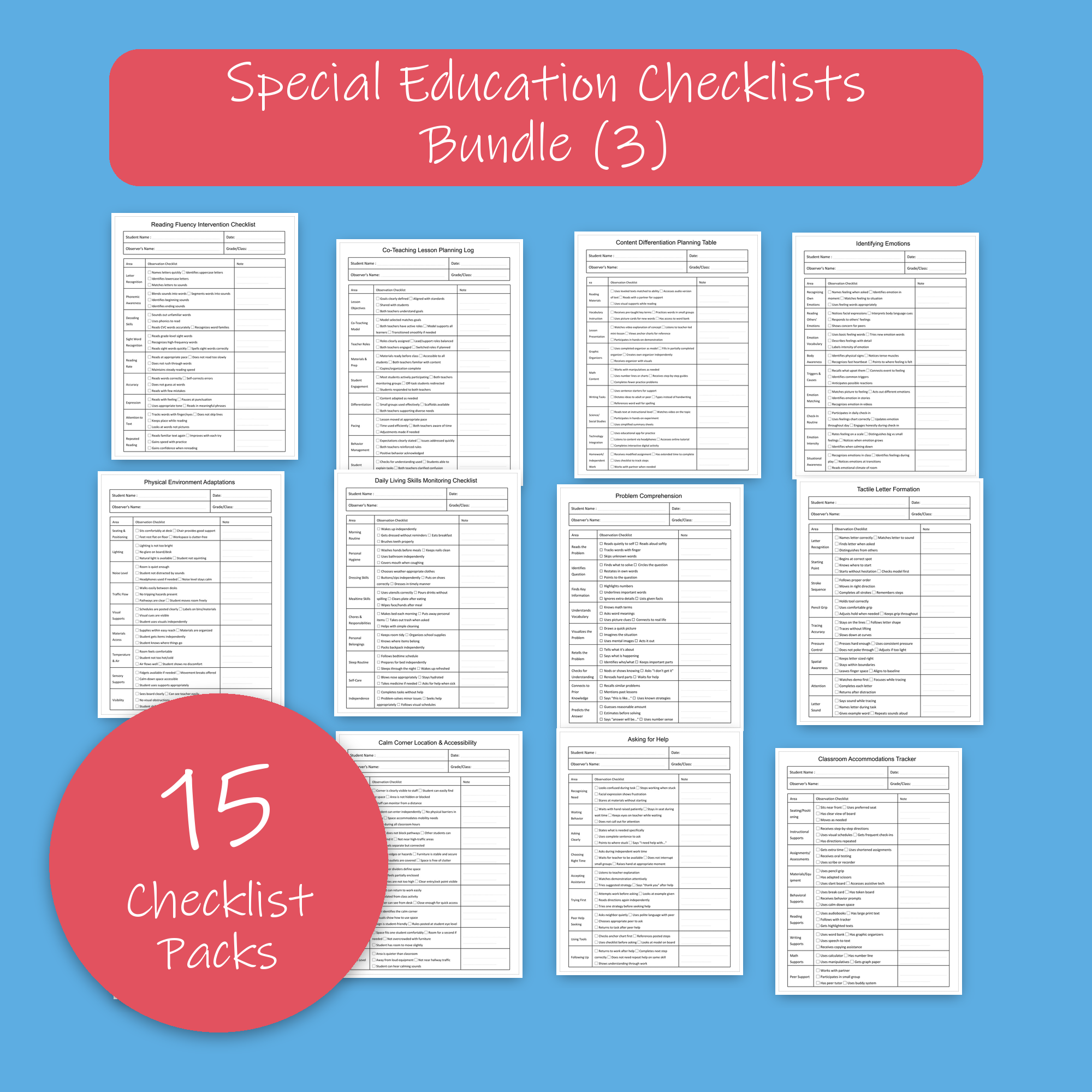
If structured observation checklists like these help you document progress, you can cover more skill areas the same way. The Special Education Checklists Bundle (3) includes this resource and more in one download, and you save 52% compared to buying each item separately.