

Non-Speaking Students in General Education
Including a non-speaking student takes more than having an AAC device in the room; it takes a class culture that treats their communication as real and worth waiting for. This resource covers identifying a student's communication method, learning from peer interactions, and correcting small misunderstandings.
What's Inside
- 12 pages of Challenge / Tip / Result tables: communication methods, peer interactions, and reacting to a student's frustration
- Communication, not behavior: eye gaze, vocalizations, and body movements explained
- Accepting responsibility for oversights: like a missed AAC setup or forgotten training
- Peer understanding: so non-speaking students are included, not just present
How It Helps You
- Helps you recognize and respond to all forms of communication
- Builds a more inclusive classroom culture
- Supports accountability when AAC setup slips
Ways to Use It
Use it in planning with your SLP, for paraprofessional training, or to guide peer awareness lessons.
Who It's For
General education teachers, SLPs, paraprofessionals, and special education teachers supporting AAC users.
Format
PDF (print-ready) and PPTX (editable). 12 pages. Instant download.
Need more than one?
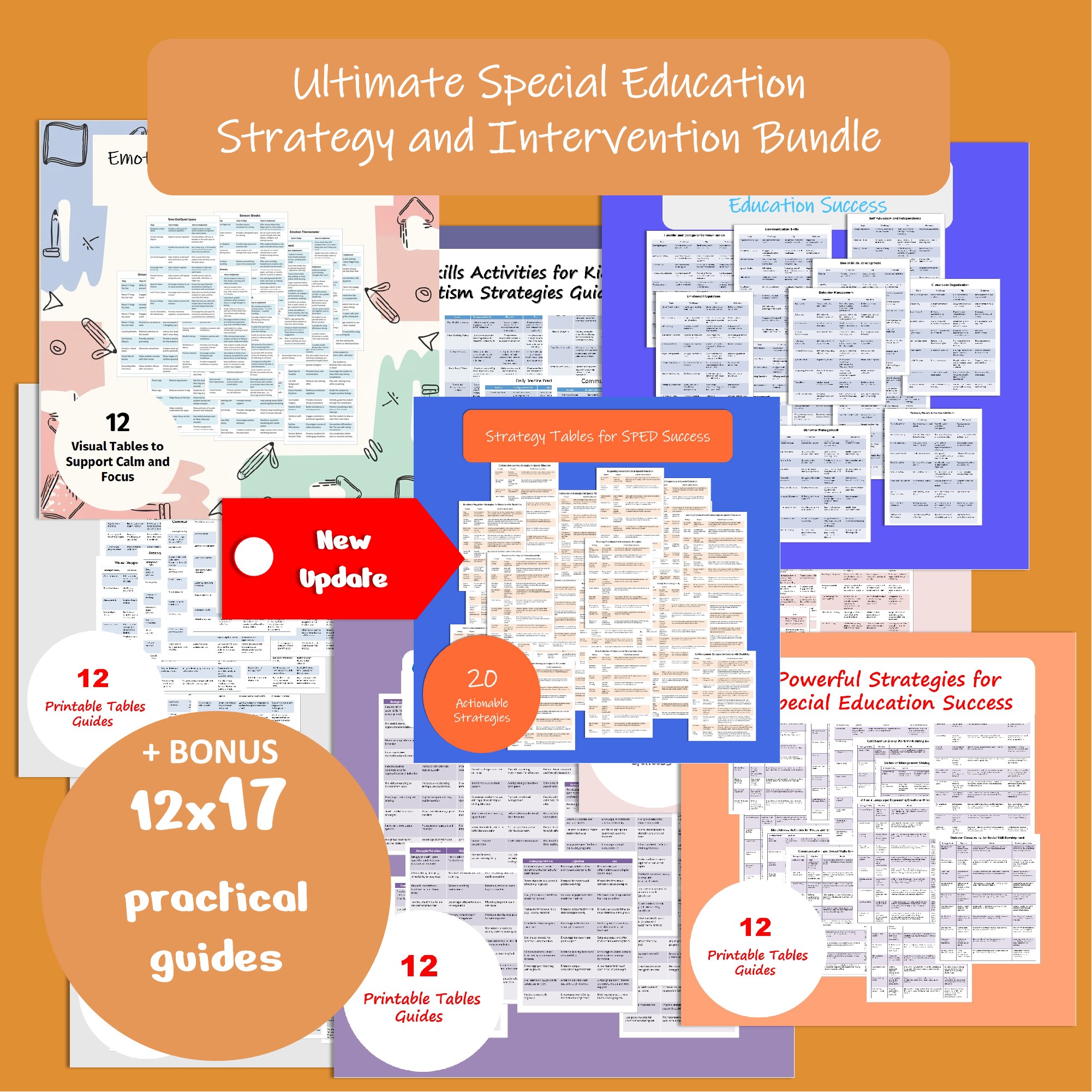
If practical, table-based strategy guides like this fit the way you work, the Special Education Mega Bundle brings together 18 related resources in one download, and you save 31% compared to buying each item separately.