
AAC Implementation Classroom Guide: Augmentative Communication Data Sheets
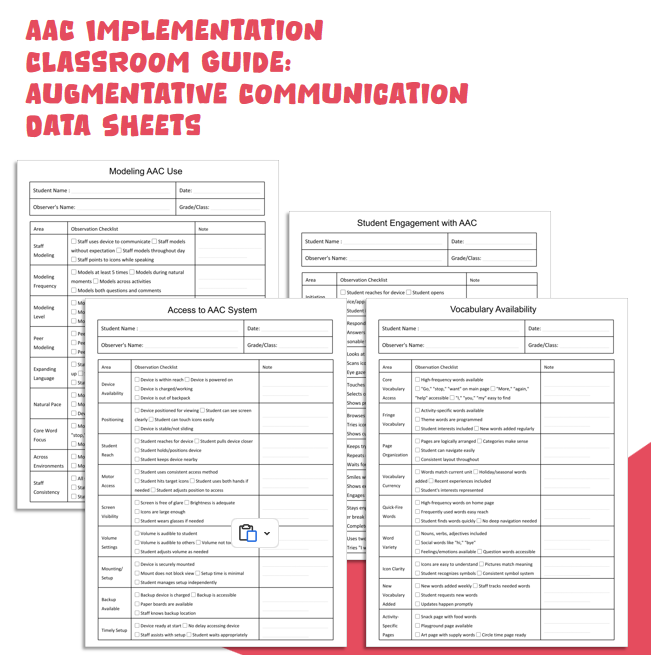
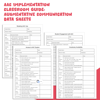
An AAC system only helps a student communicate when it is available, modeled, and used consistently across the day. This 12-page printable collection of blank, fillable observation checklists helps teachers, SLPs, and paraprofessionals track how well an AAC (Augmentative and Alternative Communication) system is being implemented in real classroom moments.
What's Inside
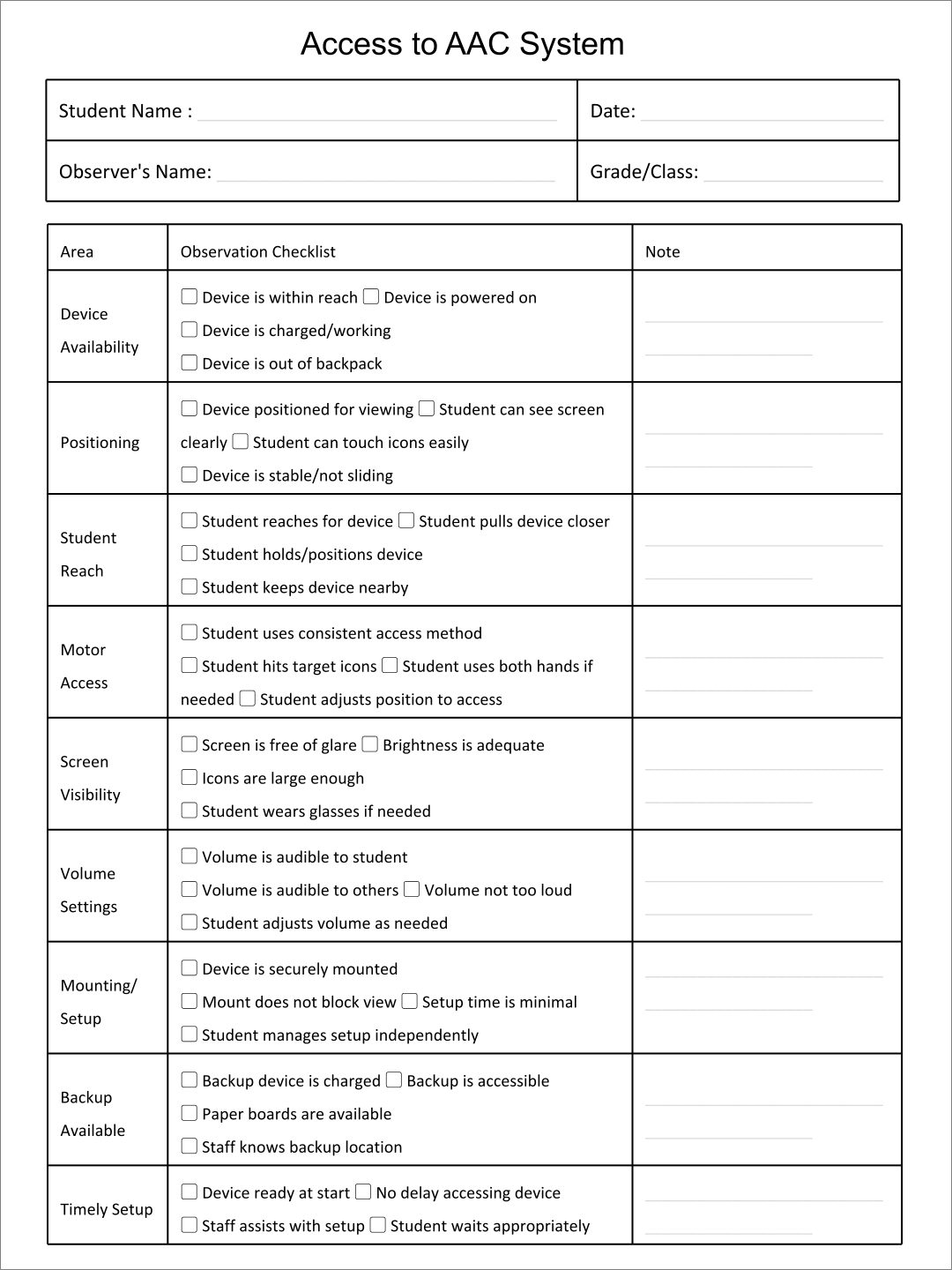
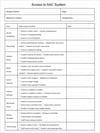
- Access to AAC System: device availability, positioning, and student reach
- Peer Interaction Using AAC: peer greetings, play, turn-taking, and patience
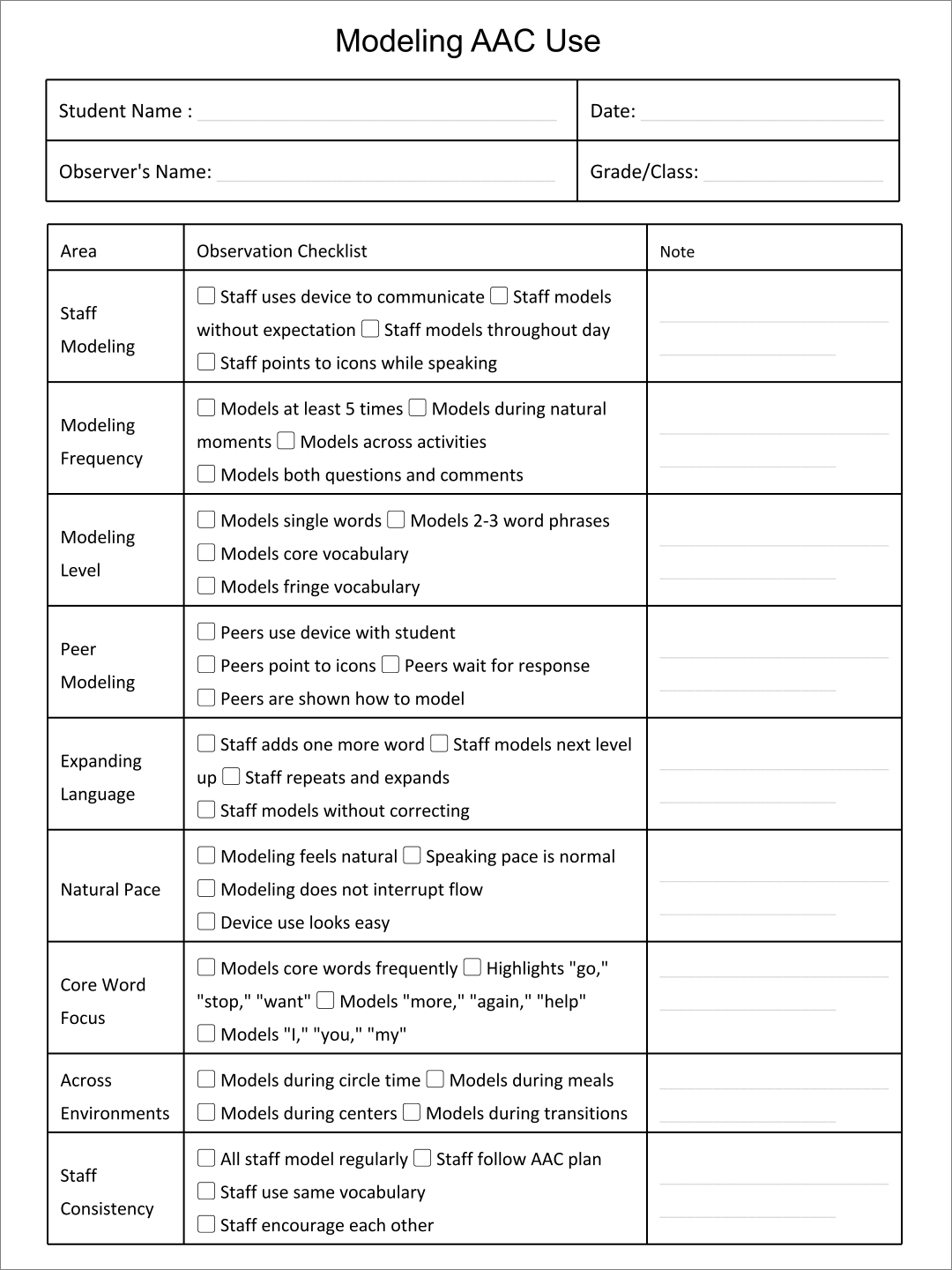
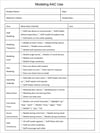
- Modeling AAC Use: checklists for tracking staff and peer modeling behaviors
- Vocabulary Availability and Vocabulary Audit: for reviewing device content
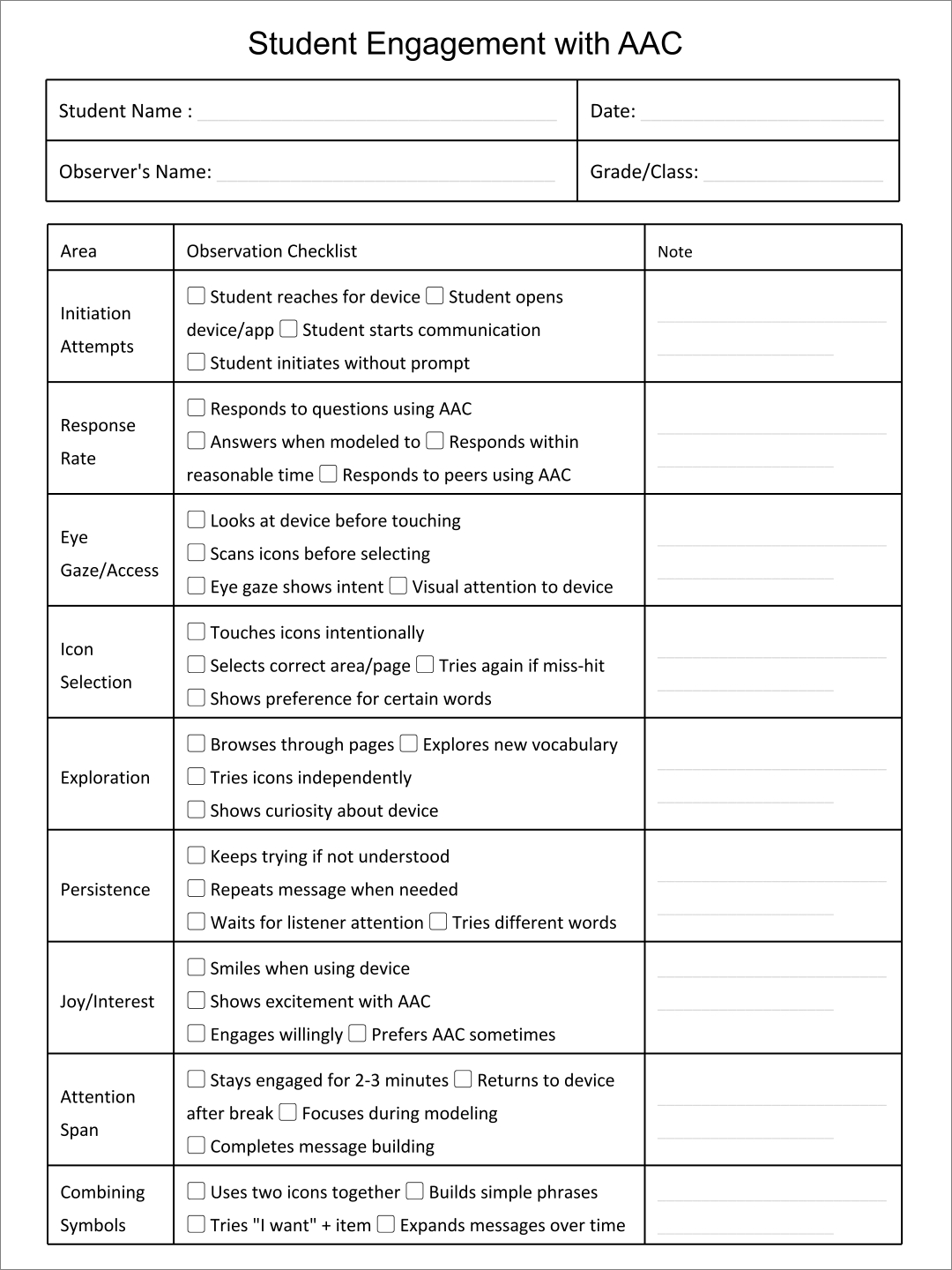
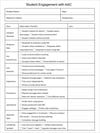
- Student Engagement with AAC: monitoring participation and initiation
- Equipment checks: motor access, screen visibility, volume, mounting, and backup device
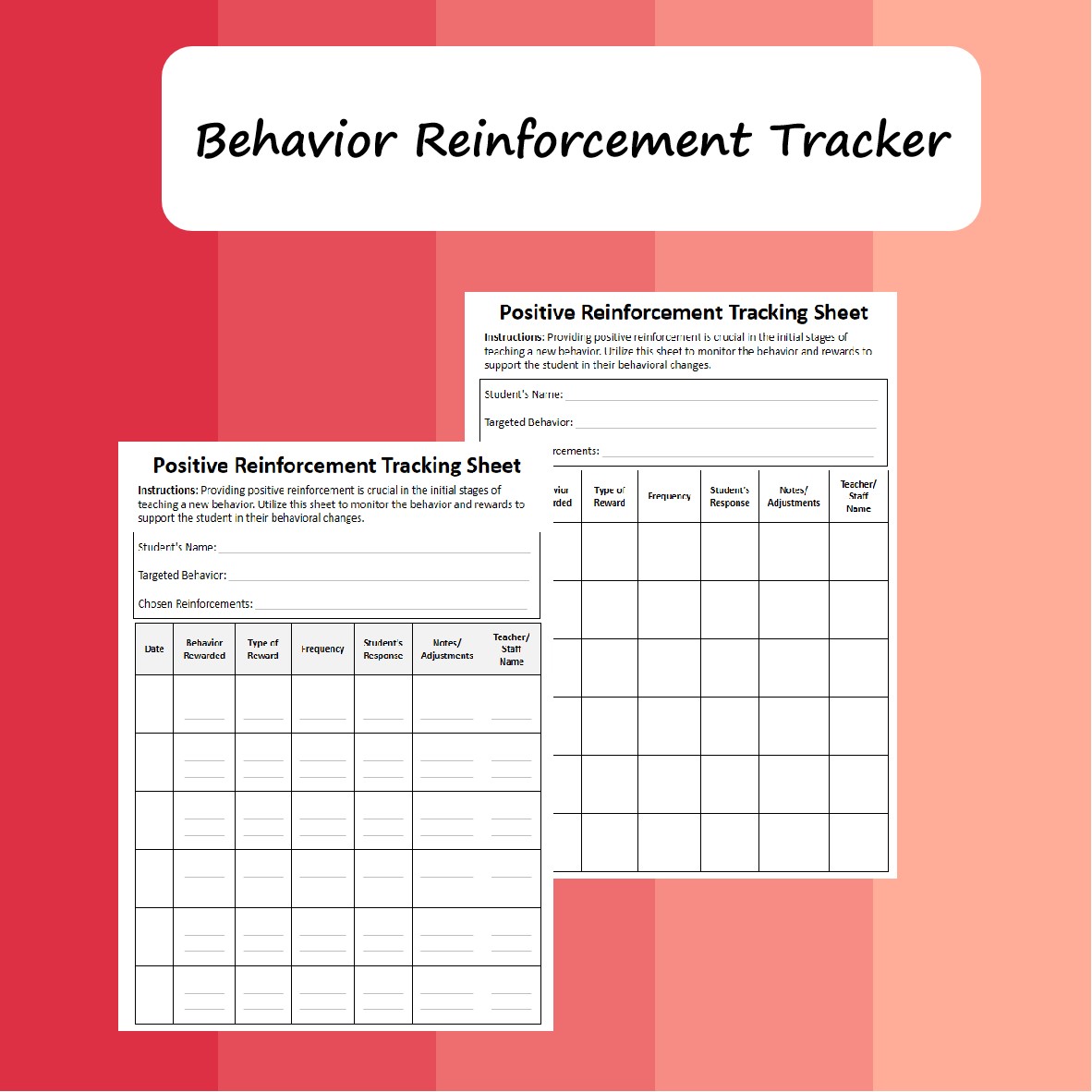
- Page layout: each page includes student name, date, observer, and grade/class fields, followed by an Area / Observation Checklist / Note table for checking off specific observable behaviors as they happen
How It Helps You
- Turns AAC implementation into observable, checkable data instead of impressions
- Spots gaps in modeling, access, or vocabulary before they slow progress
- Gives the whole team a shared format for consistent observation
Ways to Use It
Complete a checklist during instruction, therapy sessions, or peer play, then bring the completed pages to team check-ins or IEP meetings to plan next steps.
Who It's For
Speech-language pathologists, special education teachers, and paraprofessionals implementing and monitoring AAC systems for nonverbal or minimally verbal students.
Format
PDF (print-ready) and PPTX (editable). 12 pages. Instant download.
Need more than one?
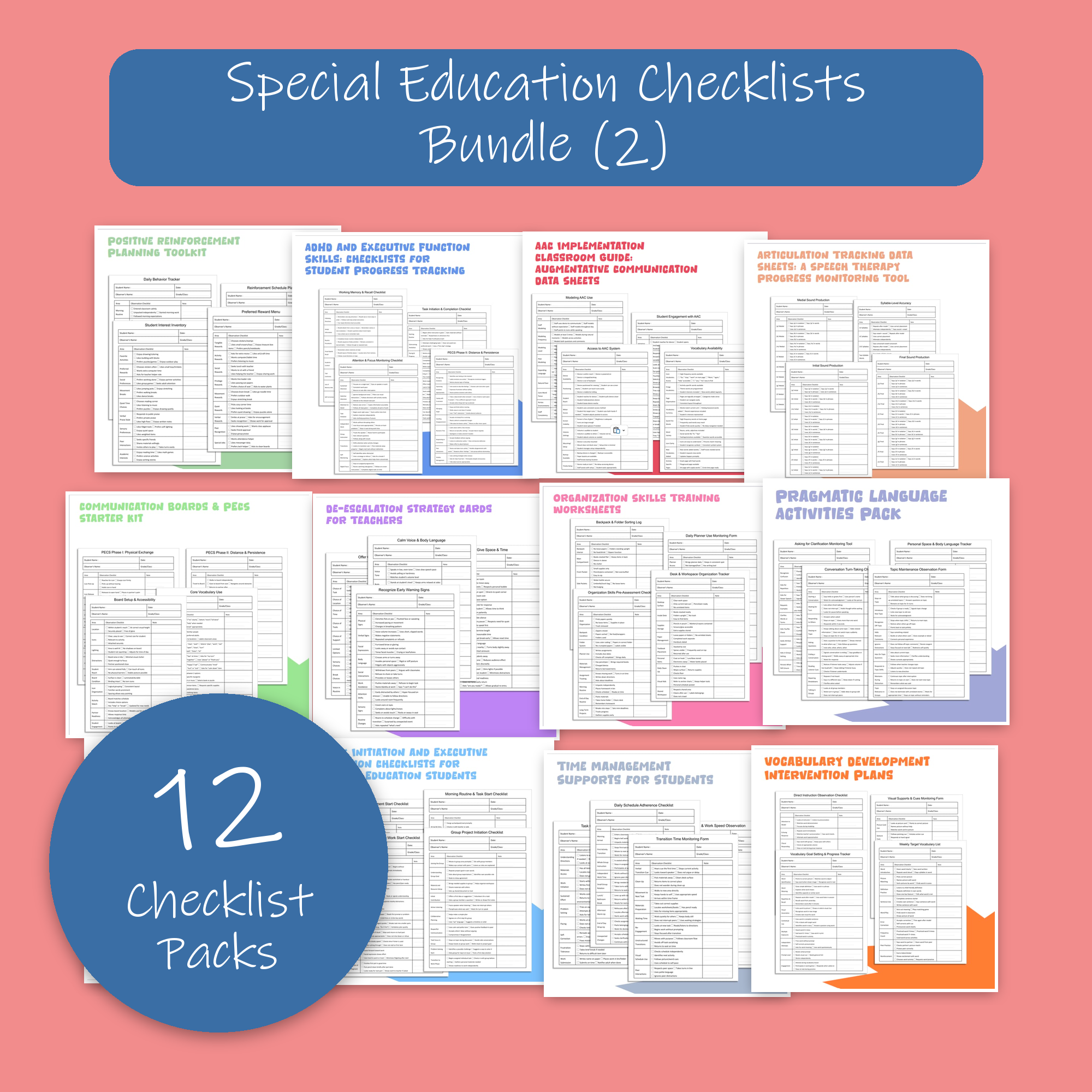
If you rely on observation data across many areas of need, the Special Education Checklists Bundle (2) includes this resource and more in one download, and you save 60% compared to buying each item separately.