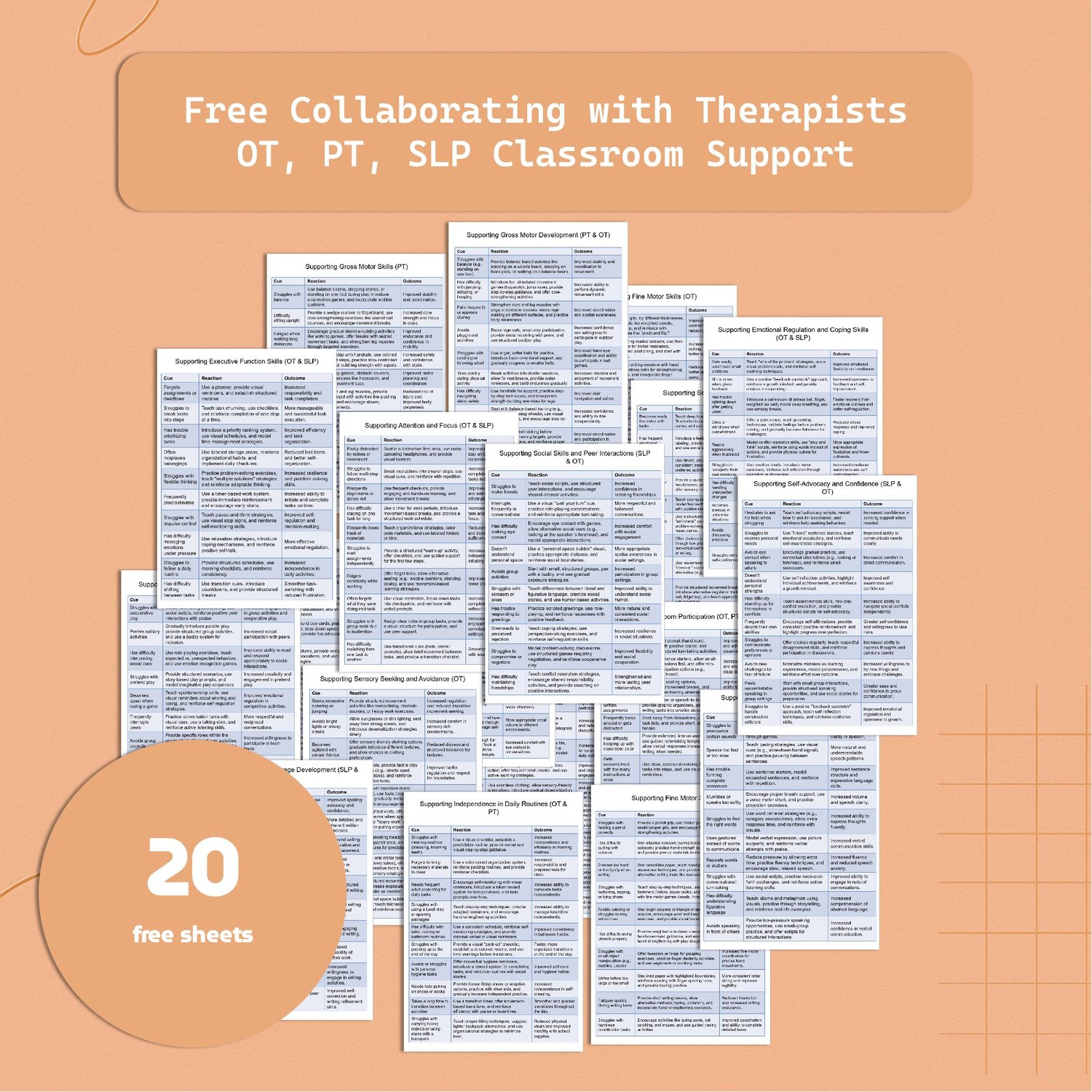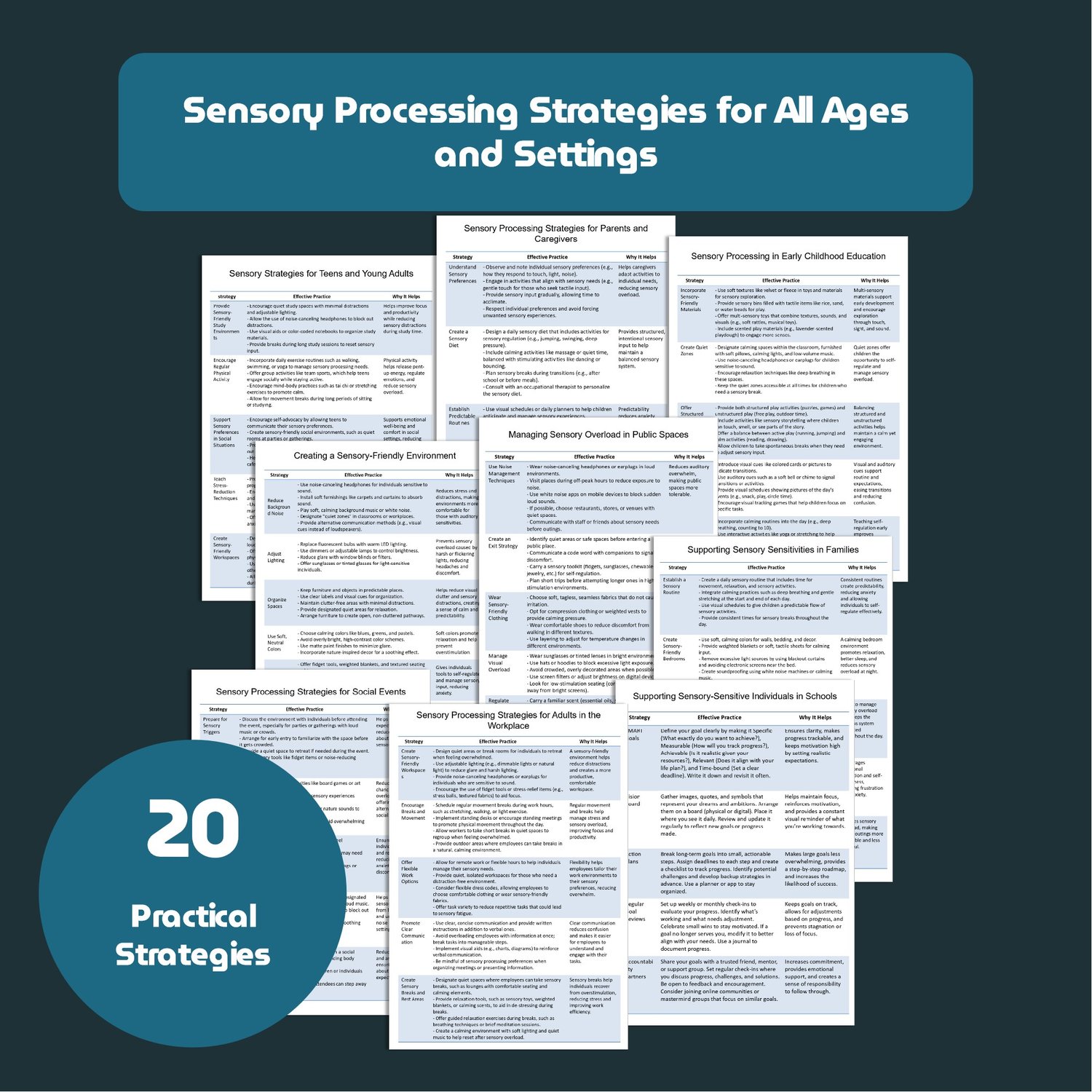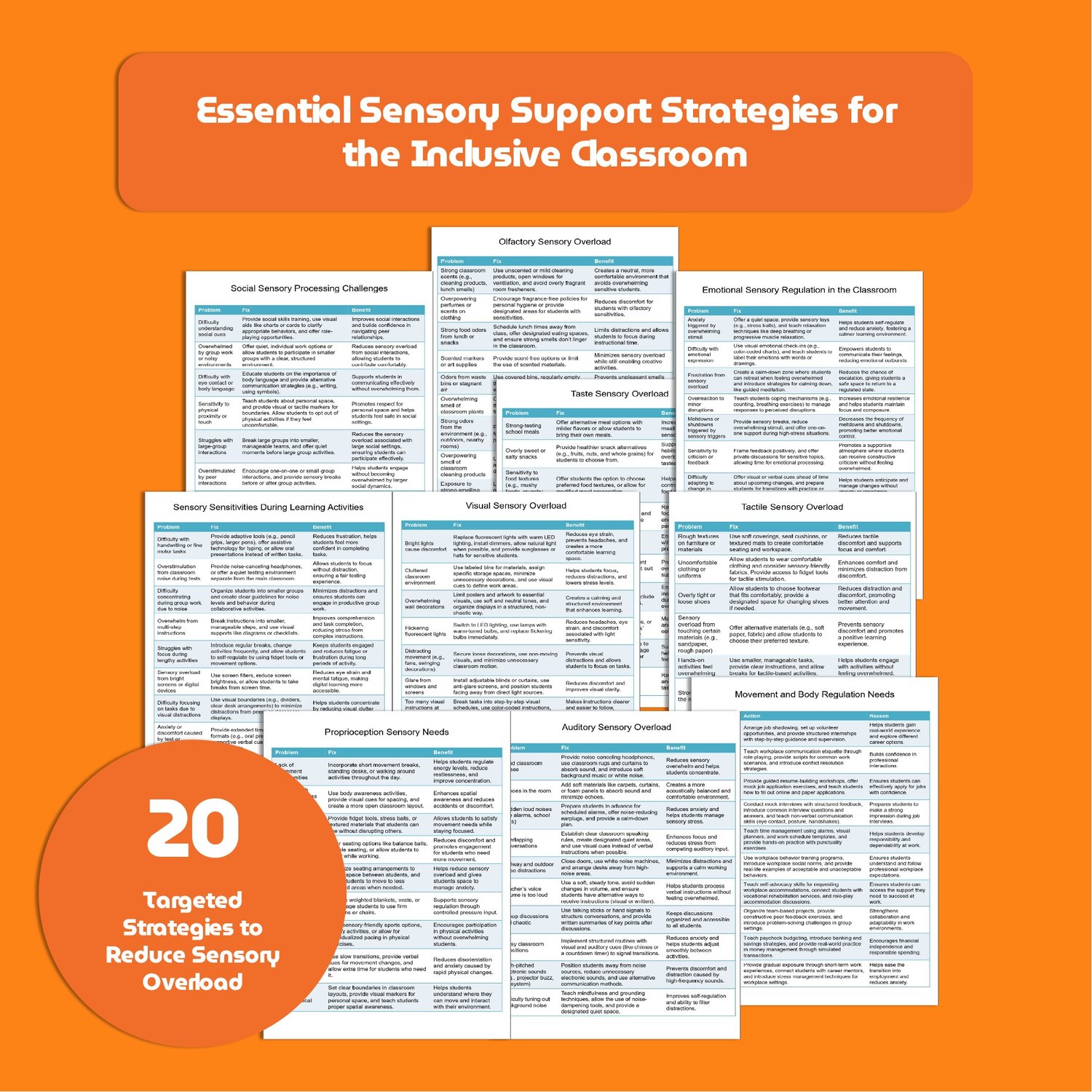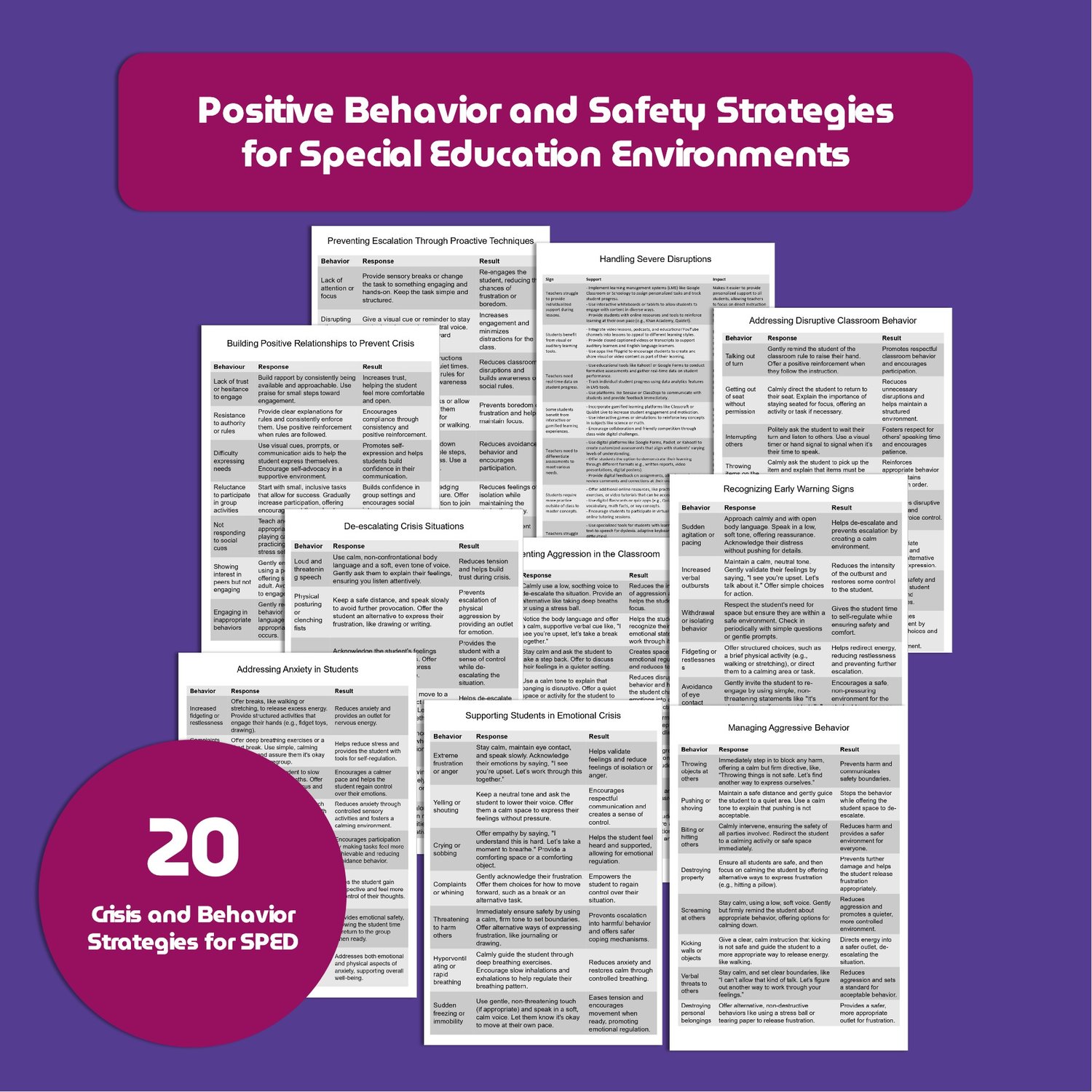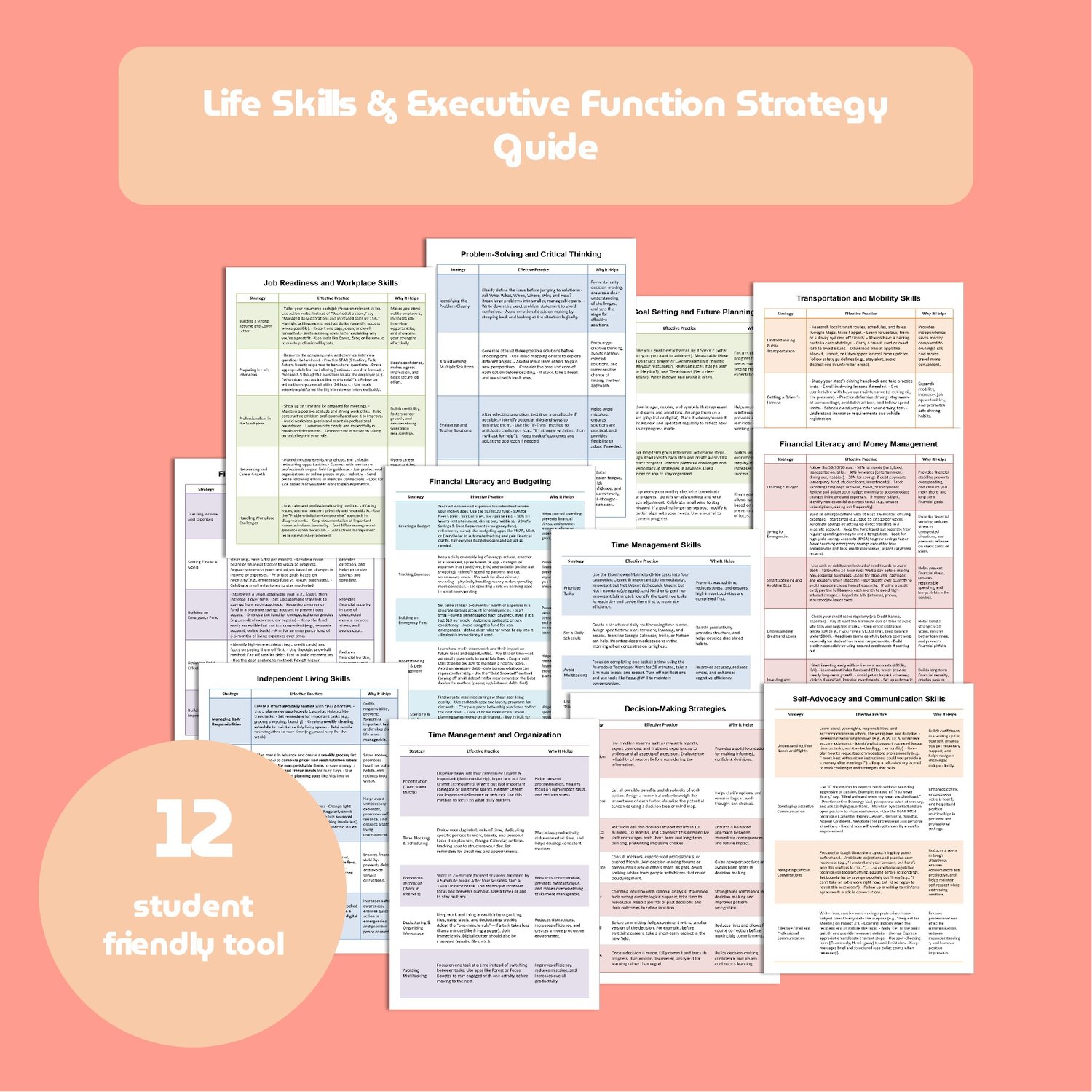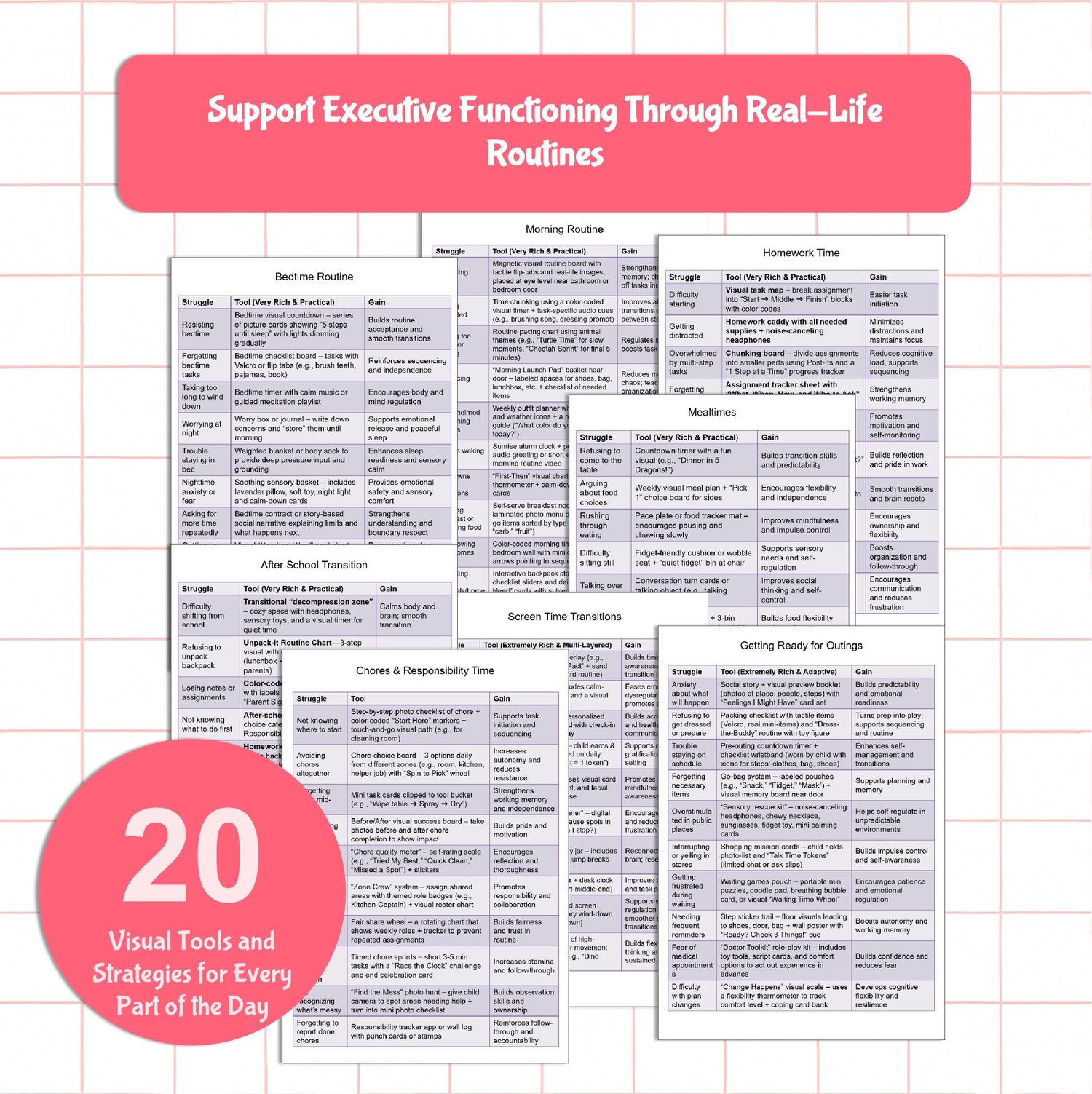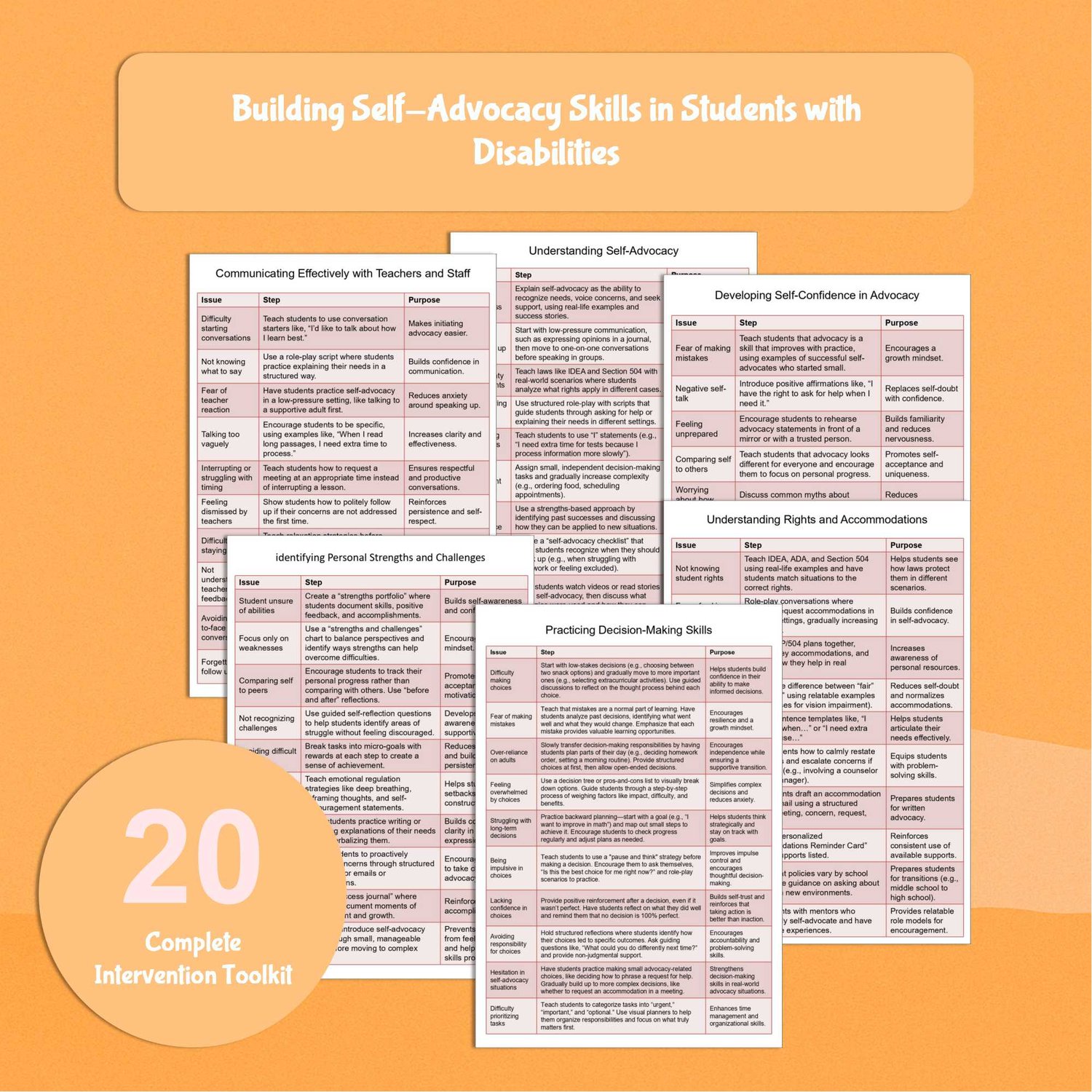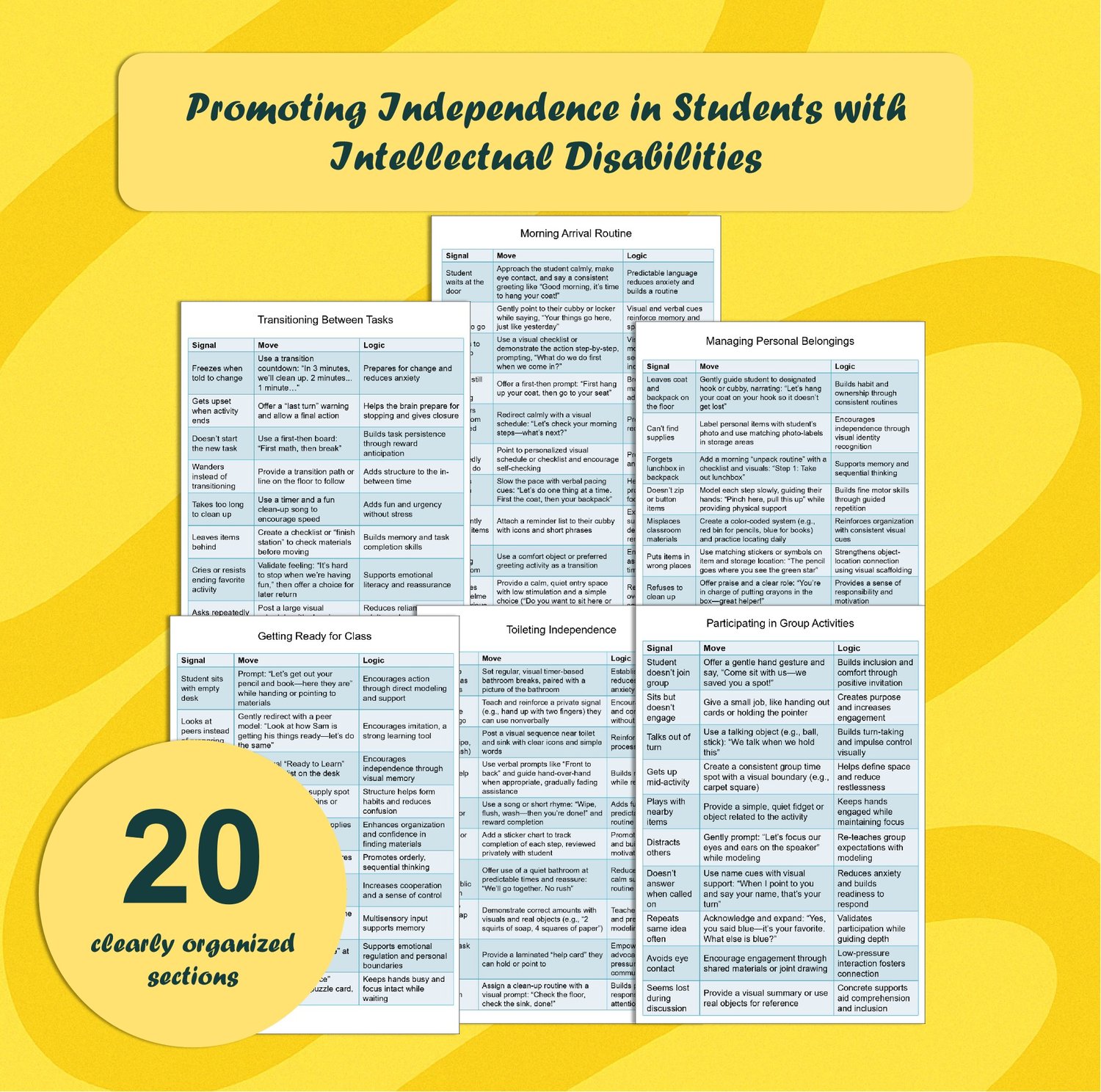

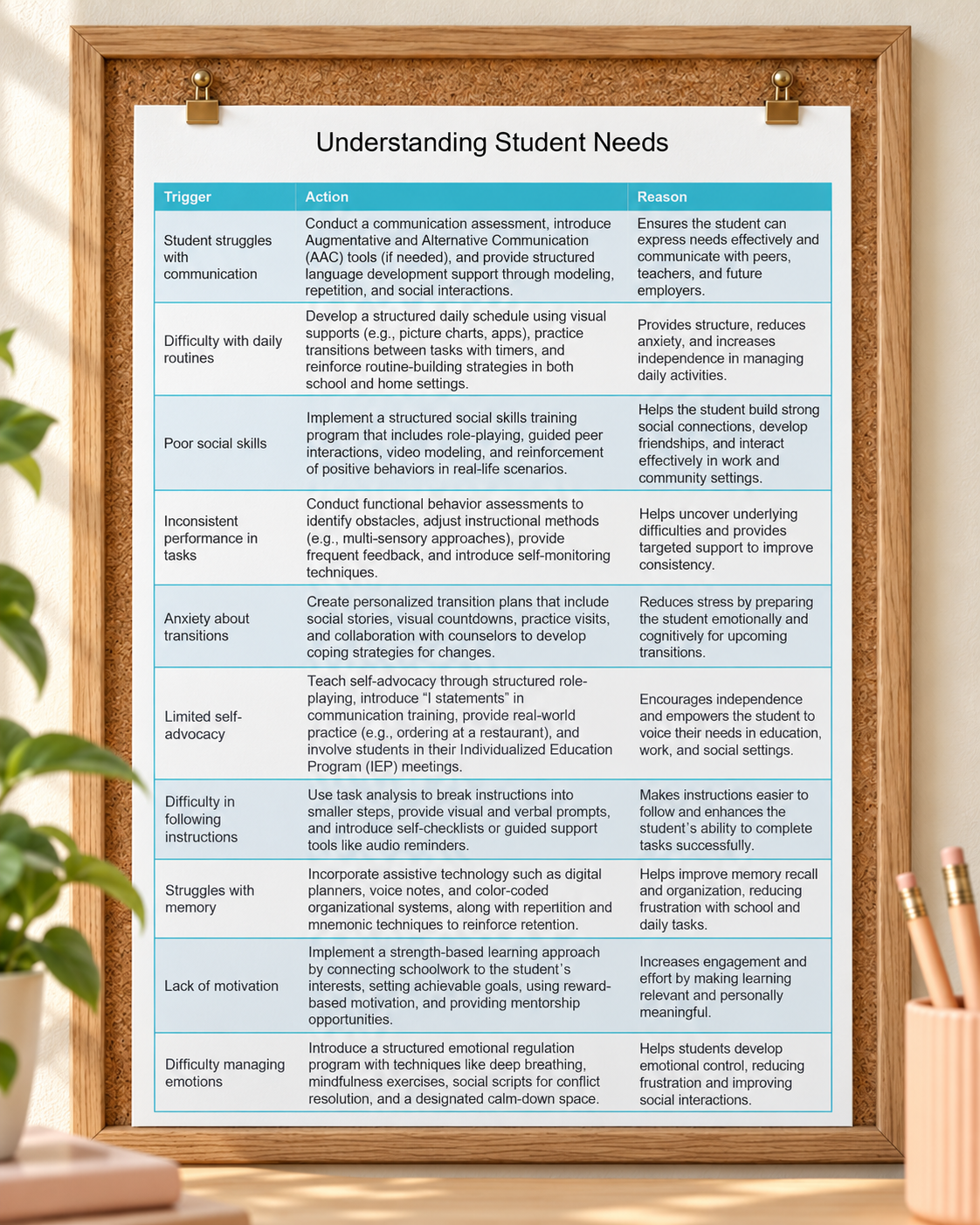
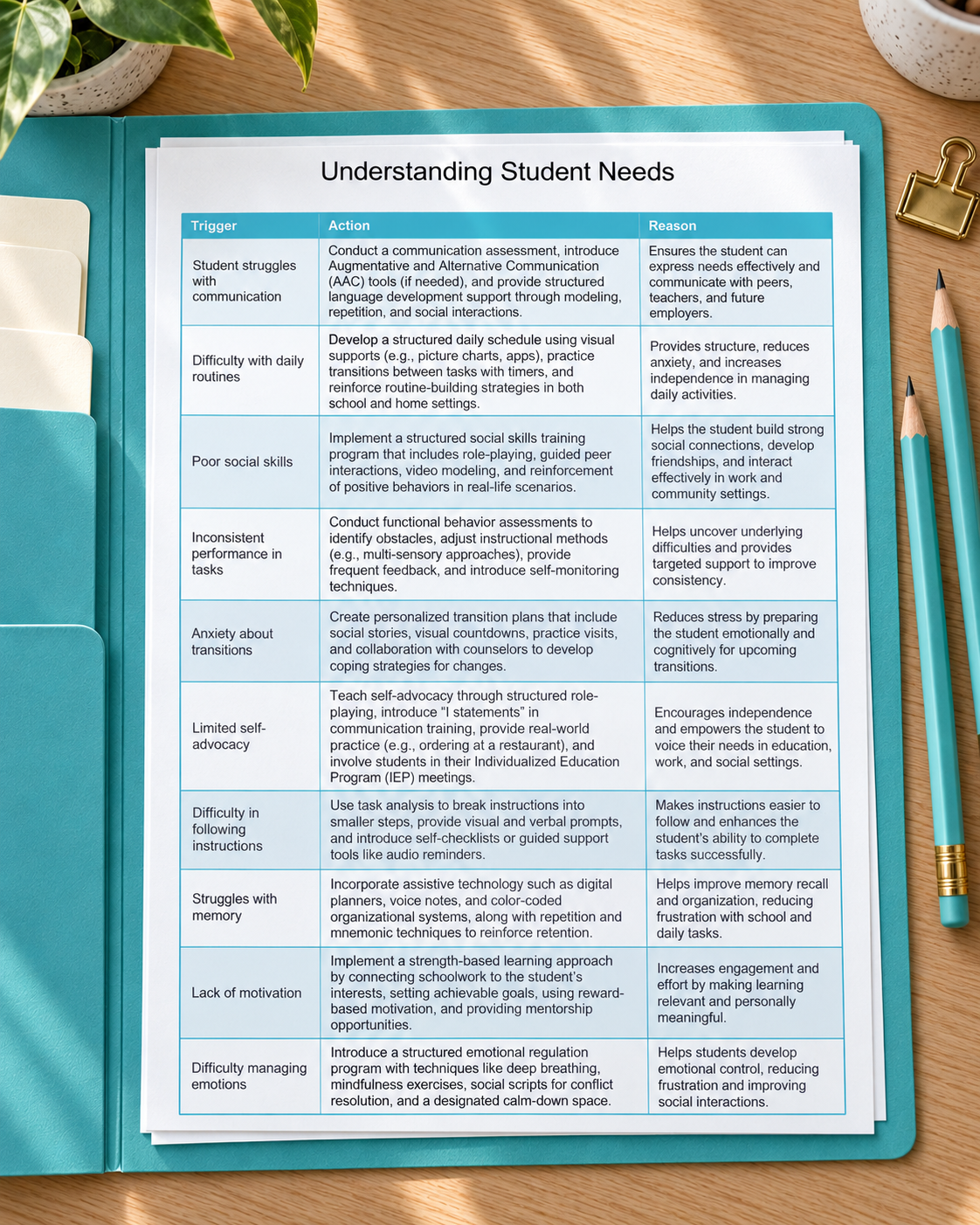
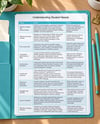
Transition Planning Strategies: 20 Areas
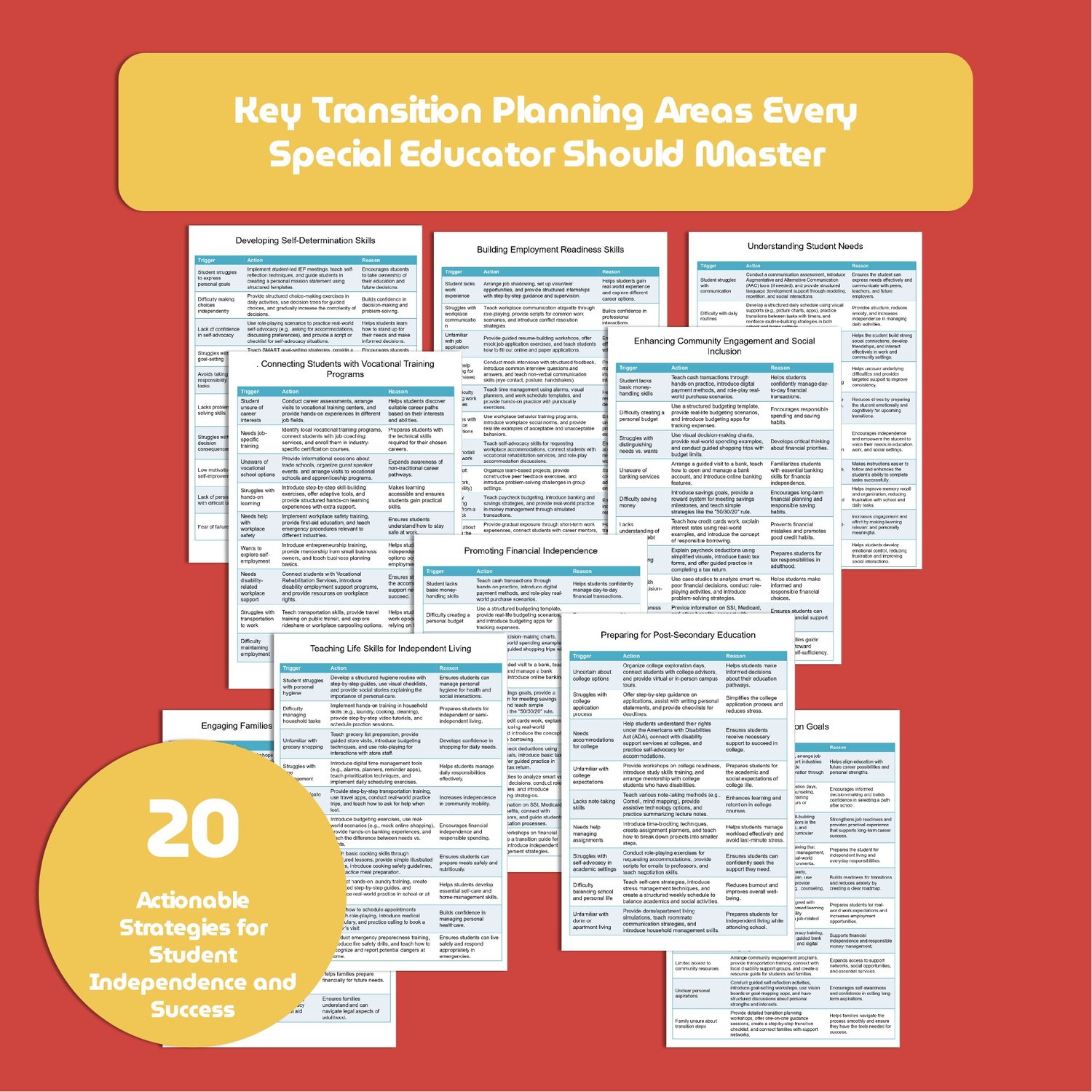
Preparing students with disabilities for life after high school covers a lot of ground. This guide organizes it into 20 areas, each using a trigger, action and reason structure to identify a need, choose a response, and understand why it matters.
What's Inside
- Developing Self-Determination Skills: student-led IEP meetings, self-advocacy, goal-setting
- Building Employment Readiness Skills; Connecting Students with Vocational Training Programs: job shadowing, resumes, career exploration
- Promoting Financial Independence; Teaching Life Skills for Independent Living: budgeting, banking, cooking, household management
- Preparing for Post-Secondary Education: college applications, accommodations, note-taking
- Enhancing Community Engagement and Social Inclusion; Engaging Families in Transition Planning: the wider support network
- Total: 20 trigger, action and reason tables
How It Helps You
- Covers every major transition domain in one framework
- Helps you write stronger transition sections of the IEP
- Works for college, vocational and independent living paths
Ways to Use It
Use it during annual IEP meetings, to train new special educators, or to track a student's readiness across transition areas.
Who It's For
Special education teachers, transition coordinators and case managers.
Format
PDF (print-ready) and PPTX (editable). 20 areas. Instant download.
Need more than one?
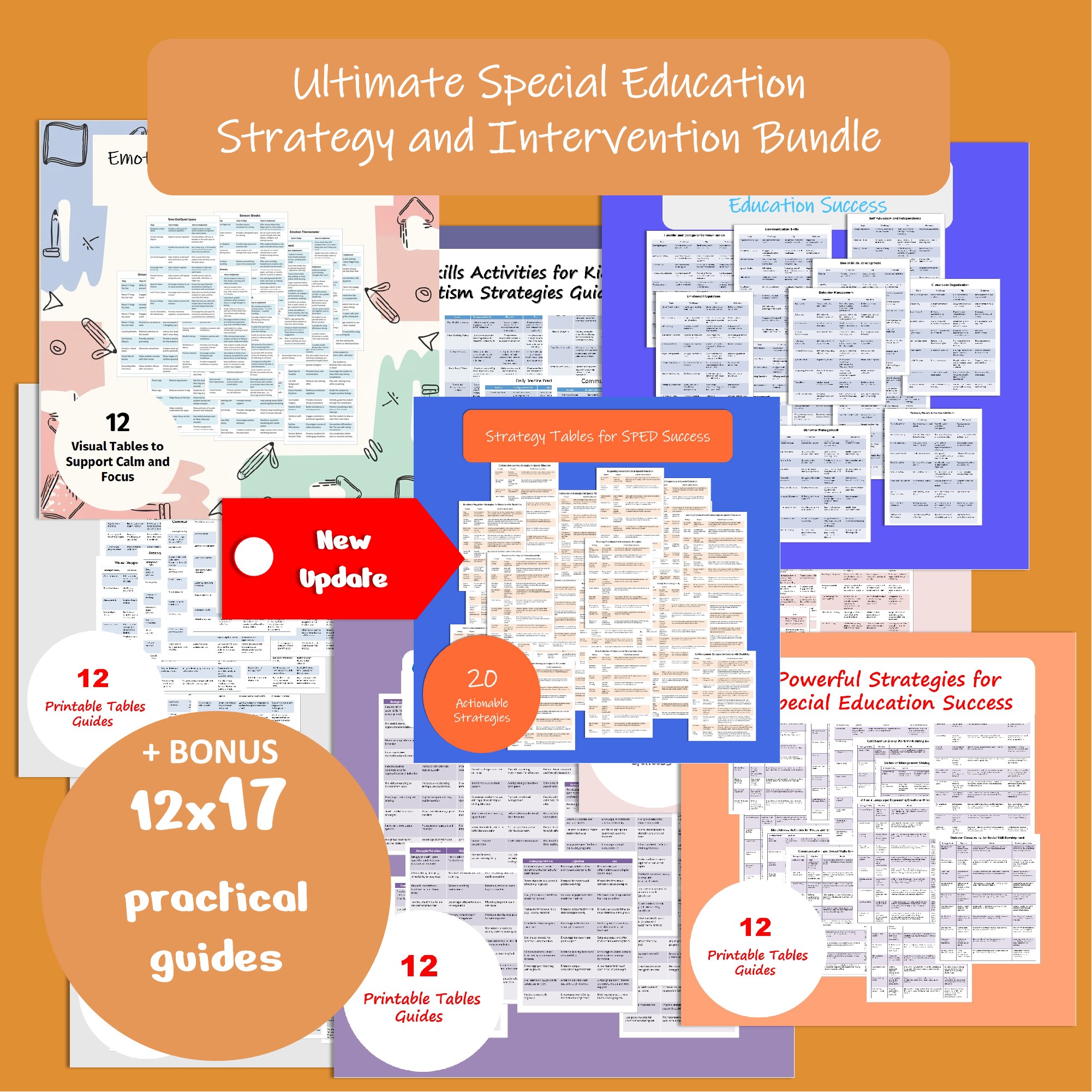
If quick-reference strategy tables fit how you work, the mega bundle gives you many more topics in the same format. The Special Education Mega Bundle brings together 18 related resources in one download, and you save 31% compared to buying each item separately.